The Emperor Angelfish (Pomacanthus imperator) stands as one of the most iconic and visually striking fish in the marine aquarium hobby. With their electric blue bodies adorned with yellow horizontal stripes and that distinctive black mask across the eyes, these fish command attention in any large saltwater display. Anyone seeking a true centerpiece fish for their marine tank often finds themselves drawn to this magnificent species.
However, keeping Emperor Angelfish requires more than just admiration for their beauty. These fish demand intermediate to advanced care level knowledge, substantial tank requirements, and a committed feeding regimen that includes specialized nutrition. Their territorial nature and specific dietary needs mean they are not suitable for beginners or small aquariums.
This comprehensive Emperor Angelfish care guide will walk you through everything you need to know before bringing one of these stunning fish home. From understanding their Indo-Pacific origins to mastering their sponge-based diet requirements, you will learn the critical care factors that determine success with this species.
Table of Contents
- Emperor Angelfish Species Summary
- Emperor Angelfish Diet and Nutrition
- Emperor Angelfish Care Requirements
- Common Diseases and Health Issues
- Tank Mates and Compatibility
- Advantages and Disadvantages
- Frequently Asked Questions
- Are Emperor Angelfish easy to care for?
- Do angelfish recognize people?
- How long do Emperor Angels live?
- What size tank does the Emperor Angel need?
- Are emperor angels hard to keep?
- What are signs of stress in angelfish?
- What's unique about emperor angelfish behavior?
- Are Emperor Angelfish reef safe?
- Why is my Emperor Angelfish losing color?
- What should I feed my Emperor Angelfish?
- Conclusion
Emperor Angelfish Species Summary
The Emperor Angelfish belongs to the family Pomacanthidae, which includes all marine angelfish species. Understanding their biological classification and natural history helps aquarists provide appropriate care that mimics their wild conditions as closely as possible.
| Scientific name: | Pomacanthus imperator |
| Common names: | Emperor Angelfish, Imperator Angelfish, Imperial Angelfish |
| Family: | Pomacanthidae (Marine Angelfish) |
| Origin: | Indo-Pacific region including Red Sea, Eastern Africa, Japan, Great Barrier Reef, New Caledonia, and Hawaii |
| Maximum size: | Up to 15 inches (40 cm) in wild; 8-12 inches typical in captivity |
| Care level: | Intermediate to Advanced |
| Temperament: | Semi-aggressive, territorial |
| Minimum tank size: | 100 gallons for juveniles; 180+ gallons for adults |
| Temperature range: | 72-80°F (22-27°C) |
| pH range: | 8.1-8.4 |
| Specific gravity: | 1.020-1.025 |
| Carbonate hardness (dKH): | 8-12 dKH |
| Diet: | Omnivore with emphasis on sponges and marine algae |
| Lifespan: | 12-20 years with proper care |
| Reef compatibility: | Fish Only With Live Rock (FOWLR) recommended; not reef safe |
The Emperor Angelfish naturally inhabits the Indo-Pacific region, with populations extending from the Red Sea and Eastern Africa across to Japan, throughout the Pacific islands, and down to the Great Barrier Reef. They thrive in coral-rich environments, typically found in lagoon patch reefs, outer reef slopes, and surge channels at depths ranging from 3 to 100 meters. Some populations in Hawaii and Florida result from captive releases rather than natural distribution.
Emperor Angelfish Appearance
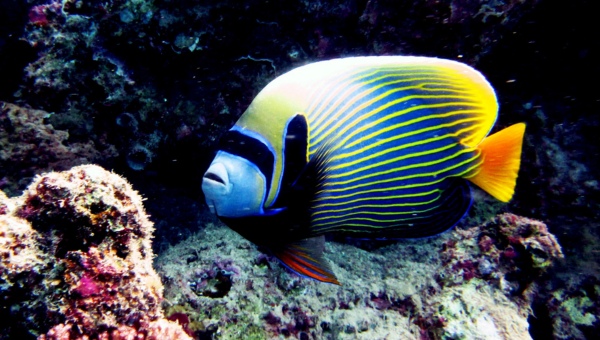
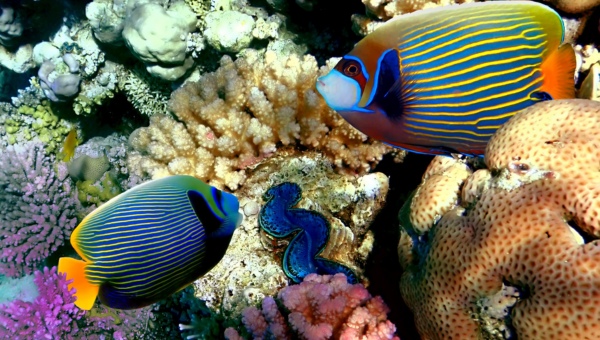
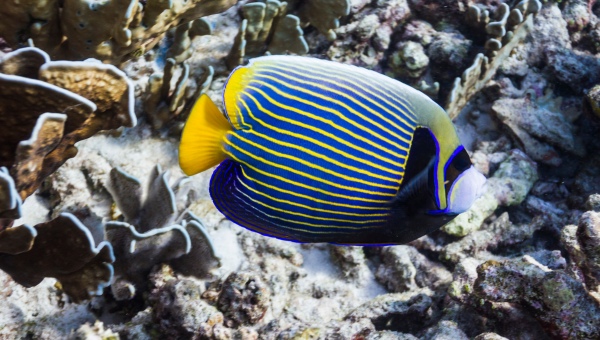
The adult Emperor Angelfish presents a breathtaking display of color that makes it one of the most recognizable marine aquarium fish. Their bodies feature a deep blue base color overlaid with approximately 15-20 bright yellow horizontal stripes that run the full length of the body from behind the gills to the tail. These stripes create a striking contrast that catches light beautifully as the fish moves through the water.
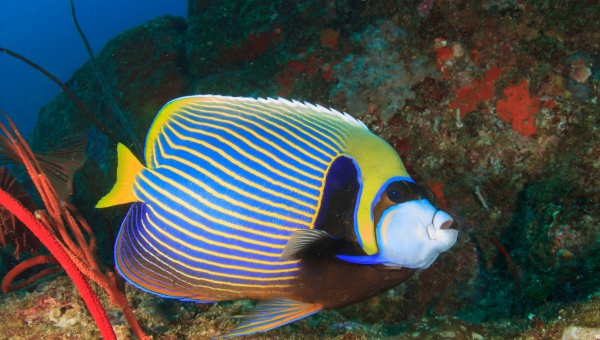
The head region shows distinctive characteristics that help distinguish this species from similar angelfish. A dark blue to black mask covers the eyes, extending backward from the mouth and running through the eyes to the start of the dorsal fin. The mouth itself appears white or pale blue, creating a sharp contrast against the darker facial markings. A thick black vertical band edged in blue runs behind the head, separating the facial coloration from the striped body pattern.
The dorsal and anal fins display blue coloration with black edging and bright blue margins. The caudal fin (tail) appears yellow with black submarginal bands. Notably, the dorsal fin stands taller than the other fins, giving the fish an elegant profile. The pectoral fins typically show yellow coloration, while the pelvic fins appear black.
Juvenile Emperor Angelfish Coloration
Juvenile Emperor Angelfish look dramatically different from adults, displaying one of the most remarkable color transformations in the marine fish world. Young specimens feature a dark blue body covered with concentric electric blue and white rings that create a stunning circular pattern across the entire body. These rings start as complete circles near the head and gradually become more horizontal toward the tail.
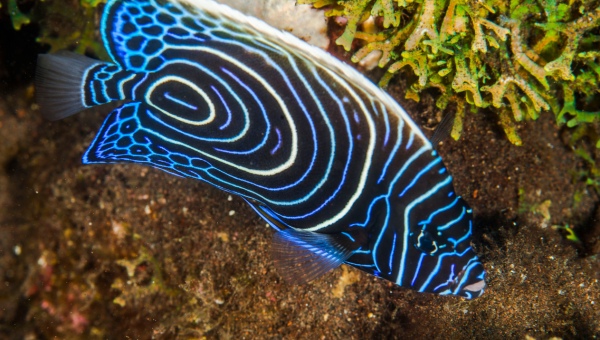
The key identifying feature of juvenile Emperor Angelfish is the complete circular pattern at the base of the tail. A white vertical bar runs just behind the gill plate, distinguishing them from the similar-looking Koran Angelfish (Pomacanthus semicirculatus), which displays a C-shaped or horseshoe pattern rather than complete circles. This distinction helps aquarists and divers correctly identify young specimens in the wild and in stores.
The color transition from juvenile to adult patterns begins when the fish reaches approximately 12 cm (4.7 inches) in length, though some individuals may not fully transition until reaching 15-20 cm (6-8 inches). During this transition phase, the fish displays a fascinating mix of juvenile rings and adult stripes, often creating a patchwork appearance that gradually resolves into the adult pattern over several months.
Sexual Dimorphism in Emperor Angelfish
Emperor Angelfish exhibit subtle sexual dimorphism that experienced aquarists can identify with careful observation. Adult males typically grow larger than females, reaching the maximum size of 15 inches while females usually remain slightly smaller. The most reliable distinguishing feature involves the coloration behind the eyes. Males display a darker blue or blackish coloration in the area immediately behind their eyes, while females show a lighter blue shade in the same region.
Males also tend to have more intensely colored and better-defined stripes compared to females. During spawning periods, these differences become more pronounced, with males displaying heightened coloration and increased territorial behavior as they establish and defend spawning territories on the reef.
Emperor Angelfish Size and Growth Rate
In their natural Indo-Pacific habitat, Emperor Angelfish can reach an impressive 15 inches (40 cm) in total length. However, in aquarium settings, most specimens achieve a more modest 8-12 inches due to tank size limitations and feeding constraints. The growth rate varies significantly based on diet quality, tank size, and water conditions.
Juveniles acquired at 2-3 inches can reach 6 inches within 12-18 months with optimal care. After this initial growth spurt, the growth rate slows considerably. Fish kept in smaller tanks or fed inadequate diets may experience stunted growth, developing compressed bodies and reduced overall size despite reaching sexual maturity.
Emperor Angelfish Lifespan
With proper care in a well-maintained marine aquarium, Emperor Angelfish can live 12-20 years. Some reports suggest wild specimens may live longer, though accurately determining age in wild populations remains challenging. The key factors affecting longevity include water quality stability, diet variety, stress levels, and tank size.
Aquarists should view Emperor Angelfish as a long-term commitment comparable to keeping a parrot or other long-lived pet. Their potential two-decade lifespan means careful consideration of future plans before acquiring one of these fish. Proper tank maintenance, regular water changes, and attentive disease prevention become decade-long responsibilities.
Emperor Angelfish Behavior and Temperament
Emperor Angelfish display semi-aggressive territorial behavior that requires careful consideration when planning tank communities. In the wild, they establish and defend territories on the reef, typically living solitary lives or occasionally forming loose pairs during spawning periods. They are not schooling fish and should never be kept in groups in typical home aquariums.
These fish demonstrate strong territorial instincts, particularly as they mature. Adults will claim specific areas of the aquarium as their own and aggressively chase away intruders. This behavior intensifies with age, making it essential to provide adequate space and visual barriers within the tank. Live rock formations that create distinct zones help reduce territorial conflicts.
When first introduced to an aquarium, Emperor Angelfish often appear shy and reclusive, hiding among rockwork and declining food. This adjustment period typically lasts several days to a few weeks depending on the individual fish and tank conditions. Once acclimated, they become bold, active swimmers that patrol their territory and recognize their keepers. Many aquarists report their Emperor Angelfish greeting them at the glass during feeding times.
Their behavior toward tank mates varies based on species compatibility and relative size. They generally ignore fish that look completely different but may attack similar-looking species or other angelfish. The rule of keeping only one Pomacanthus species per tank applies strictly to Emperor Angelfish, as they will fight aggressively with related species.
Emperor Angelfish Breeding
Emperor Angelfish have never been successfully bred in captivity, making all specimens available in the aquarium trade wild-caught. This represents one of the significant challenges in keeping this species, as wild collection stresses the fish and contributes to environmental concerns about reef fish collection practices.
In their natural Indo-Pacific habitat, Emperor Angelfish engage in external fertilization during spawning events. Males establish and defend spawning territories, typically on outer reef slopes or drop-offs where water movement helps disperse eggs. When a female enters the territory and is ready to spawn, the pair rises together in the water column, releasing eggs and sperm simultaneously.
The fertilized eggs drift with currents as part of the plankton, hatching within 15-20 hours into tiny larvae. These larvae remain in the planktonic stage for several weeks, drifting with ocean currents before settling onto the reef as juveniles. This extended larval period makes captive breeding extremely challenging, as rearing the microscopic larvae requires specialized facilities and feeding protocols that have not yet been perfected for this species.
Aquarists interested in breeding should understand that successful captive reproduction of Emperor Angelfish remains unachieved despite attempts by professional breeders and research institutions. This reality means supporting sustainable collection practices and considering tank-bred alternatives when available for other species.
Emperor Angelfish Diet and Nutrition
Proper nutrition forms the foundation of successful Emperor Angelfish care. In their natural habitat, these fish feed primarily on sponges and tunicates, with supplementary consumption of algae, coral polyps, and small crustaceans. Replicating this diet in captivity requires understanding their specialized nutritional needs and providing appropriate food varieties.
The sponge component of their diet proves particularly crucial. Natural populations consume significant quantities of sponges, which provide compounds essential for maintaining their brilliant blue and yellow coloration. Without adequate sponge-derived nutrients, Emperor Angelfish often develop color fading and reduced vibrancy. Commercial sponge-based frozen foods help address this need, as do high-quality marine angelfish preparations that include sponge material.
Feeding should occur 2-3 times daily with varied offerings. A balanced diet should include approximately 50% high-quality marine pellets or flakes specifically formulated for angelfish, supplemented with frozen foods and fresh marine algae. This variety ensures complete nutritional coverage and maintains the fish's interest in feeding.
Recommended food items include:
- Sponge-based frozen cubes: Essential for color retention and providing natural diet components
- High-quality marine pellets: Formulated specifically for marine angelfish with sponge and algae content
- Mysis shrimp: Excellent protein source that stimulates natural feeding behaviors
- Brine shrimp: Nutritious when enriched with vitamins and fatty acids
- Krill: Provides carotenoids that enhance coloration
- Nori sheets (marine algae): Attach to clips for grazing behavior; provides essential vegetable matter
- Spirulina-enriched foods: Supports immune function and coloration
- Fresh vegetables: Blanched zucchini, spinach, and marine algae preparations
- Squid and marine fish flesh: Occasional offerings for protein variety
Grazing behavior should be encouraged by providing nori sheets or marine algae attached to feeding clips. This mimics their natural browsing behavior on reef algae and provides constant nutritional supplementation between scheduled feedings.
Foods to Avoid
While Emperor Angelfish are omnivorous and generally accepting of various foods, certain items should be avoided or offered only rarely. Freshwater feeder fish such as goldfish or guppies carry disease risks and inappropriate fat profiles for marine fish. Beef heart and other terrestrial meats lack the proper amino acid profiles and can cause digestive issues.
Foods high in freshwater-derived ingredients may not provide the proper mineral balance for marine fish. Always choose marine-specific preparations when possible. Additionally, avoid over-reliance on single food types, as nutritional deficiencies quickly develop without dietary variety.
Emperor Angelfish Care Requirements
Successful Emperor Angelfish keeping requires intermediate to advanced marine aquarium experience. These fish demand stable water conditions, substantial tank sizes, and dedicated attention to their specialized needs. Understanding the full scope of care requirements before acquisition helps ensure both the fish's health and the aquarist's satisfaction.
Tank Size Requirements
Emperor Angelfish require significantly larger tanks than many aquarists initially expect. Juveniles under 4 inches can temporarily inhabit 100-gallon aquariums, but adults need minimum 180-gallon tanks with dimensions at least 6 feet in length, 2 feet in width, and 2 feet in height. These dimensions provide adequate swimming space while maintaining the water volume necessary for stable parameters.
The tank must be deep enough to give these fish a sense of security and allow proper development of their tall dorsal fins. Crowded conditions lead to stress, stunted growth, and increased aggression. Consider the fish's eventual adult size when planning tank purchases, as upgrading later proves disruptive and stressful for established fish.
When housing a bonded pair, which requires careful observation of natural pairing behavior, the minimum tank volume increases to 220 gallons or more. The additional space allows each fish to establish personal territory while maintaining the pair bond. Never attempt to force pair formation by adding two random individuals together.
Water Parameters
Maintaining stable water parameters proves critical for Emperor Angelfish health. These parameters should remain consistent:
- Temperature: 72-80°F (22-27°C) with minimal fluctuation
- pH: 8.1-8.4, stable within this narrow range
- Specific gravity: 1.020-1.025 (maintained consistently at chosen value)
- Carbonate hardness (dKH): 8-12 dKH for proper buffering
- Ammonia and nitrite: 0 ppm (undetectable)
- Nitrate: Less than 10 ppm, ideally below 5 ppm
- Phosphate: As low as possible, preferably below 0.03 ppm
Weekly water changes of 20-25% help maintain these parameters and remove accumulated waste products. Use high-quality salt mixes designed for reef aquariums, such as Instant Ocean, Reef Crystals, or Tropic Marin. Always match the new water's temperature and specific gravity to the display tank to prevent shock.
Proper oxygenation matters significantly for these active fish. Surface agitation from return pumps or powerheads should create visible water movement without generating excessive turbulence. The water should appear clear with good gas exchange at the surface.
Filtration and Water Flow
Emperor Angelfish require robust filtration systems appropriate for their size and bioload. Canister filters or sump-based systems with wet/dry filtration provide excellent mechanical and biological filtration. The filtration system should process the entire tank volume at least 4-6 times per hour.
A protein skimmer proves essential for removing dissolved organic compounds before they break down into harmful substances. Choose a skimmer rated for at least double the tank's volume to ensure adequate processing capacity. Quality brands include Reef Octopus, Bubble Magus, and Red Sea.
Water flow should be moderate to high, mimicking the surge channels and reef slopes where these fish naturally occur. Multiple powerheads or a wave-making system can create beneficial alternating flow patterns. Avoid creating dead spots where debris accumulates, but also ensure the fish can swim comfortably without fighting constant strong currents.
Heating and Temperature Control
Maintaining stable temperature within the 72-80°F range requires reliable heating equipment. Choose heaters rated for the tank's volume, and consider using two smaller heaters rather than one large unit to provide redundancy and more even heat distribution. This approach prevents temperature crashes if one heater fails and reduces hot spots that can burn fish.
Position heaters near water flow sources to distribute heat efficiently. Use a separate thermometer to verify heater accuracy, as built-in thermostats can drift over time. During summer months, monitor for overheating and employ cooling fans or chillers if necessary to maintain the upper temperature limit.
Lighting Requirements
Emperor Angelfish appreciate moderate to bright lighting that highlights their stunning coloration. LED systems or T5 fluorescent fixtures work well, providing full-spectrum illumination that brings out the blue and yellow hues. The lighting should cover the entire tank surface evenly, eliminating dark corners where the fish might feel insecure.
While not directly requiring intense lighting for their health, proper illumination helps display these fish at their best. The light also supports any photosynthetic organisms in the tank, including the marine algae that may grow on live rock and supplement the fish's diet. A photoperiod of 8-12 hours maintains natural day-night cycles.
Tank Decoration and Live Rock
Live rock serves multiple essential functions in an Emperor Angelfish aquarium. It provides biological filtration, grazing surfaces for natural feeding, and hiding places that reduce stress. Plan for approximately 1-2 pounds of live rock per gallon of tank volume, arranged to create caves, crevices, and visual barriers.
The rockwork should create distinct zones within the tank, allowing the fish to establish territories and retreat from view when desired. Arrange rocks securely on the tank bottom before adding sand to prevent collapse if the fish digs or dislodges decorations. Avoid tall, unstable structures that might topple during the fish's active swimming.
A sand substrate of 2-4 inches depth allows natural behaviors and supports beneficial microfauna. Crushed coral or aragonite sand helps maintain pH and provides buffering capacity. The substrate also hosts the biological filtration bacteria essential for processing the fish's waste.
Reef Safety and FOWLR Considerations
Emperor Angelfish are not reef safe and should be kept in Fish Only With Live Rock (FOWLR) systems rather than reef aquariums with corals. Their natural diet includes coral polyps, sponges, and tunicates, which translates to nipping behavior in aquariums. They will consume soft corals, nip at large polyp stony (LPS) corals, and potentially damage small polyp stony (SPS) corals.
Individual personality variations exist, with some specimens showing more restraint than others. However, the risk remains significant enough that attempting to keep them with valuable coral collections is inadvisable. Even Emperor Angelfish that initially ignore corals often develop nipping behaviors as they mature and their dietary needs change.
Clams and other decorative invertebrates also face risk, as Emperor Angelfish may nip at clam mantles. Some aquarists successfully keep these fish with select hardy corals like certain mushroom varieties or zoanthids, but this requires careful observation and willingness to accept losses. The FOWLR designation provides the safest and most appropriate housing strategy.
Quarantine Protocol
All Emperor Angelfish should undergo quarantine before introduction to the display tank. These wild-caught fish frequently carry parasites such as marine ich (Cryptocaryon irritans) and velvet disease (Amyloodinium ocellatum). A proper quarantine period of 4-6 weeks allows observation, treatment if necessary, and acclimation to captive foods.
Set up a quarantine tank of at least 40 gallons with simple filtration, heater, and hiding places. Observe the fish daily for signs of disease, including white spots, rapid breathing, scratching against objects, or loss of appetite. Treat prophylactically or at the first sign of illness with appropriate medications designed for marine fish.
During quarantine, train the fish to accept prepared foods before moving to the display tank. Wild-caught specimens often arrive eating only live foods or specific natural items, so teaching them to accept frozen and prepared foods in quarantine prevents feeding issues in the main aquarium. This investment in quarantine time significantly increases long-term success rates.
Tank Maintenance
Regular maintenance keeps Emperor Angelfish healthy and their environment stable. Weekly water changes of 20-25% remove accumulated nitrates and replenish trace elements. Use a gravel vacuum during water changes to remove debris from the substrate without disturbing the biological filtration excessively.
Clean algae from the glass as needed using magnetic scrapers or algae pads. Maintain filtration equipment according to manufacturer schedules, cleaning mechanical filters and replacing carbon or other chemical media regularly. Test water parameters weekly to catch any developing issues before they affect fish health.
Monitor the protein skimmer performance and empty the collection cup regularly. Clean or replace filter socks and media bags as they become clogged. These routine maintenance tasks prevent the accumulation of organic waste that degrades water quality and stresses the fish.
Common Diseases and Health Issues
Emperor Angelfish, like all marine fish, are susceptible to specific diseases and health problems. Understanding these conditions enables early detection and effective treatment, significantly improving outcomes when illness occurs.
Marine Ich (Cryptocaryon irritans)
Marine ich presents as small white spots resembling grains of salt across the fish's body and fins. Affected fish may scratch against objects, display rapid breathing, and show reduced appetite. This parasitic infection spreads quickly and requires prompt treatment. Copper-based medications, hyposalinity, or transfer methods can eliminate the parasite during its vulnerable life stages.
Velvet Disease (Amyloodinium ocellatum)
Velvet disease, caused by dinoflagellate parasites, produces a fine golden or rust-colored dusting on the fish's skin. The fish may flash against objects, breathe rapidly at the surface, and show clamped fins. This disease progresses rapidly and can be fatal within days without treatment. Copper treatments and raising temperature slightly can help control velvet outbreaks.
Head and Lateral Line Erosion (HLLE)
HLLE affects many marine angelfish species, including Emperor Angelfish. This condition causes pits and erosion along the head and lateral line, potentially progressing to serious tissue damage. The exact causes remain debated, but poor nutrition, especially lack of sponge-derived nutrients, carbon dust from activated carbon, and low vitamin C levels contribute to its development.
Prevention focuses on excellent nutrition with sponge-based foods, high-quality carbon in a bag rather than loose in the filter, and vitamin supplementation. Early-stage HLLE can improve with dietary corrections and water quality optimization, though advanced cases may leave permanent scarring.
Bacterial Infections
Fin rot, popeye, and other bacterial infections can affect Emperor Angelfish, particularly when water quality declines or the fish experiences stress from aggression or handling. Symptoms include frayed fins, cloudy eyes, and lethargy. Treatment involves improving water conditions and using appropriate antibiotics. Many bacterial infections respond to broad-spectrum antibiotics available for marine fish.
Nutritional Deficiencies and Color Fading
Without adequate sponge content in their diet, Emperor Angelfish often develop faded coloration. The brilliant blues become dull, and the yellow stripes lose their intensity. This condition indicates dietary insufficiency rather than disease but requires the same attention. Increasing sponge-based frozen foods, marine algae, and vitamin-enriched preparations usually restores color over several weeks.
Stress Indicators
Emperor Angelfish display several behavioral and physical signs when stressed. Darkened coloration, hiding for extended periods, rapid breathing, and refusal to eat indicate discomfort. Physical signs include clamped fins, scratching against objects, and unusual swimming patterns. Identifying and addressing the stress source, whether poor water quality, aggression from tank mates, or inadequate hiding places, prevents stress from escalating to disease.
Tank Mates and Compatibility
Selecting appropriate tank mates for Emperor Angelfish requires understanding their territorial nature and aggressive tendencies. These fish do not tolerate conspecifics or similar-looking species, and their size and boldness can intimidate smaller or more timid fish.
Compatible Tank Mates
Suitable tank mates include fish that are neither too similar in appearance nor small enough to become targets. Good options include:
- Tangs and surgeonfish: These active swimmers can hold their own against Emperor Angelfish aggression, though introduce the tang first to establish territory
- Wrasses: Larger wrasse species such as cleaner wrasses and leopard wrasses typically coexist well, adding activity to different tank levels
- Damselfish: Larger, more assertive damselfish species can usually manage Emperor Angelfish behavior, though some damsels may become too aggressive themselves
- Dottybacks: These small but bold fish generally avoid conflict with angelfish while adding color and interest
- Triggerfish: Larger triggers of appropriate size can share space, though both species require careful monitoring for aggression
- Pufferfish: Marine puffers like the porcupine puffer can coexist in large systems, their size and personality matching the angelfish
- Lionfish: These predatory fish occupy different niches and generally ignore angelfish, creating an interesting predator community display
- Moray eels: Snowflake moray eels and similar species make interesting bottom-dwelling companions that angelfish typically ignore
Fish to Avoid
Certain fish categories create problems when housed with Emperor Angelfish:
- Other angelfish: Never house Emperor Angelfish with other Pomacanthus species or similar-looking angelfish. They will fight relentlessly, often to the death
- Small fish: Tiny species such as gobies, blennies, and small damselfish may be bullied or eaten by adult Emperor Angelfish
- Peaceful community fish: Butterflyfish, anthias, and other peaceful species often suffer from Emperor Angelfish aggression
- Slow or stationary fish: Seahorses, pipefish, and mandarin fish cannot compete for food and may be harassed
- Conspecifics: Only attempt to keep multiple Emperor Angelfish in tanks of 300+ gallons with extensive rockwork, and only if they form a natural pair
When introducing tank mates, add the most aggressive or territorial fish last. This approach allows more peaceful species to establish territories before facing the Emperor Angelfish's dominance. Provide plenty of hiding places and visual barriers to reduce direct confrontations.
Advantages and Disadvantages
Advantages of Keeping Emperor Angelfish
- Stunning visual impact: Few aquarium fish match the bold coloration and presence of a healthy adult Emperor Angelfish
- Long lifespan: With proper care, these fish provide decades of enjoyment, forming long-term relationships with their keepers
- Interactive personality: Emperor Angelfish recognize their owners and often greet them at the glass, displaying individual personalities
- Hardiness: Once established and feeding well, they prove relatively disease-resistant compared to more delicate marine species
- Active swimming behavior: These fish utilize the entire water column, bringing constant motion and interest to the aquarium
- Impressive size: Their substantial adult size creates a focal point that smaller fish cannot match
Disadvantages of Keeping Emperor Angelfish
- Not reef safe: Their coral-nipping behavior prevents keeping them in reef aquariums, limiting tank design options
- Large tank requirement: The minimum 180-gallon requirement excludes many home aquarists due to space and cost constraints
- Wild-caught only: No captive-bred availability raises ethical concerns about reef collection and environmental impact
- Territorial aggression: Their semi-aggressive nature limits tank mate options and requires careful community planning
- Specialized diet: The need for sponge-based foods and varied nutrition adds complexity and expense to their care
- Advanced care level: Intermediate to advanced experience required, making them unsuitable for beginners
- Long-term commitment: Their potential 20-year lifespan requires planning for long-term care responsibilities
Frequently Asked Questions
Are Emperor Angelfish easy to care for?
Emperor Angelfish are not considered easy to care for. They require intermediate to advanced aquarium experience due to their large tank requirements, specialized sponge-based diet, and semi-aggressive territorial behavior. They also need pristine water conditions and are not reef safe, limiting tank design options. While hardy once established, their care demands make them unsuitable for beginners.
Do angelfish recognize people?
Yes, Emperor Angelfish often recognize their owners and display interactive behaviors. Many aquarists report their fish greeting them at the glass during feeding times and responding differently to familiar caretakers versus strangers. They develop distinct personalities and can become quite tame, even taking food directly from fingers once acclimated.
How long do Emperor Angels live?
Emperor Angelfish can live 12-20 years with proper care in a well-maintained aquarium. Some individuals may live even longer under optimal conditions. Their long lifespan means keeping them represents a significant long-term commitment comparable to other long-lived pets. Proper nutrition, stable water parameters, and adequate space all contribute to achieving their maximum lifespan potential.
What size tank does the Emperor Angel need?
Juvenile Emperor Angelfish under 4 inches need minimum 100 gallons, while adults require at least 180 gallons with dimensions of 6 feet by 2 feet by 2 feet. Pairs need 220+ gallons. These large requirements reflect their adult size of 8-12 inches in captivity and their active swimming behavior. Undersized tanks lead to stunted growth, stress, and increased aggression.
Are emperor angels hard to keep?
Emperor Angelfish are moderately difficult to keep due to several factors: their large tank size requirements, specialized diet needing sponge-based foods, wild-caught status requiring quarantine, territorial aggression limiting tank mates, and non-reef-safe status. They demand stable water parameters and experienced care. Success requires research, proper equipment, and commitment to their long-term needs.
What are signs of stress in angelfish?
Stressed Emperor Angelfish display darkened coloration, hiding for extended periods, rapid breathing, clamped fins, loss of appetite, and unusual swimming patterns. They may scratch against objects or hover in corners. Stress often precedes disease, so identifying and addressing causes such as poor water quality, aggression, or inadequate hiding places is critical for preventing health problems.
What's unique about emperor angelfish behavior?
Emperor Angelfish display fascinating behaviors including dramatic color transformation from juvenile to adult patterns, territorial patrolling of established areas, and recognition of their owners. They are solitary by nature rather than schooling fish. During the juvenile-to-adult transition starting around 12 cm, they show mixed patterns creating a patchwork appearance. Their boldness increases with acclimation time, transforming from shy hiders to confident centerpieces.
Are Emperor Angelfish reef safe?
No, Emperor Angelfish are not reef safe. They naturally feed on sponges, tunicates, and coral polyps, which translates to nipping behavior in aquariums. They will consume soft corals, damage LPS corals, and potentially harm SPS corals. They may also nip at clam mantles. They should be kept in Fish Only With Live Rock (FOWLR) systems rather than reef aquariums.
Why is my Emperor Angelfish losing color?
Color fading in Emperor Angelfish typically indicates inadequate sponge content in their diet. These fish require sponge-based nutrition to maintain their brilliant blue and yellow coloration. Without it, colors become dull and washed out. Other causes include poor water quality, stress, inadequate lighting, and nutritional deficiencies. Increase sponge-based frozen foods, marine algae, and vitamin supplementation to restore color over several weeks.
What should I feed my Emperor Angelfish?
Feed Emperor Angelfish 2-3 times daily with a varied diet including sponge-based frozen cubes, high-quality marine angelfish pellets, mysis shrimp, marine algae (nori sheets), spirulina-enriched foods, and occasional krill or squid. Sponge content is essential for color retention. A balanced diet should be approximately 50% pellets with supplements of frozen foods and fresh vegetables to ensure complete nutrition.
Conclusion
The Emperor Angelfish (Pomacanthus imperator) remains one of the most rewarding yet demanding species in the marine aquarium hobby. Their stunning transformation from the electric blue ringed juveniles to the magnificent yellow-striped adults provides years of visual enjoyment for dedicated aquarists. However, success with this species requires understanding and meeting their specific needs.
Key success factors include providing adequate space with minimum 180-gallon tanks for adults, maintaining pristine and stable water parameters (72-80°F, pH 8.1-8.4, SG 1.020-1.025), and delivering proper nutrition with emphasis on sponge-based foods for color retention. The FOWLR setup approach accommodates their non-reef-safe status while allowing for beautiful live rock aquascaping.
Prospective keepers must commit to the long-term responsibility these fish represent, with potential lifespans reaching two decades. Their wild-caught status demands proper quarantine protocols to prevent disease introduction. Their territorial nature requires thoughtful tank mate selection focusing on appropriate marine species like tangs, wrasses, and larger damselfish rather than small or peaceful community fish.
For aquarists with the experience, resources, and dedication to provide appropriate care, the Emperor Angelfish stands as a true centerpiece species that transforms a large marine aquarium into a captivating display. Their interactive personalities, recognition of their keepers, and bold presence make them worth the significant investment in time, equipment, and ongoing maintenance they require.
If you are considering adding an Emperor Angelfish to your aquarium in 2026, ensure you have the proper tank size, filtration, and long-term commitment necessary for success. With proper preparation and care, these magnificent fish will provide decades of enjoyment and become the undeniable star of your marine aquarium.