Emperor Tetras have earned a devoted following among aquarists, and it is easy to understand why. These stunning freshwater fish display an iridescent coloration that shifts between metallic blue and purple depending on the angle of the light. Their peaceful schooling behavior and hardy nature make them a perfect choice for anyone building a community tank.
Whether you are just starting your first aquarium or adding to an established planted tank, Emperor Tetra care is straightforward and rewarding. This guide covers everything you need to know about keeping these Colombian river natives healthy and happy, from tank setup requirements to breeding tips. By the end, you will have all the knowledge needed to provide excellent Emperor Tetra care in 2026.
Let us dive into the specifics of this remarkable species, including their unique appearance, behavioral quirks, and exactly what they need to thrive in captivity.
Table of Contents
- Emperor Tetra Species Summary
- Emperor Tetra Care Guide
- Tank Size for Emperor Tetra
- Water Parameters for Emperor Tetra
- Filtration for Emperor Tetra
- Water Flow and Current Requirements
- Heater for Emperor Tetra
- Lighting for Emperor Tetra Tank
- Aquarium Decor for Emperor Tetra
- Other Tank Accessories for Emperor Tetra
- Cleaning the Tank
- Common Possible Diseases in Emperor Tetra
- Treatment and Medications of Diseases for Emperor Tetras
- Emperor Tetra Food and Diet
- Diet Foods to Avoid
- Suitable Tank Mates for Emperor Tetra
- Fish to Avoid
- Advantages of Having Emperor Tetra in Your Tank
- Disadvantages of Having Emperor Tetra in Your Tank
- Frequently Asked Questions
- Final Thoughts
- Conclusion
Emperor Tetra Species Summary
| Scientific name: | Nematobrycon palmeri |
| Common name: | Emperor Tetra |
| Family: | Characidae |
| Origin: | Atrato and San Juan river basins, western Colombia |
| Size: | 2 to 3 inches (5 to 7.5 cm) |
| Life span: | 6 years (up to 7 with excellent care) |
| Temperature: | 73° to 81° Fahrenheit (23° to 27°C) |
| pH range: | 5.0 to 7.8 |
| Water hardness: | 3 to 6 dKH (soft to medium) |
| Water type: | Freshwater, tropical |
| Tank size: | 20 gallons minimum, 30+ for community |
| Temperament: | Peaceful, schooling |
| Care level: | Easy, beginner-friendly |
| Diet: | Omnivore |
| Social behavior: | Schooling fish, keep in groups of 6+ |
The Emperor Tetra, scientifically named Nematobrycon palmeri, belongs to the Characidae family and originates from the slow-moving waters of Colombia's Atrato and San Juan river systems. These fish have adapted to soft, slightly acidic water with plenty of plant cover and subdued lighting filtered through the forest canopy.

What makes Emperor Tetras particularly interesting is their unique position among tetras. Unlike most members of the Characidae family, they lack the adipose fin, that small fleshy fin typically found between the dorsal and tail fins. This absence makes them instantly recognizable to experienced aquarists and serves as a key identifying feature when distinguishing them from similar species.
Emperor Tetra Size and Growth Rate
Adult Emperor Tetras typically reach a size of 2 inches, though males can grow slightly larger, reaching up to 2.5 or even 3 inches in optimal conditions. Females tend to stay smaller and rounder, usually maxing out around 2 inches in length.
Their growth rate is moderate. Under proper care with consistent feeding and stable water parameters, Emperor Tetras will reach their adult size within 12 to 18 months. Some specimens may take up to 2 years to fully develop their adult coloration and body proportions. Factors that influence growth include diet quality, tank size, water quality, and genetics. Fish kept in smaller tanks with suboptimal conditions often exhibit stunted growth and less vibrant coloration.
Emperor Tetra Lifespan
With proper Emperor Tetra care, you can expect your fish to live 5 to 6 years on average. Exceptional specimens have been documented living up to 7 years in well-maintained aquariums with pristine water conditions and excellent nutrition.
Several factors influence how long Emperor Tetras live. Water quality is paramount, as these fish are sensitive to ammonia and nitrite spikes. A stable environment with regular maintenance, proper filtration, and consistent temperature goes a long way toward maximizing their lifespan. Diet diversity also plays a role. Fish fed a varied diet including high-quality flakes, frozen foods, and occasional live treats tend to live longer than those given a monotonous diet.
Emperor Tetra Appearance
Emperor Tetras are visually striking fish with a distinctive appearance that sets them apart from other tetra species. Their bodies display a laterally compressed, somewhat oval shape typical of many tetras, but several unique features make them instantly recognizable.
The base coloration is a shimmering metallic blue-purple that changes intensity depending on lighting conditions and the viewing angle. A bold horizontal stripe runs from behind the gills to the base of the tail, varying from deep red to rusty orange. This stripe is bordered by thinner lines that enhance the visual impact. The anal fin is elongated and flowing, particularly in males, often edged with white or yellow. The tail fin forms a distinct trident or three-pronged shape, another characteristic unique to this species.
One of the most fascinating aspects of Emperor Tetra appearance is the eye color difference between sexes. Males possess striking metallic blue eyes that seem to glow under aquarium lighting. Females have eyes that appear metallic green or yellow-green. This difference is so consistent that experienced aquarists use it as the quickest way to sex their fish, even before examining body shape or fin length.
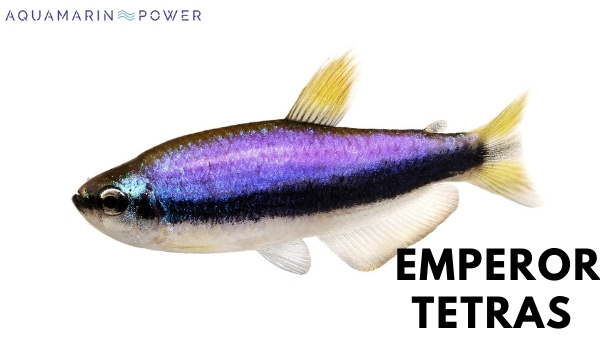
As mentioned earlier, Emperor Tetras notably lack the adipose fin that most tetras possess. This small detail, combined with their trident tail and eye color dimorphism, makes identification straightforward once you know what to look for. The purple iridescence on their flanks becomes especially pronounced when the fish are in breeding condition or when lighting hits them at certain angles.
Male vs Female Emperor Tetra
Telling male and female Emperor Tetras apart is relatively easy once you know the key differences. The table below summarizes the distinguishing characteristics.
| Feature | Male Emperor Tetra | Female Emperor Tetra |
|---|---|---|
| Eye color | Metallic blue | Metallic green or yellow-green |
| Body shape | Torpedo-shaped, streamlined | Rounder, fuller-bodied |
| Size | Larger, up to 3 inches | Smaller, up to 2 inches |
| Anal fin | Long, flowing, pointed | Shorter, less pronounced |
| Color intensity | More vibrant, especially during spawning | Subdued, paler coloration |
| Behavior | More active, displays dominance | Calmer, less territorial |
Males are generally the showier sex, with their elongated fins and brighter colors making them the preferred choice for aquarists looking to add visual impact to their tanks. However, keeping a mix of both sexes creates the most natural behavior and reduces aggression between males, as the presence of females gives them an outlet for their display behaviors.
Emperor Tetra Variants
While the classic Nematobrycon palmeri is the most commonly available Emperor Tetra, aquarists sometimes encounter references to other color variants. Understanding these helps avoid confusion when shopping for these fish.
The Blue Emperor Tetra and Purple Emperor Tetra, also known by the scientific name Inpaichthys kerri, are actually a different species altogether. These fish are sometimes labeled as Blue Emperor Tetras or Kerri Tetras in the trade. They share the same peaceful temperament and care requirements but display different coloration, with Inpaichthys kerri showing more pronounced blue tones throughout the body rather than the blue-purple mix of true Emperor Tetras.
Occasionally, you may see references to Black Emperor Tetras or Red Emperor Tetras. These are typically line-bred color variations or simply descriptive terms used by different suppliers. When purchasing, always verify the scientific name to ensure you are getting Nematobrycon palmeri if that is what you want for your tank.
Emperor Tetra Behavior and Temperament
Emperor Tetras are generally peaceful community fish that spend most of their time swimming in the middle and upper levels of the aquarium. Their schooling behavior is a joy to watch, as they move together in coordinated groups, often shimmering as they catch the light simultaneously.
However, their temperament comes with some important nuances that every aquarist should understand. Male Emperor Tetras establish a dominance hierarchy within their school. You will often see males displaying to each other, flaring their fins and intensifying their colors to assert their position. While this rarely escalates to serious fighting in adequately sized tanks with proper stocking numbers, it can become problematic if you keep too few males together or in cramped conditions.
One behavioral trait that generates discussion among keepers is fin nipping. Emperor Tetras can develop a tendency to nip the fins of long-finned tank mates, particularly if kept in small groups or when they feel insecure in their environment. This behavior is most commonly directed at fish like bettas, angelfish, or guppies with flowing fins. The best way to prevent fin nipping is to keep Emperor Tetras in proper schools of at least six individuals and provide plenty of visual barriers with plants and decor.
In a well-planted aquarium with adequate space and appropriate group size, Emperor Tetras show their best behavior. They become confident, active swimmers that rarely bother other inhabitants. They also become more likely to display their full color potential when they feel secure in their surroundings.
Emperor Tetra Breeding
Breeding Emperor Tetras is achievable for dedicated aquarists and can be a rewarding project. These fish are egg scatterers that show no parental care, so specific preparation is necessary to raise fry successfully.
To condition breeding pairs, feed them a diet rich in live and frozen foods for several weeks. You will know they are ready when the females appear noticeably plump with eggs and the males intensify their coloration and display more frequently. The best approach is to set up a dedicated breeding tank with soft water, a temperature between 80 and 82 degrees Fahrenheit, and a neutral pH around 7.0.

The breeding tank should include a spawning mop or fine-leaved plants like Java moss where the female can deposit her eggs. Some breeders use a mesh bottom that allows eggs to fall through to safety, preventing the parents from eating them. Emperor Tetras typically spawn in the morning hours, with the male chasing the female through the plants until she releases her eggs and he fertilizes them.
Remove the parents immediately after spawning to prevent egg predation. The eggs hatch in approximately 24 to 36 hours, and the fry become free-swimming after another 3 to 4 days. Initially, they require infusoria or commercially available liquid fry food. After a week, they can accept newly hatched brine shrimp and eventually progress to crushed flakes and micro pellets.
One breeding method worth mentioning involves water changes with cooler water. A water change of 25 to 30 percent using water a few degrees cooler than the tank can sometimes trigger spawning behavior, mimicking the rainy season conditions in their natural habitat. This natural approach is preferred over artificial hormone methods, which are unnecessary for this species and carry potential risks.
Emperor Tetra Care Guide
Providing proper Emperor Tetra care is straightforward and rewarding. These hardy fish tolerate a range of conditions but thrive when their specific needs are met. The following sections detail every aspect of creating the ideal environment for your Emperor Tetras.
Remember that while Emperor Tetras are forgiving of beginner mistakes, they display their best colors and behavior when kept in optimal conditions. Investing time in proper setup pays dividends in the form of healthier, more active, and more colorful fish.
Tank Size for Emperor Tetra
The minimum tank size for Emperor Tetras is 20 gallons. This recommendation reflects current consensus among experienced aquarists and aligns with the natural behavior of these active, schooling fish. While smaller tanks may keep them alive, they will not allow for the natural swimming patterns and social dynamics that make these fish so engaging to watch.
For a community tank that includes Emperor Tetras alongside other peaceful species, aim for 30 gallons or larger. This extra space reduces territorial behavior among males, provides adequate swimming room for the school, and allows for better water parameter stability. A larger tank also gives you more flexibility in aquascaping, letting you create the densely planted environment these fish prefer.
As a schooling species, Emperor Tetras should be kept in groups of at least six individuals. In a 20-gallon tank, this minimum school size works well. However, if space permits, larger groups of 8 to 10 fish create more impressive displays and distribute aggression more effectively among the males.
For those wondering about specific stocking numbers, a 30-gallon tank comfortably houses 8 to 10 Emperor Tetras along with appropriate tank mates and bottom-dwelling species like Corydoras catfish. Always prioritize horizontal swimming space over vertical height, as these fish prefer to cruise along the length of the tank.
Water Parameters for Emperor Tetra
Emperor Tetras originate from soft, slightly acidic waters, but they adapt well to typical community tank parameters. The key is stability rather than hitting exact numbers. Sudden changes in water chemistry cause more stress than keeping them at the edge of their preferred range consistently.
Maintain a water temperature between 73 and 81 degrees Fahrenheit. While they tolerate the lower end of this range, they are most active and colorful at temperatures around 76 to 78 degrees. Use a reliable heater and check it regularly to prevent temperature swings that can weaken their immune system.
The pH range should stay between 5.0 and 7.8, with the ideal zone being slightly acidic at 6.0 to 7.0. Water hardness should remain soft to medium, between 3 and 6 dKH. If your tap water is harder than this, consider mixing it with reverse osmosis water or rainwater during water changes to achieve more suitable parameters.
Regular water changes are essential for Emperor Tetra health. Perform weekly water changes of 25 to 30 percent, or every 10 days at minimum. This maintains water quality, removes accumulated waste, and replenishes minerals. Always treat tap water with a quality dechlorinator before adding it to the tank, as chlorine and chloramine are harmful to these sensitive fish.
Filtration for Emperor Tetra
A quality filter is essential for maintaining the clean, stable water conditions Emperor Tetras need. Choose a filter that provides both mechanical and biological filtration. Mechanical filtration removes particulate matter and debris, while biological filtration houses beneficial bacteria that process harmful ammonia and nitrite.
Emperor Tetras come from slow-moving forest streams and do not appreciate strong water flow. When selecting a filter, consider the flow rate carefully. Hang-on-back filters often provide adjustable flow, allowing you to reduce the output to a gentle stream. Sponge filters are an excellent choice for Emperor Tetra tanks, as they provide gentle filtration while also serving as a grazing surface for microorganisms that fry and small fish feed upon.
Position filter outputs to create gentle circulation rather than strong currents. If your filter creates too much flow, diffuse it by directing the output against the aquarium glass or adding a spray bar attachment. Areas of calm water are important for these fish to rest and display natural behaviors.
Several filter options work well for Emperor Tetra tanks. The Aqua Clear Power Filter series offers reliable performance with adjustable flow rates. The Fluval C series provides excellent biological filtration capacity. For smaller tanks, sponge filters powered by air pumps create ideal gentle conditions while being safe for fry if breeding occurs.
Water Flow and Current Requirements
Understanding Emperor Tetra preferences for water flow helps create a more natural and comfortable environment. In their native habitat, these fish inhabit slow-moving backwaters and side channels of Colombian rivers where the current is minimal. Replicating these conditions in captivity reduces stress and encourages natural behavior.
Strong currents cause Emperor Tetras to seek shelter and reduce their activity level. You will notice them hiding behind plants or decorations, or staying in corners where the flow is weakest. This behavior indicates they are struggling against the current and not displaying their natural mid-water swimming patterns.
To achieve the right flow level, select a filter rated for your tank size rather than one significantly oversized. Position filter returns to create gentle circulation patterns rather than direct jets of water. Adding spray bars or positioning outputs against the aquarium wall diffuses strong currents effectively.
When assessing your tank's flow, observe your fish during their most active periods. Healthy Emperor Tetras should swim freely throughout the middle and upper water column, not just in areas sheltered from the filter output. If you notice them consistently avoiding certain areas or appearing to struggle while swimming, the current is likely too strong.
Heater for Emperor Tetra
As tropical fish, Emperor Tetras require a stable water temperature maintained by a reliable aquarium heater. Temperature fluctuations stress these fish and make them susceptible to disease. Select a heater rated for your tank size with a proven thermostat for accurate temperature control.
The target temperature range is 73 to 81 degrees Fahrenheit, with the sweet spot being around 76 to 78 degrees. Position the heater near the filter outflow to ensure even heat distribution throughout the tank. Always use a separate thermometer to verify the heater's accuracy, as built-in thermostats can drift over time.
Several heater brands perform reliably for Emperor Tetra tanks. The Aqueon Pro series offers shatterproof construction and precise temperature control. The Fluval E Series includes digital displays and safety features like automatic shut-off when removed from water. The Eheim Jager series provides excellent reliability and accurate temperature settings.
When installing a new heater, allow it to acclimate to the tank water temperature for 15 to 20 minutes before plugging it in. This prevents thermal shock that can damage the heating element. Always unplug the heater during water changes if the water level will drop below the minimum fill line indicated on the heater body.
Lighting for Emperor Tetra Tank
Lighting choices significantly impact how Emperor Tetras appear in your aquarium. Their iridescent scales and metallic eye colors display best under subdued to moderate lighting that creates the dappled effect of sunlight filtering through forest canopy in their natural habitat.
While they tolerate standard aquarium lighting, Emperor Tetras show their best colors under slightly dimmer conditions. Intense bright lighting can wash out their appearance and cause them to seek shade among plants and decorations. LED lights with adjustable brightness or those featuring daylight and moonlight modes work particularly well.
Consider lighting duration as well. A photoperiod of 8 to 10 hours suits Emperor Tetras and supports healthy plant growth without encouraging excessive algae. Use a timer to maintain consistent lighting schedules, as erratic day-night cycles stress fish and disrupt their natural rhythms.
Popular lighting options include the Fluval Plant 3.0 for planted tanks, which offers customizable spectrum and intensity. The NICREW Classic LED provides an affordable option with adjustable brightness. The Current USA Satellite Freshwater LED includes weather effects and adjustable color temperatures that enhance the appearance of Emperor Tetras.
Aquarium Decor for Emperor Tetra
Creating the right environment for Emperor Tetras goes beyond basic decorations. These fish thrive in heavily planted tanks that replicate their natural habitat of slow-moving, vegetation-rich Colombian rivers. The right decor choices enhance their colors, reduce stress, and encourage natural behaviors.
Dark substrate forms the foundation of an ideal Emperor Tetra tank. Dark gravel or sand makes their colors pop visually and mimics the leaf-litter-covered riverbeds of their origin. Black gravel, dark brown aquasoil, or natural river sand all work well. Avoid bright white or neon substrates that create glare and make the fish appear washed out.
Plant selection should focus on species that provide cover while leaving open swimming areas. Java fern anchors easily to driftwood and rocks, creating mid-level cover that Emperor Tetras appreciate. Amazon sword plants offer tall background coverage and broad leaves that diffuse light. Water sprite works beautifully as either a floating plant or rooted specimen, creating dappled shade that these fish prefer.

Additional plant options include Cryptocoryne for foreground coverage, Anubias varieties attached to hardscape, and floating plants like Amazon frogbit or red root floaters to create natural shading. Driftwood and rocks provide additional structure and create territorial boundaries that help manage male aggression.
Leave the central area of the tank relatively open for swimming while planting the sides and back heavily. This creates the perfect balance of security and open space that brings out the best in Emperor Tetra behavior and appearance.
Other Tank Accessories for Emperor Tetra
Beyond the essentials of filtration, heating, and lighting, several accessories make maintaining an Emperor Tetra tank easier and more effective. Consider these additions to complete your setup.
An aquarium gravel cleaner or siphon is essential for regular maintenance. Choose one sized appropriately for your tank, with a nozzle that reaches into corners where debris accumulates. Python water change systems simplify the process for larger tanks by connecting directly to faucets.
Aquarium nets with fine mesh prevent damage to the delicate fins of Emperor Tetras during catching or moving. Keep multiple sizes on hand, with a larger net for general use and a smaller one for precise work with individual fish.
Water testing kits are indispensable for monitoring parameters. Liquid test kits provide more accurate results than test strips and allow you to measure ammonia, nitrite, nitrate, pH, and hardness. Regular testing, especially during the cycling phase and after water changes, ensures your parameters remain within acceptable ranges.
Cleaning the Tank
Regular maintenance keeps Emperor Tetras healthy and their environment stable. Establish a consistent cleaning routine that addresses water quality without disrupting the biological balance of the tank.
Perform partial water changes of 25 to 30 percent weekly or every 10 days at minimum. Use a gravel vacuum to remove accumulated waste from the substrate while siphoning water. This prevents the buildup of harmful compounds and maintains the water chemistry parameters Emperor Tetras prefer.
Clean filter media monthly by rinsing it in tank water removed during a water change. Never use tap water, as the chlorine will kill the beneficial bacteria housed in the filter. Replace mechanical filter pads when they become clogged or deteriorated, but preserve biological media to maintain the nitrogen cycle.
Wipe down the glass interior during water changes to remove algae buildup. A magnetic algae scraper makes this task easier without getting your hands wet. Clean the exterior glass and equipment as needed to maintain a clear view of your fish.
Common Possible Diseases in Emperor Tetra
Emperor Tetras are generally hardy fish, but they are susceptible to common aquarium diseases, particularly when stressed by poor water conditions or improper acclimation. Recognizing symptoms early allows for prompt treatment and better outcomes.
Ich (Ichthyophthirius multifilii) is one of the most common ailments affecting Emperor Tetras. This parasite appears as white spots resembling grains of salt scattered across the body and fins. Affected fish may rub against decorations, show rapid breathing, or clamp their fins. Ich often follows temperature fluctuations or stress from transport. Treatment requires raising the water temperature gradually to 86 degrees Fahrenheit and using appropriate medications.
Ichthyosporiasis is another disease to watch for. Caused by the fungus Ichthyosporidium, it produces white nodules on the skin, gills, and internal organs. Symptoms include white patches on the body, labored breathing, lethargy, and loss of appetite. This condition is difficult to treat and requires veterinary consultation for appropriate antifungal medication.
Fin rot appears as fraying, discoloration, or receding fin tissue, often starting at the edges of the fins. Bacterial fin rot usually follows fin nipping injuries or poor water quality. Infected fins may show red or black edges as tissue dies. Clean water and antibiotic treatment typically resolve bacterial fin rot, though severely damaged fins may not fully regenerate.
Gill flukes (Dactylogyrus and Gyrodactylus) are parasitic flatworms that attach to the gills and skin. Infected fish display rapid breathing, gasping at the surface, and swollen or pale gills. They may also rub against objects to relieve irritation. Treatment requires antiparasitic medications containing praziquantel or formalin.
Bacterial infections can manifest as red streaks, ulcers, or cloudy eyes. These often indicate poor water quality or secondary infections following another illness. Symptoms include lethargy, loss of appetite, and abnormal swimming patterns. Maintaining excellent water quality and using appropriate antibiotics treat most bacterial issues.
Treatment and Medications of Diseases for Emperor Tetras
Treating sick Emperor Tetras requires prompt action and the right medications. Always start by testing water parameters and performing a water change, as many disease symptoms resolve when water quality improves. Quarantine affected fish when possible to prevent disease spread and allow targeted treatment.
For Ich treatment, gradually raise the tank temperature to 86 degrees Fahrenheit over 48 hours while increasing aeration. Higher temperatures accelerate the parasite's life cycle while reducing dissolved oxygen. Combine heat treatment with copper-based medications or formalin-malachite green formulations following manufacturer instructions. Treatment typically continues for 10 to 14 days to ensure all life stages are eliminated.
Antibacterial medications treat fin rot and other bacterial infections. Look for products containing antibiotics effective against gram-negative bacteria common in aquarium fish, such as those with kanamycin, nitrofurazone, or sulfonamides. Follow the full treatment course even if symptoms improve to prevent recurrence. Remove activated carbon from filters during treatment, as it absorbs medications.
Antiparasitic medications address gill flukes and other external parasites. Praziquantel effectively treats flatworm parasites without harming the biological filter. For severe infestations, formalin-based treatments may be necessary, though these require careful dosing and good aeration. Always follow dosage instructions precisely, as overdosing harms fish and underdosing allows parasites to develop resistance.
Antifungal medications treat Ichthyosporiasis and secondary fungal infections. These often require prolonged treatment courses and may need veterinary consultation for systemic infections. Preventing fungal infections through good water quality and avoiding injuries is more effective than treating established infections.
Prevention remains the best approach. Maintain excellent water quality, quarantine new fish for at least two weeks before adding them to your main tank, and avoid sudden changes in temperature or chemistry. Healthy Emperor Tetras with good nutrition and low stress resist disease far better than compromised individuals.
Emperor Tetra Food and Diet
Emperor Tetras are omnivores with a diverse diet in their natural habitat, consuming small insects, crustaceans, plant matter, and algae. In captivity, providing this variety ensures optimal health, vibrant colors, and successful breeding.
A quality staple diet consists of high-quality flake foods or micro pellets formulated for tropical community fish. Choose products with quality protein sources listed among the first ingredients. Many commercial foods now include color-enhancing ingredients like astaxanthin that help bring out the blue and purple iridescence in Emperor Tetras.
Supplement dry foods with frozen and live options several times weekly. Brine shrimp, both adult and newly hatched, are eagerly accepted and provide excellent nutrition. Bloodworms offer high protein content but should be fed sparingly as a treat rather than a staple due to their low fiber content. Daphnia provides both nutrition and a natural laxative effect that helps prevent digestive issues. Tubifex worms stimulate natural hunting behavior, though they should be purchased from reliable sources to avoid contamination.
Do not overlook vegetable matter and plant-based foods. Blanched vegetables like zucchini, cucumber, or spinach provide necessary fiber and micronutrients. Spirulina-based flakes or pellets contribute vegetable matter to the diet. In planted tanks, Emperor Tetras naturally graze on algae and biofilm growing on leaves and decorations, supplementing their diet between feedings.
Feed small amounts two to three times daily, offering only what the fish can consume within two to three minutes. Overfeeding pollutes the water and causes obesity. A varied diet fed in appropriate portions supports the immune system, enhances coloration, and promotes the natural behaviors that make Emperor Tetras so engaging to observe.
Diet Foods to Avoid
While Emperor Tetras accept most standard aquarium foods, certain items should be avoided or limited to maintain their health. Understanding these restrictions helps prevent nutritional deficiencies and digestive problems.
Avoid overfeeding fatty foods like beef heart or excessive bloodworms, as these can cause fatty liver disease over time. Limit freeze-dried foods, as they expand in the fish's stomach and may cause blockages if fed dry. Always soak freeze-dried items in tank water before feeding.
Live foods collected from the wild carry disease risks. Avoid feeding wild-caught insects, worms, or larvae unless you are certain the collection site is free from pesticides and pollutants. Commercially produced live foods from reputable suppliers are safer alternatives.
Human food scraps, bread, and processed foods have no place in an aquarium diet. These items lack appropriate nutrition and can introduce harmful additives. Stick to foods specifically formulated for tropical fish or items known to be safe, such as blanched vegetables from your kitchen.
Suitable Tank Mates for Emperor Tetra
Emperor Tetras thrive in community tanks with other peaceful species that share their water parameter preferences. Selecting compatible tank mates creates a harmonious aquarium where all inhabitants display their best behaviors.
Small peaceful tetras make excellent companions. Neon Tetras and Green Neon Tetras share similar care requirements and create stunning visual displays when schooling together. Ember Tetras add warm orange coloration that contrasts beautifully with the blue-purple of Emperor Tetras. Flame Tetras, Bloodfin Tetras, and Congo Tetras also work well in larger community setups.
Rasboras, particularly Harlequin Rasboras and Glowlight Rasboras, share the peaceful nature and schooling behavior that complement Emperor Tetras. These mid-water swimmers occupy a similar tank region without causing territorial disputes.
Bottom-dwelling species like Corydoras catfish and small plecos make perfect tank mates. They inhabit different tank levels, reducing competition for space, while their peaceful nature aligns with Emperor Tetra temperament. Otocinclus catfish help control algae without disturbing other inhabitants.
Small peaceful livebearers such as Guppies, Mollies, and Platies can coexist successfully, though it is wise to avoid fancy long-finned varieties that might tempt fin-nipping. Endler's livebearers are particularly suitable due to their smaller size and active nature.
Small gouramis like Dwarf Gouramis, Honey Gouramis, and Sparkling Gouramis add interest to the upper tank levels without threatening Emperor Tetras. Avoid larger or more aggressive gourami species that might bully smaller tetras.
Invertebrates like Ghost Shrimp, Amano Shrimp, and Nerite Snails contribute to the cleanup crew while remaining safe from predation by appropriately sized Emperor Tetras. Cherry shrimp may become snacks for adult Emperor Tetras, so exercise caution when combining these species.
Fish to Avoid
Certain fish are incompatible with Emperor Tetras due to temperament, size, or environmental requirements. Keeping these species together leads to stress, injury, or death for the tetras.
Large aggressive cichlids top the list of incompatible fish. Oscars, Jack Dempseys, and Green Terror Cichlids will view Emperor Tetras as food. Even if they do not immediately eat them, the constant threat causes debilitating stress that shortens the tetras' lifespan.
Betta fish present a mixed picture. While some aquarists successfully keep them together in heavily planted tanks, the combination carries risks. Emperor Tetras may fin-nip bettas, and bettas may attack tetras. Only attempt this combination in large, well-planted tanks with plenty of visual barriers.
Fin nippers like Tiger Barbs, Serpae Tetras, and some Danio species should be avoided unless you have a very large tank where territories can be clearly established. These fish will target the flowing fins of male Emperor Tetras, causing stress and potential secondary infections.
Fast, highly active fish like Giant Danios or some Rainbowfish species may outcompete Emperor Tetras for food and create excessive water flow that stresses them. Slow, deliberate swimmers like Emperor Tetras struggle to thrive with tank mates that dominate feeding time.
Predatory fish of any kind are obviously unsuitable. Angelfish, despite being cichlids, sometimes work in large tanks with adult Emperor Tetras, but they may eat small tetras given the opportunity. Monitor any such combination carefully.
Advantages of Having Emperor Tetra in Your Tank
- Stunning visual appeal: The metallic blue-purple coloration and red stripes create a striking display, especially when the school moves together under aquarium lighting. Their colors rival much more expensive or delicate fish.
- Peaceful community temperament: Emperor Tetras rarely cause problems with other fish, making them ideal for community tanks with other peaceful species. They focus their attention on their own school rather than bothering tank mates.
- Active schooling behavior: Watching a properly sized school of Emperor Tetras swim in formation is genuinely mesmerizing. Their coordinated movements and simultaneous color flashing add life and movement to any aquarium.
- Hardy and forgiving: Emperor Tetras tolerate a range of water conditions and beginner mistakes better than many delicate tetra species. This resilience makes them excellent learning fish for new aquarists.
- Easy to breed: For those interested in fish breeding, Emperor Tetras present an achievable challenge without requiring extreme specialization or equipment. Their breeding behavior is fascinating to observe.
- Affordable and widely available: Emperor Tetras are reasonably priced at most pet stores and online retailers, making it easy to purchase the school size they need without breaking the bank.
Disadvantages of Having Emperor Tetra in Your Tank
While Emperor Tetras offer many benefits, honest assessment requires acknowledging some potential drawbacks. Understanding these helps you decide if they fit your specific situation.
- Minimum tank size requirements: The 20-gallon minimum tank size means they are not suitable for nano aquariums or small desktop tanks. This space requirement limits options for those with limited room.
- Schooling requirements: The need for at least six individuals increases the total bioload and cost compared to keeping solitary fish. You cannot keep just one or two Emperor Tetras ethically.
- Fin nipping tendencies: When kept in small groups or with inappropriate tank mates, Emperor Tetras may develop fin-nipping behavior. This limits their compatibility with long-finned fish and requires careful stocking planning.
- Male aggression: Dominance displays between males sometimes escalate beyond posturing, particularly in cramped conditions or with too many males. Managing this requires adequate space and proper male-to-female ratios.
- Not suitable for unheated tanks: As tropical fish requiring consistent warm temperatures, Emperor Tetras need aquarium heaters and cannot be kept in rooms that experience temperature swings or in unheated tanks.
Frequently Asked Questions
Are Emperor Tetras hard to keep?
No, Emperor Tetras are considered easy to care for and are suitable for beginner aquarists. They tolerate a range of water conditions, accept standard aquarium foods, and are generally hardy. The key requirements are maintaining stable water parameters, keeping them in proper schools of six or more, and providing at least a 20-gallon tank with gentle filtration.
How big do Emperor Tetras get?
Emperor Tetras typically grow to 2 inches in length, with males occasionally reaching up to 2.5 or 3 inches. Females usually stay smaller at around 2 inches. Their body is laterally compressed with flowing fins that make them appear larger when swimming.
How can you tell male from female Emperor Tetras?
The most reliable distinguishing feature is eye color. Males have metallic blue eyes, while females have metallic green or yellow-green eyes. Additionally, males are larger, more streamlined, and have longer flowing anal fins. Females are smaller, rounder-bodied, and display less intense coloration overall.
What are good tank mates for Emperor Tetras?
Good tank mates include other peaceful tetras like Neon Tetras and Ember Tetras, rasboras such as Harlequin Rasboras, small livebearers like Guppies and Platies, Corydoras catfish, small plecos, and peaceful shrimp like Amano Shrimp. Dwarf Gouramis also work well. Avoid large aggressive cichlids, fin nippers, and predatory fish.
Are Emperor Tetras easy to care for?
Yes, Emperor Tetras are among the easier tetra species to keep. They accept a wide variety of foods including flakes, pellets, frozen, and live foods. They adapt to standard community tank parameters and are forgiving of minor water quality fluctuations. Their main requirements are stable temperature, regular water changes, and appropriate tank size with peaceful tank mates.
How many Emperor Tetras are in a 30 gallon tank?
A 30-gallon tank comfortably houses 8 to 10 Emperor Tetras, which is an ideal school size for displaying their best behavior. This stocking level leaves room for additional community fish like Corydoras catfish or small rasboras, provided filtration and maintenance are adequate.
Are Emperor Tetra fin nippers?
Emperor Tetras can develop fin-nipping behavior, particularly when kept in small groups, with limited space, or when housed with long-finned fish like bettas or angelfish. Keeping them in proper schools of six or more and providing a well-planted tank with visual barriers significantly reduces this tendency. Avoid keeping them with slow, long-finned fish when possible.
Do Emperor Tetras like flow?
Emperor Tetras prefer gentle water flow and calm conditions. In their natural habitat of slow-moving Colombian rivers, they experience minimal current. Strong filter outputs cause stress and prevent them from displaying natural schooling behavior. Use adjustable filters, sponge filters, or diffuser attachments to create gentle circulation rather than strong currents.
Final Thoughts
Emperor Tetras represent one of the best values in the aquarium hobby for those seeking beauty, activity, and ease of care in one package. Their iridescent colors rival far more demanding species, while their hardy nature forgives the learning curve every new aquarist experiences. Whether you are building your first community tank or adding to a mature planted aquarium, these fish deliver consistent satisfaction.
Success with Emperor Tetras comes down to meeting their basic needs: a 20-gallon or larger tank, a school of at least six individuals, gentle water flow, regular maintenance, and compatible tank mates. Provide these elements, and you will be rewarded with years of enjoyment watching these fish display their full potential.
Conclusion
Emperor Tetra care is straightforward and rewarding for aquarists at any experience level. By following the guidance in this article, you can create a thriving environment where these beautiful fish display their best colors and behaviors. Remember that proper Emperor Tetra care involves understanding their specific needs, from the 20-gallon minimum tank size to their omnivorous diet and preference for gentle water flow.
With their metallic blue eyes, trident tails, and peaceful schooling nature, Emperor Tetras bring both visual appeal and active movement to any community aquarium. Take the time to set up their environment correctly, maintain stable water parameters, and choose appropriate tank mates, and these Colombian natives will thrive in your care for years to come.
Thanks for reading this complete Emperor Tetra care guide. We hope you enjoy keeping these remarkable fish in your aquarium!