The Mexican Tetra stands as one of the most fascinating specimens in the aquarium hobby, captivating enthusiasts with its unique dual forms and remarkable evolutionary adaptations. Whether you encounter the silvery surface-dwelling variety darting through clear waters or the ethereal pinkish-white cave form navigating in complete darkness, this species offers aquarists a living window into evolutionary biology. This comprehensive Mexican Tetra care guide covers everything from their scientific significance to practical husbandry requirements for 2026.
Scientifically known as Astyanax mexicanus (also called Astyanax jordani in older literature), the Mexican Tetra belongs to the Characidae family and has become invaluable to scientific research. Laboratories worldwide study these fish for their remarkable ability to regenerate eye tissue and their potential applications in understanding blindness and developing treatments for human vision disorders. This same biological uniqueness makes them extraordinary aquarium residents.
Native to the Nueces and Pecos Rivers in Texas and the Rio Grande basin in Mexico, Mexican Tetras have adapted to environments ranging from sunlit streams to pitch-black underground caves. Their hardy nature and fascinating behaviors make them suitable for both beginner aquarists and experienced hobbyists seeking something beyond ordinary community fish. This guide examines their care requirements, behavioral quirks, breeding habits, and the sensory adaptations that allow blind cave tetras to thrive without sight.
Yes, Mexican Tetras are easy to care for. These hardy fish tolerate a wide range of water conditions and accept most commercial foods, making them ideal for beginners. Their adaptability stems from evolving in variable environments, from Texas rivers to Mexican cave pools.
Table of Contents
- Species Summary
- Mexican Tetra Care Guide
- Scientific Research and Mexican Tetras
- Mexican Tetras Food & Diet
- Diet Foods To Avoid
- Tank Size
- Water Parameters
- Filtration
- Heating
- Plants
- Lighting
- Substrate
- Decorations
- Water Changes
- Testing The Water
- Mexican Tetra Common Possible Diseases
- Feeding Schedule
- Mexican Tetra Tank Mates
- Mexican Tetra Fish To Avoid
- How To Choose A Healthy Mexican Tetra
- Advantages Of Having Mexican Tetra In Your Tank
- Disadvantages Of Having Mexican Tetra In Your Tank
- Frequently Asked Questions
- Are Mexican tetras easy to care for?
- What mistakes do beginner fish owners make with Mexican Tetras?
- How to tell if a Mexican tetra is happy?
- What is the lifespan of a Mexican cave tetra?
- Are blind cave tetras hard to keep as pets?
- Can Mexican blind cavefish see?
- How big do blind cave tetras get?
- Do blind cave tetras need a heater?
- Conclusion
Species Summary
| Scientific name: | Astyanax mexicanus (also Astyanax jordani) |
| Common names: | Mexican Tetra, blind cave tetra, blind cavefish, Rio Grande tetra |
| Family: | Characidae |
| Order: | Characiformes |
| Class: | Actinopterygii |
| Color: | Silvery-gray (surface form) or pinkish-white/translucent (cave form) |
| Origin: | Mexico and Texas |
| Adult size: | 3 to 5 inches (7.5-12 cm) |
| Life expectancy: | 3 to 5 years |
| Habitat: | Rivers, streams, cave pools with slow-moving water |
| Behavior: | Peaceful, solitary explorers (not schooling fish) |
| Minimum tank size: | 20 gallons |
| Temperature range: | 68°-77°F (20-25°C) |
| pH range: | 6.0 to 8.0 |
| Water type: | Freshwater |
| Water hardness: | 4-30 dGH (soft to medium) |
| Activity Level: | Moderately active |
| Sociability: | Solitary (does not school) |
| Tankmates: | Peaceful community fish |
| Gender Differences: | Males larger with pointed anal fin; females rounder |
| Temperament: | Mostly peaceful with occasional fin-nipping |
| Care Level: | Easy to moderate |
| Compatibility: | Good with other peaceful fish |
| Breeding method: | Egg-scatterer |
| Diet: | Omnivore/carnivore |
| Feeding Frequency: | 2 to 3 times per day |
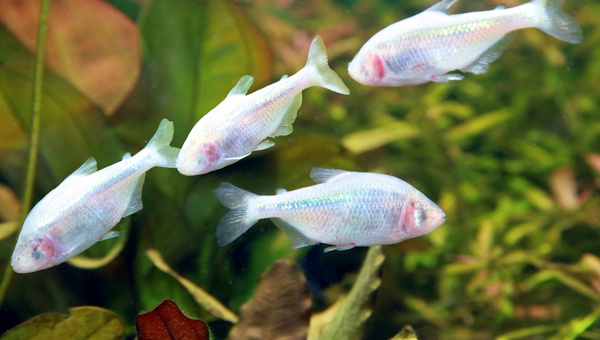
The Mexican Tetra exists in two distinct forms that represent one of evolution's most dramatic natural experiments. The surface form possesses normal eyes, silvery coloration, and pigmentation typical of river-dwelling fish. The cave form exhibits complete albinism, translucent pinkish-white skin, and degenerate eyes that appear as small dark spots beneath the skin. Remarkably, both forms belong to the same species and can interbreed, producing offspring with varying degrees of eye development.
The IUCN Red List classifies Mexican Tetras as "Least Concern" due to their stable wild populations. In the aquarium trade, surface-dwelling Mexican Tetras typically cost between $4-$10 each, while the rarer blind cave tetra form commands prices up to $50 per specimen. A group of six surface form tetras generally costs $10-$30 depending on size and retailer.
Surface Form vs Cave Form Comparison
Understanding the differences between surface and cave forms helps aquarists provide appropriate care. The surface form displays normal silver coloration with a lateral stripe and functional eyes adapted to bright conditions. These fish prefer standard aquarium lighting and show more pronounced schooling tendencies than their cave-dwelling counterparts.
The cave form presents a dramatically different appearance. Complete lack of pigmentation creates a pinkish-white translucent body where internal organs remain visible. Their eyes degenerate during development, leaving only dark spots where eyes once functioned. Cave forms prefer subdued lighting or complete darkness and show more solitary behaviors. Both forms share identical care requirements for water parameters and diet, though lighting preferences differ significantly.
Mexican Tetra Appearance
Mexican Tetras display remarkable physical diversity depending on their origin population. The surface form features a compressed, streamlined body typical of Characidae family members, with a silvery base color and subtle iridescence. A faint lateral line runs along the midline of the body, helping these fish detect water movements and pressure changes in their environment.

The cave form presents a ghostly appearance with translucent pinkish-white skin that reveals the underlying skeletal structure and organs. Their lack of pigmentation represents true albinism, not merely pale coloration. The most striking feature remains their eye sockets, which appear as small dark depressions rather than functional organs. Some specimens show barely visible eye remnants beneath the skin surface.
Sexual dimorphism remains subtle but observable in both forms. Males typically grow larger than females and develop more pointed anal fins. Females appear rounder in the body, particularly when carrying eggs. During breeding condition, males may intensify their coloration slightly, though this remains less pronounced than in many other tetra species.
Mexican Tetra Size & Growth Rate
Adult Mexican Tetras reach sizes between 3 to 5 inches (7.5-12 cm) in standard aquarium conditions. Males typically achieve the larger end of this range, while females remain slightly smaller. Growth rates prove relatively rapid compared to many aquarium fish, with specimens reaching full adult size within 6 to 12 months under optimal conditions.

Juveniles purchased at typical retail size of 1-2 inches grow quickly when provided adequate nutrition and water quality. Both surface and cave forms achieve similar sizes, though metabolic differences between populations may cause slight variations in growth rates. Regular feeding with high-quality protein sources supports optimal growth development.
Mexican Tetra Lifespan
Mexican Tetras live approximately 3 to 5 years in well-maintained aquarium conditions. Surface forms occasionally outlive cave forms, reaching the upper end of this range more consistently. Lifespan depends heavily on water quality, diet quality, and stress levels.
Providing stable water parameters, regular water changes, and varied nutrition helps Mexican Tetras achieve their full lifespan potential. Poor water conditions, inadequate filtration, or inappropriate tank mates can significantly shorten their lives. Cave forms may be particularly sensitive to bright lighting stress, which can impact longevity.
Mexican Tetra Behavior & Temperament
Mexican Tetras exhibit behavioral patterns that distinguish them dramatically from most other tetra species. Unlike Neon Tetras, Cardinal Tetras, or Ember Tetras that form tight schooling groups for protection, Mexican Tetras function as solitary explorers throughout their environment. They do not derive comfort or security from group living and will spread throughout the aquarium individually rather than clustering together.
This solitary tendency proves especially pronounced in cave-dwelling populations, which evolved in environments where food scarcity made group foraging disadvantageous. Each fish establishes its own patrol route through the tank, investigating caves, plants, and decorations independently. While they coexist peacefully with conspecifics, they rarely interact socially beyond breeding encounters.
Their activity patterns show interesting variations between forms. Surface-dwelling Mexican Tetras display more diurnal activity, roaming the tank during daylight hours. Cave forms become more active during dimly lit periods or when the aquarium receives subdued lighting. Both forms spend considerable time near the bottom of the tank, foraging through substrate and investigating potential food sources.
Peacefulness defines their general temperament, though some individual variability exists. Mexican Tetras rarely show aggression toward tank mates and coexist well with similarly sized peaceful species. However, stress can trigger fin-nipping behaviors, particularly toward fish with long, flowing fins. This nipping stems from sensory exploration rather than true aggression, as blind cave tetras use their mouths to investigate objects they cannot see.
Providing adequate hiding spaces reduces stress and minimizes unwanted behaviors. Caves, driftwood, and dense planting create territories where fish can retreat when feeling threatened. Without sufficient hiding places, Mexican Tetras may become skittish and hide in corners rather than displaying their natural exploratory behaviors.
Sensory Adaptations and the Lateral Line System
The blind cave tetra's ability to navigate without sight depends on an extraordinarily sensitive lateral line system. This sensory organ runs along both sides of the fish's body, detecting minute changes in water pressure, currents, and vibrations. Through this system, cave tetras effectively "feel" their surroundings in three dimensions, creating mental maps of their environment comparable to echolocation in bats.
The lateral line contains specialized neuromast cells that respond to water displacement. As objects move through water or the fish swims near solid surfaces, pressure waves bounce back and register on these sensors. Blind cave tetras can detect obstacles, locate food, and even recognize individual tank mates through lateral line signatures alone.
Beyond the lateral line, cave tetras possess enhanced olfactory senses and taste bud density. Their noses detect food odors at remarkable distances, guiding them to uneaten food before it decomposes. Increased taste bud populations along their heads and mouths allow them to "taste" objects before ingesting, compensating for their inability to visually inspect food.
Surface-dwelling Mexican Tetras share these sensory capabilities but rely less heavily on them. Their functional eyes provide primary navigation, with lateral line and chemical senses serving supplementary roles. This redundancy makes surface forms somewhat hardier in aquarium settings, as they possess multiple sensory backup systems.
Mexican Tetras Breeding
Mexican Tetras breed readily in captivity, making them excellent choices for aquarists interested in observing natural spawning behaviors. Their status as egg scatterers means they release eggs throughout the water column rather than depositing them on specific surfaces. This breeding strategy reflects their riverine origins where drifting eggs would distribute downstream.
Setting up a dedicated breeding tank improves success rates significantly. A 20-gallon tank with sponge filtration provides adequate space while protecting eggs and fry from mechanical damage. Sandy substrate or marble pebbles protect eggs from parental predation while maintaining water quality. Temperature should remain between 68°F-77°F with slightly softer water than the main tank.
Conditioning breeding pairs requires high-quality live and frozen foods. Bloodworms, brine shrimp, and daphnia provide the protein and lipids necessary for gamete development. After 1-2 weeks of conditioning, females visibly swell with eggs while males intensify their courting behaviors.
Spawning typically occurs during morning hours when aquarium lighting first illuminates the tank. Females release 100-1000 eggs depending on size and condition, scattering them among plants or across the substrate. Males fertilize the eggs immediately after release. Parents show no guarding behaviors and will consume eggs if not separated promptly.
Fry development presents unique characteristics in Mexican Tetras. Unlike adults, newborn fry possess functional eyes regardless of their parent's form. Cave form fry hatch with eyes that appear normal, allowing them to navigate their early environment visually. Over the following weeks, eye degeneration begins in cave form lineages. The eyes gradually shrink, lose transparency, and eventually sink beneath the skin surface.
This eye degeneration represents programmed cell death rather than simple atrophy. Research shows the genetic mechanisms that would maintain eye development remain present but are actively suppressed in cave populations. Cross-breeding surface and cave forms produces offspring with intermediate eye development, demonstrating the genetic compatibility between populations.
Fry hatch within 24-48 hours and absorb their yolk sacs over 3-5 days. Initial feeding requires infusoria or commercially available liquid fry food until they grow large enough to accept baby brine shrimp nauplii. Growth rates remain rapid, with fry reaching juvenile size within 4-6 weeks under optimal conditions.
Separating fry by eye development allows aquarists to selectively breed for either form. Line breeding from surface form parents maintains eye functionality, while cave form lineages consistently produce eyeless offspring. Hybrid crosses create fascinating intermediate specimens with partial vision.
Mexican Tetra Care Guide
Mexican Tetras rank among the hardier freshwater aquarium fish, tolerating variable conditions that would stress more delicate species. Their care level rates as easy to moderate, making them suitable for beginners while still offering interesting behaviors for experienced aquarists. Success depends on understanding their specific needs for water quality, space, and appropriate tank mates.
Wild Mexican Tetras inhabit slow-moving, highly oxygenated waters including spring-fed creeks, river pools, and underground cave systems. These environments feature rocky substrates, minimal aquatic vegetation, and consistent water chemistry. Recreating these conditions in captivity supports their natural behaviors and promotes long-term health.
Their adaptability to cave environments has produced remarkably efficient metabolisms. Mexican Tetras survive longer than most fish in low-oxygen conditions and can tolerate brief temperature fluctuations. However, maintaining stable parameters produces healthier, more colorful specimens with stronger immune systems.
Surface and cave forms share identical care requirements for water chemistry and nutrition. The primary difference lies in lighting preferences. Surface forms thrive under standard aquarium lighting, while cave forms prefer subdued illumination or dimly lit tanks. Providing appropriate lighting for your specific form reduces stress and encourages natural behaviors.
Scientific Research and Mexican Tetras
Beyond their value as aquarium specimens, Mexican Tetras serve as one of science's most important model organisms for studying eye development, blindness, and evolutionary adaptation. Research institutions worldwide maintain colonies of both surface and cave forms for studies spanning developmental biology, genetics, and regenerative medicine.
The unique ability of cave form fry to develop eyes before degeneration begins allows scientists to study the complete developmental process under controlled conditions. By comparing surface and cave populations, researchers identified specific genetic mutations responsible for eye loss. These findings have implications for understanding human congenital eye disorders.
Perhaps most remarkably, Mexican Tetras retain the genetic capacity to regenerate eye tissue throughout their lives. Laboratory experiments have successfully transplanted eye tissue between surface and cave forms, with recipient fish developing functional vision. This regenerative capacity makes them valuable models for developing treatments to restore sight in humans with degenerative eye conditions.
Aquarists keeping Mexican Tetras participate in preserving these important research animals. Maintaining genetically diverse populations in home aquariums provides backup populations should wild habitats face threats. Documenting breeding success, behavior patterns, and longevity in captive conditions contributes valuable data to the scientific community.
Mexican Tetras Food & Diet
Mexican Tetras function as opportunistic omnivores with strong carnivorous preferences. In their native habitats, they consume insect larvae, small crustaceans, zooplankton, and whatever organic matter drifts downstream. This varied diet supports their rapid growth and active metabolisms.
Commercial flake or pellet foods formulated for tropical fish provide adequate nutrition as dietary staples. High-quality brands containing fish meal, shrimp, and spirulina support coloration and growth. However, relying solely on dried foods misses opportunities to display their natural foraging behaviors and may result in less vibrant specimens.
Live and frozen foods should comprise 30-50% of their diet for optimal health. Brine shrimp, bloodworms, daphnia, and blackworms trigger enthusiastic feeding responses and provide essential fatty acids unavailable in processed foods. These foods also sink slowly, encouraging Mexican Tetras to hunt throughout the water column rather than remaining at the bottom.
Feeding blind cave tetras requires special considerations. Without vision, they rely on smell and water disturbance to locate food. Target feeding by placing food in consistent locations helps them establish feeding stations. Sinking pellets work better than floating foods, as the splash and scent draw cave tetras to the bottom where they naturally forage. Crushed flakes that disperse scent widely throughout the tank also prove effective.
Vegetable matter plays a smaller role in their diet than in many tetras, though they accept blanched vegetables as occasional supplements. Zucchini, spinach, and cucumber provide fiber and micronutrients that support digestive health. These should be offered weekly as treats rather than dietary staples.
Diet Foods To Avoid
Certain foods present health risks for Mexican Tetras and should be excluded from their diet entirely. Understanding these restrictions prevents common nutritional problems that shorten lifespans and reduce vitality.
These include:
- Foods high in fat: Fatty foods from mammalian sources lack appropriate lipid profiles for fish metabolism and can cause organ stress.
- Live feeder fish: Goldfish and rosy reds carry parasites and provide unbalanced nutrition. They also introduce disease risks to the aquarium.
- Spicy or seasoned foods: Human foods containing spices, oils, or seasonings cause digestive upset and potential toxicity.
- Uncooked vegetables: Raw vegetables prove difficult to digest and may contain pesticides or contaminants. Always blanch vegetables before offering.
Excluding these problematic foods while maintaining dietary variety ensures long-term health and reduces disease susceptibility.
Tank Size
The minimum tank size for Mexican Tetras is 20 gallons for a small group. However, a 30-gallon aquarium or larger provides significantly better conditions for these active fish. Their exploratory nature requires horizontal swimming space rather than vertical height, making standard 20-long or 29-gallon tanks preferable to tall column aquariums.
Additional volume becomes necessary when keeping Mexican Tetras in community setups. Each additional species or group of tank mates requires 10+ gallons beyond the base requirement. Overcrowding increases aggression, reduces water quality, and stresses fish into poor coloration and illness.
Water Parameters
Mexican Tetras tolerate wide water parameter ranges, reflecting their adaptation to variable environments. Temperatures between 68°F-77°F (20-25°C) suit them perfectly, with cave forms preferring the lower end of this range. pH values from 6.0-8.0 remain acceptable, though 6.5-7.5 represents optimal conditions.
Water hardness between 4-30 dGH accommodates both surface and cave forms. Soft water encourages breeding behaviors and supports egg development, while harder water maintains stable pH. Weekly water changes of 20-30% maintain water quality and replenish trace minerals.
The specific gravity should remain at 1.000 (freshwater) as these are strictly freshwater fish. High oxygen levels benefit them significantly, though their cave ancestry allows them to tolerate lower oxygen than most tetras during temporary power outages or equipment failures.
Filtration
Effective filtration maintains the clean water Mexican Tetras prefer without creating excessive current. Their native habitats feature slow-moving waters, making strong filtration outputs potentially stressful. Select filters rated for twice the tank volume, but adjust flow rates to moderate levels.
Hang-on-back filters, canister filters, and sponge filters all work well for Mexican Tetra aquariums. Sponge filters prove particularly valuable for breeding tanks, as they protect fry from mechanical damage while providing biological filtration. For blind cave tetras, sponge filters create gentle water currents that help them orient themselves through lateral line sensation.
Heating
Mexican Tetras require heating in most home environments to maintain temperatures above 68°F. Submersible aquarium heaters with automatic thermostats prevent temperature fluctuations that stress fish and suppress immune function.
Heaters should provide 3-5 watts per gallon for adequate heating capacity. Position heaters near filter outputs to distribute warmed water throughout the tank. Using two smaller heaters rather than one large unit provides backup heating should one fail.
Cave-dwelling Mexican Tetras may benefit from slightly cooler temperatures (68-72°F) that mimic their subterranean environments. Avoid temperatures exceeding 80°F, as heat stress reduces oxygen availability and accelerates metabolism beyond sustainable levels.
Plants
While Mexican Tetras do not require planted aquariums, live plants provide numerous benefits including water purification, hiding places, and reduced lighting intensity for cave forms. Select hardy plants that tolerate the moderate lighting and water parameters these fish prefer.
Floating plants prove particularly valuable for cave tetras, diffusing overhead lighting and creating dim zones where these photophobic fish feel secure. Hornwort, water sprite, and duckweed provide excellent coverage while tolerating varied conditions.
Rooted plants like Java fern, Anubias, and Cryptocoryne attach to rocks and driftwood rather than requiring planted substrate. These arrangements match the rocky, minimal-vegetation environments Mexican Tetras inhabit in nature.
Lighting
Lighting requirements differ dramatically between surface and cave forms. Surface-dwelling Mexican Tetras thrive under standard aquarium lighting of moderate intensity, approximately 1-2 watts per gallon of fluorescent light or equivalent LED output. A regular photoperiod of 10-12 hours supports their natural rhythms.
Cave forms require significantly subdued lighting and may become stressed under bright illumination. These photophobic fish prefer dimly lit tanks with floating plants creating shadowed areas. Some keepers maintain cave tetras in aquariums with no artificial lighting, relying on ambient room light for viewing.
Gradual lighting changes prevent startling fish. Sudden illumination of a dark room can trigger panic responses in blind cave tetras that sense the light change through their lateral line system. Dim lighting initially, then gradually increasing intensity allows comfortable acclimation.
Substrate
Sandy substrates benefit Mexican Tetras by allowing natural foraging behaviors. These fish enjoy sifting through sand searching for food particles, a behavior impossible on gravel surfaces. Fine gravel (2-3mm diameter) provides an acceptable alternative if sand proves impractical.
Dark substrates enhance the appearance of surface forms, making their silvery bodies more striking. Light-colored or white sand creates dramatic contrast with the pinkish-white cave forms, highlighting their translucent qualities. Avoid sharp-edged substrates that could damage delicate barbels used for sensory exploration.
Decorations
Caves and hiding places prove essential for Mexican Tetra wellbeing. Clay pots, PVC pipes, driftwood caves, and rock formations create territories where fish retreat when stressed. These decorations should be positioned to create multiple hiding spots throughout the tank rather than single dominant caves.
For blind cave tetras, decorations serve as navigational landmarks. Consistent placement allows fish to memorize tank layouts and navigate confidently. Frequent rearrangement disorients them and causes temporary stress until they remap their environment using lateral line sensation.
Water Changes
Regular water changes maintain the water quality Mexican Tetras need for long-term health. Weekly changes of 20-30% remove accumulated waste products and replenish essential minerals. For heavily stocked tanks or breeding setups, twice-weekly changes of 15-20% provide even better conditions.
Matching temperature and pH between new water and tank water prevents shock. Use water conditioners to neutralize chlorine and chloramines present in tap water. For cave tetras, avoid creating strong currents during water changes that might disorient them temporarily.
Testing The Water
Regular water testing identifies problems before they affect fish health. Test kits for ammonia, nitrite, nitrate, pH, and hardness provide essential data for maintaining optimal conditions. Weekly testing during tank establishment and monthly testing for mature tanks represents standard practice.
Ammonia and nitrite should remain at zero ppm at all times. Any detectable levels indicate insufficient biological filtration or overfeeding. Nitrate levels should stay below 40 ppm, with levels below 20 ppm being ideal. High nitrates suppress immune function and reduce color vibrancy.
Mexican Tetra Common Possible Diseases
Mexican Tetras demonstrate strong disease resistance under proper care conditions. Their hardy nature and efficient immune systems protect them from many common aquarium ailments. However, stress from poor water quality, inappropriate tank mates, or improper acclimation opens vulnerability to several diseases.

The most common health problems include:
Parasites
External parasites such as ich (Ichthyophthirius multifiliis) present white spots resembling salt grains across the body and fins. Gill flukes cause rapid breathing and gill inflammation. Internal parasites produce weight loss despite normal feeding. Quarantine new fish prevents parasite introduction.
Bacterial Infections
Fin rot appears as frayed or receding fins with reddened edges. Columnaris manifests as white or gray patches on the body and gills. These infections typically follow injuries or water quality problems. Antibiotic treatments prove effective when diagnosed early.
Fungal Infections
Cotton-like growths on wounds or fins indicate fungal infection. These secondary infections follow injuries or parasite damage. Antifungal medications and improved water quality resolve most cases.
Swim Bladder Disease
Affected fish lose buoyancy control, floating at the surface or sinking to the bottom. Overfeeding, constipation, or physical trauma commonly cause this condition. Fasting for 24-48 hours often resolves mild cases.
Signs That Your Mexican Tetra Is Sick
Early disease detection requires observing normal behavior to recognize deviations. Healthy Mexican Tetras maintain steady swimming patterns, clear eyes (in surface forms), and vibrant coloration.
Sickness indicators include:
- Loss of appetite or refusing food
- Lethargy or hiding continuously
- Visible weight loss or bloating
- Darkened or faded coloration
- Clamped fins held close to the body
- Frayed or damaged fins
- Labored breathing or gasping at surface
- Erratic swimming or loss of balance
Immediate intervention when these signs appear significantly improves treatment outcomes. Isolate sick fish to prevent disease spread and allow targeted treatment.
Feeding Schedule
Mexican Tetras thrive on two to three feedings daily of appropriately sized foods. Each feeding should last approximately two minutes, with all food consumed during that period. Uneaten food must be removed to prevent water quality degradation.
Morning and evening feedings of staple foods with midday treats of live or frozen foods provides balanced nutrition. Target feeding blind cave tetras at consistent locations helps them locate food efficiently. Sinking foods work better for cave forms than floating flakes.
Mexican Tetra Tank Mates
Mexican Tetras coexist peacefully with similarly sized, non-aggressive community fish. Their calm demeanor and moderate activity level make them compatible with most standard aquarium species. Avoid long-finned fish that might trigger nipping behaviors or aggressive species that bully them.
Compatible tank mates include:
- Cherry Barbs and other small barbs
- Dwarf Gouramis
- Neon Tetras and other tetra species
- Rasboras
- Danios
- Small loaches
- Small catfish
These peaceful species share similar water parameter requirements and will not harass Mexican Tetras. Groups of these companions create active, harmonious community displays.
Mexican Tetra Fish To Avoid
Certain fish species prove incompatible with Mexican Tetras due to aggression, size differences, or behavioral conflicts. Researching compatibility before purchasing prevents stress, injury, and losses.
Avoid these tank mates:
- Betta fish (aggressive toward similar-sized fish)
- Dwarf cichlids (territorial and aggressive)
- Fancy guppies with long fins (trigger nipping)
- Large mollies and platies (may bully smaller tetras)
- Swordtails with long fins
- Any large or predatory fish
These species either attack Mexican Tetras directly or possess physical features that trigger unwanted nipping behaviors. Selecting appropriate companions ensures peaceful community tanks.
How To Choose A Healthy Mexican Tetra
Selecting healthy specimens at purchase establishes the foundation for successful long-term care. Quality retailers maintain clean tanks with active, well-fed fish showing natural behaviors.
Look for fish with clear eyes (in surface forms) or clean eye sockets without cloudiness or swelling (in cave forms). Active swimming, steady buoyancy, and full body profiles indicate good health. Avoid fish with clamped fins, visible parasites, or those hiding in corners while tank mates explore.
Request to see fish fed before purchase. Healthy Mexican Tetras respond immediately to food with enthusiastic feeding. Reluctance to eat or inability to locate food suggests underlying health issues.
Advantages Of Having Mexican Tetra In Your Tank
Mexican Tetras offer several compelling benefits for aquarium enthusiasts. Their peaceful nature allows them to integrate seamlessly into community tanks without disrupting tank mate relationships. They never show genuine aggression toward other fish, making them reliable choices for mixed-species displays.
Their hardy constitution makes them forgiving of beginner mistakes while remaining interesting enough for experienced keepers. They tolerate water parameter fluctuations, brief temperature variations, and temporary filtration problems better than most tetra species.
Breeding Mexican Tetras proves straightforward for those interested in observing natural reproduction behaviors. Their egg-scattering approach and rapid fry development provide educational opportunities for understanding fish development. The unique eye degeneration in cave form fry offers a fascinating glimpse into developmental biology unavailable with other aquarium species.
The dual form availability allows aquarists to choose between normally pigmented surface forms or the ethereal blind cave varieties. Keeping both forms together creates striking visual contrast while demonstrating evolutionary adaptation in real-time.
Disadvantages Of Having Mexican Tetra In Your Tank
Mexican Tetras present a few challenges that potential keepers should consider. Their solitary nature means they will not form the tight schooling displays that many aquarists enjoy with other tetra species. Those seeking synchronized swimming groups may find Mexican Tetras disappointingly independent.
Fin-nipping tendencies, while not true aggression, can damage the appearance of long-finned tank mates. Careful companion selection becomes essential to prevent nipped fins on prized fish like bettas or fancy guppies.
Cave forms require specialized lighting considerations that may limit aquascaping options. Their photophobic nature demands subdued illumination, potentially restricting live plant choices or visual appreciation of tank decorations.
Frequently Asked Questions
Are Mexican tetras easy to care for?
Yes, Mexican Tetras are easy to care for and make excellent choices for beginner aquarists. Their hardy nature allows them to tolerate a wide range of water conditions, and they accept most commercial fish foods readily. They thrive in standard community tank setups with basic filtration and regular water changes. Both surface and cave forms require similar care, though cave tetras prefer subdued lighting.
What mistakes do beginner fish owners make with Mexican Tetras?
Common beginner mistakes include keeping Mexican Tetras with long-finned fish that trigger nipping behaviors, providing excessive lighting for cave forms, and expecting them to school like other tetra species. Beginners sometimes fail to provide adequate hiding places, causing stress and shy behavior. Overfeeding and irregular water changes also create health problems. Understanding their solitary nature and photophobic tendencies prevents most beginner errors.
How to tell if a Mexican tetra is happy?
Happy Mexican Tetras display active exploratory behavior throughout the tank, including the middle and bottom levels. They respond enthusiastically to feeding time and maintain steady swimming without erratic darting or hiding. Surface forms show clear eyes and vibrant silvery coloration, while cave forms navigate confidently without bumping into decorations. Healthy fish maintain good body weight and interact calmly with tank mates without excessive hiding.
What is the lifespan of a Mexican cave tetra?
Mexican cave tetras live 3 to 5 years in well-maintained aquarium conditions. Surface forms occasionally reach the upper end of this range more consistently than cave forms. Lifespan depends heavily on water quality, appropriate lighting for cave forms, and stress reduction through proper tank mate selection. Regular water changes, varied nutrition, and stable temperatures help achieve maximum longevity.
Are blind cave tetras hard to keep as pets?
Blind cave tetras are not hard to keep and share similar care requirements to surface forms. Their blindness actually makes them less skittish than sighted fish, as they cannot see movements outside the tank. They require subdued lighting or dimly lit aquariums and benefit from consistent tank layouts that they can memorize. Target feeding in consistent locations helps them locate food efficiently. Their hardiness and unique appearance make them rewarding pets for aquarists willing to accommodate their lighting preferences.
Can Mexican blind cavefish see?
No, adult Mexican blind cavefish cannot see. Cave-dwelling populations have evolved complete eye degeneration over thousands of generations in lightless environments. Their eyes appear as small dark spots or depressions beneath the skin surface. However, newborn cave form fry hatch with functional eyes that gradually degenerate over several weeks. This unique developmental process allows scientists to study eye development and degeneration in laboratory settings.
How big do blind cave tetras get?
Blind cave tetras reach 3 to 5 inches (7.5-12 cm) in length at maturity, identical to their surface-dwelling counterparts. Males typically grow slightly larger than females and develop more pointed anal fins. Growth occurs rapidly during the first 6-12 months, with fish reaching adult size within a year under optimal conditions. Proper nutrition and water quality support maximum growth potential.
Do blind cave tetras need a heater?
Blind cave tetras need heaters in most home environments to maintain temperatures between 68°F-77°F (20-25°C). They prefer temperatures at the lower end of this range compared to many tropical fish. Stable temperatures within this range support their immune function and metabolic health. Sudden temperature drops below 68°F cause stress and increased disease susceptibility. Aquarium heaters with thermostats provide the consistent warmth these tropical fish require.
Conclusion
The Mexican Tetra represents one of aquarium keeping's most rewarding species, bridging the gap between casual fishkeeping and scientific appreciation. Their dual forms offer aquarists the rare opportunity to observe evolutionary adaptation in real-time, from the silvery surface-dwelling populations to the ethereal blind cave varieties. For anyone seeking Mexican Tetra care information in 2026, this guide provides the foundation for successful long-term keeping.
Unlike schooling tetras that cluster together, Mexican Tetras function as solitary explorers, investigating every corner of their environment independently. This behavioral distinction makes them fascinating to observe as they establish personal territories and patrol routes throughout the tank. Their hardy constitution forgives beginner mistakes while their unique biology rewards dedicated study.
Whether you choose the surface form with its functional eyes and silvery sheen, or the cave form with its translucent pinkish body and extraordinary lateral line navigation, Mexican Tetras deliver an aquarium experience unlike any other. Their significance to scientific research on eye development and cave adaptation adds depth beyond mere ornamental value. For aquarists ready to venture beyond ordinary community fish, the Mexican Tetra opens a window into evolution, biology, and the remarkable adaptability of life itself.
If you have any questions about Mexican Tetra care or want to share your experiences keeping these fascinating fish, please leave a comment below.
Thank you for reading!