White Skirt Tetras are captivating freshwater fish that have earned their place as a staple in community aquariums worldwide. Known scientifically as Gymnocorymbus ternetzi, these elegant fish are actually a captive-bred leucistic variant of the Black Skirt Tetra, sporting pure white bodies and flowing translucent fins that create a striking contrast in planted tanks. Unlike their wild-type cousins that inhabit the Paraguay and Guapore Basins of South America, White Skirt Tetras do not occur naturally and are exclusively aquarium-created color morphs through selective breeding.
These peaceful schooling fish belong to the Characidae family and are prized by both beginner and experienced aquarists for their hardy nature and undemanding care requirements. Their albino coloration results from a genetic mutation that eliminates dark pigmentation while preserving the characteristic long-finned "skirt" appearance that gives them their common name. When kept in proper groups, they display active, engaging behaviors that bring life to any freshwater community setup.
This comprehensive guide covers everything you need to know about White Skirt Tetra care, from their origin and appearance to tank setup, diet, breeding, and health management. You will also learn important information about GloFish variants and the controversial practice of dyeing fish that every responsible aquarist should understand before making a purchase.
Table of Contents
- Key Takeaways
- Species Summary
- White Skirt Tetra Care Guide
- White Skirt Tetra Tank Size and Setup
- Water Parameters
- Filtration
- Heating
- Plants
- CO2 Systems
- Substrate
- Water Changes
- White Skirt Tetra Common Possible Diseases
- Signs That Your White Skirt Tetra Is Sick
- White Skirt Tetra Preventing Diseases
- White Skirt Tetra Treatment and Medications of Diseases
- White Skirt Tetra Food and Diet
- White Skirt Tetra Diet Foods to Avoid
- Feeding Schedule
- White Skirt Tetra Tank Mates
- White Skirt Tetra Fish to Avoid
- Related Tetra Species for Community Aquariums
- Advantages of Having White Skirt Tetra in Your Tank
- Disadvantages of Having White Skirt Tetra in Your Tank
- Frequently Asked Questions
- Conclusion
Key Takeaways
- Origin: White Skirt Tetras are captive-bred albino variants of Black Skirt Tetras originating from selective breeding programs, not found in the wild
- Scientific Name: Gymnocorymbus ternetzi (pronounced jim-no-CORE-ee-mbus ter-NET-zee)
- Tank Requirements: Minimum 15-20 gallons for a school, with temperatures between 68°-79°F and pH 6.0-7.5
- Group Size: Must be kept in groups of 6 or more to prevent fin nipping behavior and encourage natural schooling
- Lifespan: 3-7 years with proper care, though most live 3-5 years in home aquariums
- Ethical Warning: Avoid artificially dyed "strawberry" or "blueberry" tetras that undergo harmful coloring processes
- GloFish Variants: Genetically modified fluorescent versions are available and are different from dyed fish
Species Summary
| Scientific name: | Gymnocorymbus ternetzi |
| Other names: | White Skirt Tetra, Whitefin Tetra, Gold Skirt Tetra, Petticoat Tetra |
| Family: | Characidae (Characins) |
| Color: | White (leucistic/albino variant) |
| Origin: | Brazil, Paraguay, and Argentina (wild ancestors only) |
| Size: | 2-2.5 inches (5-6.5 cm) |
| Lifespan: | 3-7 years in captivity |
| Habitat: | Freshwater rivers and streams (South American basins) |
| Behavior: | Peaceful, social, schooling |
| Minimum tank size: | 15-20 gallons recommended |
| Temperature range: | 68°-79°Fahrenheit (20-26°C) |
| pH range: | 6.0-7.5 |
| Water hardness: | 5-20 dGH |
| Care level: | Easy (beginner-friendly) |
| Temperament: | Peaceful when properly grouped |
| Breeding Method: | Egg scatterer (egg-laying) |
| Breeding Difficulty: | Easy to Moderate |
| Diet: | Omnivorous |
| Feeding Frequency: | 2-3 times per day |
The White Skirt Tetra shares its scientific classification with the Black Skirt Tetra, also known as the Black Widow Tetra. This species was first described in the aquarium trade during the early 1900s when wild specimens were collected from the slow-moving waters of the Paraguay Basin and Guapore Basin. The white color variant was developed through selective breeding of specimens displaying reduced pigmentation, resulting in the beautiful albino forms available today.
These fish are completely domesticated and do not exist in natural wild populations. When maintaining them in home aquariums, you should replicate the warm, soft, slightly acidic conditions of their ancestors' Amazonian habitat. Their hardiness and adaptability make them excellent candidates for beginner aquarists, though they do require specific group dynamics to display their best behavior.

White Skirt Tetra Appearance
If you are searching for a fish that combines striking beauty with easy care, the White Skirt Tetra delivers on both counts. These leucistic fish display pure white bodies with delicate, transparent fins that catch and reflect aquarium lighting with an almost iridescent quality. Their appearance is the result of a genetic mutation that removes dark pigmentation while preserving the underlying white and silver coloration.
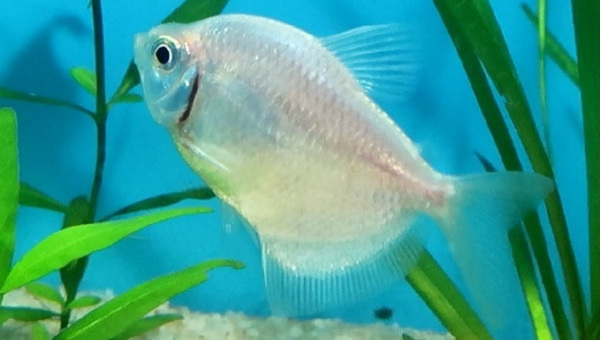
The body shape is distinctly oval and laterally compressed, giving them a sleek profile that allows for quick, darting movements through the water column. Their mouth is positioned ventrally (on the underside of the head) and equipped with tiny teeth suited for their omnivorous diet. The most distinctive feature is the long, flowing anal and dorsal fins that extend dramatically behind the body, creating the "skirt" effect that inspired their common name.
Gender Differences and Visual Identification
Identifying male and female White Skirt Tetras becomes easier once you know what visual cues to look for. Males typically display longer, more elaborate fins than females, with the skirt extensions flowing well beyond the body. Their coloration often appears brighter and more pronounced, particularly when viewed under aquarium lighting that highlights their translucent finnage.
Females are generally larger and stockier in body shape, particularly when carrying eggs. Their fins are noticeably shorter and less flowing than those of males. During breeding periods, females develop a visibly rounded abdomen as they fill with eggs, making gender identification straightforward for aquarists monitoring their fish for spawning behavior.
Artificially Dyed Fish: Strawberry and Blueberry Tetras
A critical issue in the aquarium trade involves artificially dyed White Skirt Tetras marketed as "strawberry tetras," "blueberry tetras," "cotton candy tetras," or other colorful names. These fish undergo invasive and often harmful coloring processes where dye is injected into their bodies or they are fed color-altering chemicals. This practice causes significant stress, compromises immune function, and typically results in premature death.
Responsible aquarists should never purchase dyed fish. The coloration is temporary and fades within weeks or months, returning the fish to its natural white appearance. More importantly, the dyeing process damages internal organs and leaves fish vulnerable to infections and diseases. When shopping for White Skirt Tetras, avoid any specimens displaying unnatural pink, blue, green, or purple coloration that appears painted on rather than integrated into the fin structure.
GloFish Variants
Unlike dyed fish, GloFish White Skirt Tetras are genetically modified variants that fluoresce under blue LED lighting. These fish contain genes from naturally fluorescent marine organisms, resulting in permanent coloration that does not fade and causes no harm to the fish. GloFish variants are available in electric green, sunburst orange, and cosmic blue colorations.
GloFish White Skirt Tetras require identical care to their traditional counterparts, sharing the same dietary needs, water parameters, and social requirements. The genetic modification is heritable, meaning offspring will also display fluorescence. These variants are popular among hobbyists who enjoy viewing their aquariums under actinic lighting, which makes the fish appear to glow.
White Skirt Tetra Size and Growth Rate
Adult White Skirt Tetras reach a standard length of 2 to 2.5 inches (5-6.5 cm), with males sometimes appearing slightly smaller due to their more slender body shape. Growth occurs rapidly during the first six months of life, with juveniles reaching approximately 1.5 inches within three to four months under optimal conditions.
Most specimens achieve their full adult size within 12 to 18 months. Factors influencing growth rate include water quality, diet quality, tank size, and group dynamics. Fish kept in undersized tanks or inadequate groups may experience stunted growth and never reach their full genetic potential. Providing a varied diet rich in protein and maintaining stable water parameters supports healthy, consistent development.
White Skirt Tetra Lifespan
With proper care and optimal conditions, White Skirt Tetras typically live 3 to 5 years in home aquariums. Some individuals have been reported to reach 7 years of age when maintained in pristine water conditions with excellent nutrition and low stress levels. The difference between average and maximum lifespan often reflects the quality of care provided throughout the fish's life.
Several factors significantly impact longevity. Poor water quality, inadequate filtration, and irregular maintenance routines shorten lifespan by creating chronic stress and compromising immune function. Conversely, maintaining stable water parameters, performing regular water changes, providing high-quality varied diets, and keeping fish in proper school sizes supports extended lifespans approaching the upper range of their potential.
White Skirt Tetra Breeding
White Skirt Tetras are egg scatterers that readily breed in home aquariums when provided appropriate conditions. The breeding process begins with conditioning adult fish on high-quality live and frozen foods for one to two weeks prior to spawning attempts. During this period, the distinction between genders becomes more apparent as females swell with eggs.
To encourage spawning, set up a separate breeding tank with soft, acidic water (pH 6.0-6.5) and temperatures at the upper range of their tolerance (78-79°F). Provide fine-leaved plants or a spawning mop where the female can deposit her adhesive eggs. Spawning typically occurs in the early morning hours, with the female releasing 500 to 1000 eggs that scatter among the vegetation.
Parents must be removed immediately after spawning, as White Skirt Tetras will consume their own eggs and fry given the opportunity. Eggs hatch within 24 to 36 hours, and the fry become free-swimming approximately three to four days later. Feed the fry infusoria or commercially prepared fry food for the first week, then transition to newly hatched brine shrimp as they grow. The fry are extremely small and require frequent feedings of appropriately sized foods.
White Skirt Tetra Behavior and Temperament
White Skirt Tetras are fundamentally peaceful, social fish that exhibit their best behavior when maintained in proper schools. Their natural inclination is to swim in coordinated groups, creating mesmerizing displays as they move together through the water column. However, their peaceful nature depends entirely on maintaining adequate group sizes.
When kept in groups smaller than six individuals, White Skirt Tetras frequently develop fin nipping tendencies. This behavior stems from stress and the lack of proper social hierarchy that schooling provides. Fin nipping typically targets slow-moving or long-finned tank mates such as bettas, angelfish, and fancy guppies. The solution is straightforward: maintain groups of six or more, and fin nipping behavior largely disappears as the fish establish proper social dynamics.
Within a properly sized school, a subtle pecking order develops with dominant individuals often claiming prime feeding positions. This hierarchy rarely involves aggression but may include brief chasing that resolves quickly without injury. White Skirt Tetras occupy the middle to upper water column and are active swimmers, providing constant movement that enhances the visual appeal of community aquariums.
White Skirt Tetra Care Guide
Maintaining healthy White Skirt Tetras requires understanding their environmental needs and providing consistent, attentive care. These hardy fish adapt well to standard community aquarium conditions, but their long-term health and color vibrancy depend on stable water parameters, appropriate tank mates, and regular maintenance routines. The following guidelines detail the specific requirements for creating an optimal environment where these fish can thrive.

The foundation of successful White Skirt Tetra care begins with recognizing that these fish, while adaptable, are still captive-bred descendants of wild fish with specific environmental preferences. Recreating aspects of their ancestral habitat, particularly regarding water chemistry and social structure, significantly improves their quality of life and reduces disease susceptibility.
White Skirt Tetra Tank Size and Setup
While some sources list 10 gallons as the minimum tank size, experienced aquarists recommend 15 to 20 gallons as the practical minimum for a school of White Skirt Tetras. These active swimmers need horizontal swimming space to display natural schooling behavior. Tanks measuring 24 inches or more in length provide the territory these fish need to establish proper social dynamics without constant territorial disputes.
Tank setup should prioritize open swimming space in the center with plants and decorations positioned along the back and sides. White Skirt Tetras appreciate areas of both open water and planted cover. Use driftwood, rocks, and caves to create hiding spots and break up sightlines, which helps reduce stress and provides security. Dark substrates enhance the visual contrast of their white bodies, making their coloration appear more vibrant.
Water Parameters
White Skirt Tetras thrive in water parameters that approximate their ancestors' natural habitat. Maintain temperatures between 68° and 79°Fahrenheit, with the ideal range falling between 72° and 76°F. pH should remain between 6.0 and 7.5, though they adapt well to neutral pH conditions common in most municipal water supplies. General hardness should fall within 5 to 20 dGH (degrees of general hardness).
Water quality management is essential for preventing common diseases. Ammonia and nitrite levels must remain at zero ppm at all times, as these compounds are toxic even at low concentrations. Nitrates should stay below 20 ppm through regular water changes and adequate plant growth. Sudden parameter fluctuations cause stress and disease susceptibility, so any adjustments should occur gradually over several days.
Filtration
Effective filtration maintains water quality between changes while providing the gentle water movement White Skirt Tetras prefer. A hang-on-back filter rated for your tank size provides adequate mechanical and biological filtration. Canister filters offer superior filtration capacity for larger aquariums housing multiple schools of fish. The filter outflow should create mild current without generating turbulent water that stresses these fish.
Air stones or sponge filters provide supplemental aeration that benefits both the fish and beneficial bacteria colonies. White Skirt Tetras evolved in well-oxygenated waters and appreciate gentle surface agitation that promotes gas exchange. Avoid filters with excessively strong outputs that create chaotic currents, as this forces fish to expend excess energy swimming against the flow.
Heating
Submersible aquarium heaters maintain stable temperatures within the preferred range. Select a heater rated for your tank size, typically 3-5 watts per gallon. Position the heater near filter outflows to distribute warmed water evenly throughout the aquarium. Always use a thermometer to verify temperatures, as heater thermostats can drift over time and cause dangerous temperature swings.
Temperature stability matters more than achieving a specific point within the acceptable range. Fluctuating temperatures stress fish and increase susceptibility to ich (white spot disease), a common parasitic infection. During water changes, ensure new water matches the aquarium temperature within 2-3 degrees to prevent thermal shock. In summer months, monitor for overheating, as temperatures above 82°F cause oxygen depletion and stress.
Plants
Live plants benefit White Skirt Tetra aquariums in multiple ways. Plants absorb nitrates, provide hiding spots, and create a more natural environment that reduces stress. Excellent plant choices include Cryptocoryne, Java fern, Anubias, and Vallisneria, all of which tolerate the moderate lighting these fish prefer. Floating plants such as Amazon frogbit or water lettuce diffuse overhead lighting and provide additional cover.
Arrange plants to create sheltered areas along the tank perimeter while leaving the central portion open for swimming. Dense planting along the back wall mimics the vegetated edges of their ancestral streams while preserving the open water column these fish utilize for schooling. Driftwood and rocks complement plant decor and provide additional surface area for beneficial biofilm growth.
CO2 Systems
Carbon dioxide supplementation is not required for White Skirt Tetra aquariums. These fish thrive in low-tech planted setups without CO2 injection. However, if you maintain a heavily planted tank with demanding plant species, CO2 supplementation supports vigorous plant growth that further improves water quality through nutrient absorption.
If using CO2, monitor injection rates carefully to prevent pH crashes or oxygen depletion. Dissolved CO2 acidifies water, potentially dropping pH below acceptable ranges. During CO2 injection periods, oxygen levels may fall, so ensure adequate surface agitation from filters or air stones maintains gas exchange. Most White Skirt Tetra keepers find that standard low-light plants thrive without supplemental CO2.
Substrate
Sandy substrates suit White Skirt Tetras better than coarse gravel. These fish occasionally browse the bottom for food particles, and fine gravel or sand prevents injury to their delicate barbels and mouthparts. Dark-colored substrates create visual contrast that makes their white bodies stand out strikingly. Aquarium sand or smooth fine gravel in the 1-2 mm range provides an ideal surface.
Avoid sharp or jagged substrates that could damage fins or skin. White Skirt Tetras sometimes rest on the bottom or explore the substrate while foraging, making smooth surfaces preferable. If using gravel, select rounded river pebbles rather than crushed stone with sharp edges. Substrate depth of 2-3 inches accommodates plant roots while remaining shallow enough for easy maintenance.
Water Changes
Regular partial water changes are essential for maintaining water quality and preventing disease. Change 25-30% of the aquarium water weekly, using a gravel vacuum to remove accumulated debris from the substrate. This routine removes nitrate buildup, replenishes trace minerals, and eliminates organic waste that fuels pathogen growth. Consistent water changes promote brighter coloration and more active behavior.
Always treat tap water with a quality dechlorinator before adding it to the aquarium. Chlorine and chloramine in municipal water supplies kill beneficial bacteria and damage fish gill tissue. Match the temperature and pH of new water to the aquarium water as closely as possible to prevent shock. During water changes, observe fish behavior for early signs of stress or disease.
White Skirt Tetra Common Possible Diseases
White Skirt Tetras are generally hardy fish, but they remain susceptible to common freshwater aquarium diseases, particularly when water quality declines or stress levels rise. Ich, also known as white spot disease, presents as tiny white dots resembling salt grains across the body and fins. This parasitic infection often strikes when temperatures drop suddenly or water quality deteriorates. Prompt treatment with elevated temperatures and ich medication prevents serious outbreaks.
Fin rot, caused by bacterial infections, appears as frayed or disintegrating fin edges that progress toward the body if untreated. This condition typically results from poor water quality, aggressive tank mates, or fin nipping within undersized schools. Velvet disease, another parasitic infection, coats fish in a gold or rust-colored dust and requires immediate treatment with copper-based medications. Bacterial infections such as columnaris manifest as white or gray patches on the skin and mouth area.
Internal parasites may cause wasting despite normal feeding, visible worms in feces, or bloating. Fungal infections appear as white cottony growths on fins, body, or mouth. Preventing these diseases proves far easier than treating them. Maintain stable water parameters, perform regular water changes, quarantine new fish, and feed high-quality varied diets to support strong immune systems.
Signs That Your White Skirt Tetra Is Sick
Recognizing illness early dramatically improves treatment success rates. Watch for these warning signs that indicate health problems requiring attention:
- Lethargy or decreased activity levels, particularly isolating from the school
- Loss of appetite or refusal to eat for more than 24 hours
- Visible white spots, patches, or abnormal growths on the body or fins
- Frayed, torn, or receding fins indicating fin rot or nipping damage
- Labored breathing or rapid gill movement suggesting gill parasites or poor water quality
- Erratic swimming behavior such as flashing against objects or swimming at the surface
- Clamped fins held tight against the body rather than relaxed and flowing
- Bloating, sunken belly, or abnormal body shape changes
- Discoloration, cloudiness, or bulging in the eyes
White Skirt Tetra Preventing Diseases
Disease prevention relies on maintaining optimal living conditions that support strong immune function. The foundation of prevention is excellent water quality maintained through regular partial water changes and adequate filtration. Test water parameters weekly using reliable test kits to catch problems before they affect fish health. Address any ammonia or nitrite readings immediately, as these compounds stress fish and compromise disease resistance.

Quarantine all new fish for two to three weeks before introducing them to your main aquarium. This isolation period allows observation for disease symptoms without risking your established population. Feed a varied diet including high-quality flake food, frozen options like bloodworms and brine shrimp, and occasional live foods to provide complete nutrition. Avoid overfeeding, which pollutes water and creates conditions where pathogens thrive. Maintaining proper school sizes reduces stress and aggression that predispose fish to illness.
White Skirt Tetra Treatment and Medications of Diseases
When disease strikes, prompt identification and treatment save fish lives. For ich (white spot disease), raise the aquarium temperature gradually to 86°F over 48 hours while adding ich-specific medication containing malachite green or copper. The elevated temperature accelerates the parasite's life cycle, exposing it to medication during its vulnerable free-swimming stage. Continue treatment for at least ten days after visible spots disappear to ensure complete elimination.
Bacterial infections including fin rot and columnaris respond to antibiotic treatments. Use broad-spectrum antibiotics such as erythromycin, tetracycline, or kanamycin according to package directions. Remove activated carbon from filters during treatment, as carbon absorbs medications and reduces their effectiveness. Serious infections may require medicated food rather than water-borne treatments, particularly for internal bacterial issues.
Parasitic infections other than ich, such as velvet disease or skin flukes, require anti-parasitic medications containing copper sulfate, formalin, or praziquantel. Fungal infections typically clear with antifungal medications containing malachite green or methylene blue. Always complete full treatment courses even if fish appear recovered, as stopping early allows surviving pathogens to rebound. Isolate sick fish in a hospital tank when possible to prevent medicating healthy fish unnecessarily and to provide targeted treatment.
White Skirt Tetra Food and Diet
White Skirt Tetras are opportunistic omnivores that thrive on diverse diets in aquarium settings. In their natural habitat, they consume small invertebrates, insect larvae, plant matter, and organic debris. Replicate this variety in captivity by offering high-quality flake or pellet foods as dietary staples, supplemented with frozen and live options that provide essential nutrients and stimulate natural foraging behavior.
Excellent food options include high-protein tropical flakes, freeze-dried or frozen bloodworms, brine shrimp, daphnia, and tubifex worms. Vegetable matter such as spirulina flakes or blanched vegetables (zucchini, cucumber, spinach) should comprise about 20-30% of their intake. Feed small amounts that fish consume within two to three minutes, two to three times daily.
White Skirt Tetra Diet Foods to Avoid
Certain foods harm White Skirt Tetras and should never enter their diet. Raw meat, beef heart, or poultry provide inappropriate protein sources that cause digestive distress and water pollution as they decompose. Large food items that fish cannot swallow whole pose choking hazards and should be broken into appropriate sizes.
Avoid over-reliance on single food types, as this creates nutritional deficiencies. Poor-quality flake foods containing excessive fillers provide minimal nutritional value and pollute water. Foods that have been stored improperly or past expiration dates may contain harmful molds or rancid fats. Remove uneaten food promptly after feeding sessions to prevent water quality degradation.
Feeding Schedule
Establish a consistent feeding schedule that provides nutrition without compromising water quality. Feed adult White Skirt Tetras two to three times daily, offering only what they can consume within two to three minutes per feeding. Morning and evening feedings work well for most aquarists, with an optional midday feeding on weekends when observation is possible.
Fasted days benefit fish by allowing digestive system rest and mimicking natural feeding patterns where food is not always abundant. Consider skipping one feeding per week or providing only vegetable matter on that day. This practice helps prevent obesity and associated health problems while maintaining the aquarium's water quality by reducing nutrient input.
White Skirt Tetra Tank Mates
Selecting appropriate tank mates ensures peaceful community dynamics. White Skirt Tetras coexist harmoniously with other peaceful, similarly-sized species that share their water parameter preferences. Ideal companions include active swimmers that occupy different tank levels, reducing competition for space while creating visually interesting multi-species displays.
Excellent tank mate options include Danios, Rasboras, and Corydoras catfish. Other tetra species such as Neon Tetras, Cardinal Tetras, Rummynose Tetras, Ember Tetras, Black Phantom Tetras, and Red Eye Tetras make compatible schooling companions. Small peaceful loaches such as Kuhli Loaches occupy bottom areas without conflict.
White Skirt Tetra Fish to Avoid
Certain species create problematic combinations with White Skirt Tetras. Large or aggressive fish view small tetras as food or target them for bullying. Angelfish and Cichlids of all types typically prey on or intimidate White Skirt Tetras. Even peaceful larger fish like Discus may accidentally consume small tetras.
Long-finned slow swimmers present particular compatibility challenges. Betta fish and fancy guppies with flowing fins often become targets for fin nipping, especially if your tetra school is smaller than the recommended six individuals. Large predatory fish such as Oscars, Arowanas, or large barbs pose obvious threats. Always research potential tank mates thoroughly before making additions to ensure size and temperament compatibility.
Related Tetra Species for Community Aquariums
If you enjoy keeping White Skirt Tetras, consider exploring other tetra species that share similar care requirements and peaceful temperaments. Many tetra varieties can be kept together in large community aquariums, creating stunning displays of color and activity. For a comprehensive overview of available options, check out our complete guide to types of tetra fish suitable for home aquariums.
Species like the Black Phantom Tetra offer similar size and temperament with striking black coloration that contrasts beautifully with white skirt varieties. Red Eye Tetras provide silvery bodies with distinctive red eye rings that add visual interest. For a larger, more colorful option, consider the Congo Tetra with its flowing rainbow-colored fins.
Advantages of Having White Skirt Tetra in Your Tank
White Skirt Tetras offer numerous benefits that make them valuable additions to freshwater aquariums. Their peaceful nature allows them to integrate seamlessly into community setups with other non-aggressive species. They contribute to tank cleanliness by consuming algae growth and eating leftover food particles that might otherwise foul water quality. Their active swimming behavior in the middle and upper water column adds constant movement that brings aquariums to life.
These hardy fish tolerate a wide range of water conditions, making them forgiving choices for beginners learning aquarium management. They are widely available and reasonably priced, making them accessible to aquarists on any budget. Their striking white coloration provides contrast against dark substrates, green plants, and colorful tank mates. With proper care, they live three to seven years, providing long-term enjoyment. Their egg scatterer breeding method offers fascinating opportunities for aquarists interested in fish reproduction.
Disadvantages of Having White Skirt Tetra in Your Tank
Despite their many advantages, White Skirt Tetras present some challenges that prospective keepers should consider. Their requirement for group living means you must maintain at least six individuals, which increases the total cost and requires larger aquariums than single-specimen fish. When kept in undersized groups, they develop problematic fin nipping behavior that damages tank mates and creates aquarium tension.
They require consistent water quality maintenance and become stressed when parameters fluctuate or maintenance lapses. Their active nature means they need open swimming space, limiting aquascaping options that rely on dense central decoration. They may outcompete slower or more timid fish for food during feeding times, requiring strategies to ensure all inhabitants receive adequate nutrition. Their sensitivity to poor water conditions means they fare poorly in neglected tanks or with inexperienced keepers who skip maintenance.
Frequently Asked Questions
How big do White Skirt Tetras get?
White Skirt Tetras typically reach 2 to 2.5 inches (5-6.5 cm) in length when fully grown. Males may appear slightly smaller due to their slender body shape compared to females. Growth is rapid during the first 6 months, with most fish reaching adult size within 12-18 months.
How many White Skirt Tetras should be kept together?
You should keep White Skirt Tetras in groups of 6 or more. They are schooling fish that display their best behavior in proper groups. When kept in smaller numbers, they often develop fin nipping tendencies and become stressed. Larger groups of 8-10 individuals display even more natural schooling behavior and reduced aggression.
Are White Skirt Tetras dyed or natural?
Natural White Skirt Tetras are albino/leucistic color variants of Black Skirt Tetras created through selective breeding. However, some stores sell artificially dyed fish marketed as strawberry, blueberry, or cotton candy tetras. These dyed fish undergo harmful coloring processes and should be avoided. GloFish variants are genetically modified and naturally fluorescent, which is different from harmful dyeing.
Are White Skirt Tetras good for beginners?
Yes, White Skirt Tetras are excellent beginner fish due to their hardy nature and adaptability to various water conditions. They tolerate a range of pH and temperature parameters and are not overly sensitive to minor water fluctuations. However, beginners must understand their schooling requirements and need for proper group size to prevent behavioral issues.
What fish can live with White Skirt Tetras?
White Skirt Tetras are compatible with other peaceful community fish of similar size. Good tank mates include Danios, Rasboras, Corydoras catfish, Neon Tetras, Cardinal Tetras, Rummynose Tetras, Black Phantom Tetras, Red Eye Tetras, and Kuhli Loaches. Avoid aggressive fish, large cichlids, angelfish, and long-finned fish like bettas that may be targets for fin nipping.
Conclusion
White Skirt Tetras remain one of the most rewarding species for freshwater aquarists seeking beautiful, active fish for community aquariums. As a captive-bred leucistic variant of the Black Skirt Tetra, these fish bring pure white elegance and graceful swimming behavior to planted tanks when kept in proper schools of six or more. Their hardy nature and adaptability make them suitable for beginners, while their distinctive appearance satisfies experienced hobbyists.
Success with White Skirt Tetras depends on understanding their fundamental requirements: adequate group size to prevent fin nipping, stable water parameters maintained through regular care, and compatible tank mates that share their peaceful temperament. By avoiding artificially dyed specimens and opting for healthy, naturally colored or GloFish variants, you support ethical aquarium practices while enjoying these stunning fish.
Whether you are setting up your first community aquarium or adding to an established collection, White Skirt Tetras offer years of enjoyment with proper care. For aquarists interested in exploring related species, our comprehensive guide to types of tetra fish provides detailed information on compatible alternatives. With lifespans reaching up to seven years, these charming fish will bring life and movement to your aquarium throughout 2026 and beyond.
Happy Fishkeeping!