Jack Dempsey fish (Rocio octofasciata) are Central American cichlids that have captivated aquarium hobbyists for generations with their bold personalities and stunning coloration. Named after the famous 1920s heavyweight boxing champion, these fish live up to their moniker with feisty temperaments and impressive presence that commands attention in any aquarium setup.
In 2026, the Jack Dempsey remains one of the most popular freshwater cichlids for intermediate aquarists seeking an interactive, long-lived pet. Native to the slow-moving waters of Mexico, Guatemala, Honduras, and Belize, these hardy fish adapt well to captive conditions when their basic needs are met. Whether you are drawn to their iridescent speckles, territorial behavior, or the challenge of breeding a mated pair, this guide covers everything you need for successful Jack Dempsey fish care.
This comprehensive Jack Dempsey fish care guide will walk you through tank requirements, water parameters, diet recommendations, compatible tank mates, breeding advice, and health management. By the end, you will understand exactly what these charismatic cichlids need to thrive for their full 8-15 year lifespan in your home aquarium.
Table of Contents
- Jack Dempsey Fish: Species Summary
- Jack Dempsey Fish: Food & Diet
- Jack Dempsey Fish: Care Guide
- Jack Dempsey Fish: Tank size
- Jack Dempsey Fish: Water Parameters
- Filtration
- Heating
- Lighting
- Co2 Systems
- Substrate
- Aquascaping
- Water Conditioners
- Decorations
- Jack Dempsey Fish: Other Tank Accessories
- Jack Dempsey Fish: Water Changes
- Jack Dempsey Fish: Cleaning The Tank
- Jack Dempsey Fish: Cleaning The Filter
- Jack Dempsey Fish: Testing The Water
- Jack Dempsey Fish: Common Possible Diseases
- Jack Dempsey Fish: Preventing Diseases
- Jack Dempsey Fish: Treatment & Medications
- Jack Dempsey Fish: Tank Mates
- Advantages Of Having Jack Dempsey Fish In Your Tank
- Disadvantages Of Having Jack Dempsey Fish In Your Tank
- Frequently Asked Questions
- Conclusion
Jack Dempsey Fish: Species Summary
| Scientific Name: | Rocio octofasciata (formerly Cichlasoma octofasciatum) |
| Common Name: | Jack Dempsey, Blue Dempsey |
| Family: | Cichlidae |
| Size: | 9-12 inches (23-30 cm) |
| Life expectancy: | 8-15 years with proper care |
| Habitat: | Central America (Mexico, Guatemala, Honduras, Belize) |
| Behavior: | Territorial, aggressive, solitary |
| Tank size: | 55 gallons minimum, 80+ gallons recommended |
| Water temperature: | 73° - 84° Fahrenheit (23° - 29° Celsius) |
| pH range: | 6.1 to 7.5 |
| Water hardness: | 9-15 dGH |
| Water type: | Freshwater |
| Activity level: | Moderate |
| Compatibility: | Similar size cichlids, dither fish |
| Temperament: | Aggressive |
| Care Level: | Intermediate |
| Breeding: | Substrate egg layer, forms mated pairs |
| Diet: | Carnivorous predator |
The Jack Dempsey fish represents the perfect combination of beauty and brawn in the aquarium world. These Central American cichlids display remarkable coloration that intensifies as they mature, transforming from drab juveniles into vibrant adults with metallic blue-green iridescent speckles covering their bodies. Their scientific name Rocio octofasciata references both the eight dark vertical bars they display as juveniles and their stunning reflective qualities.
Jack Dempsey Fish: Appearance
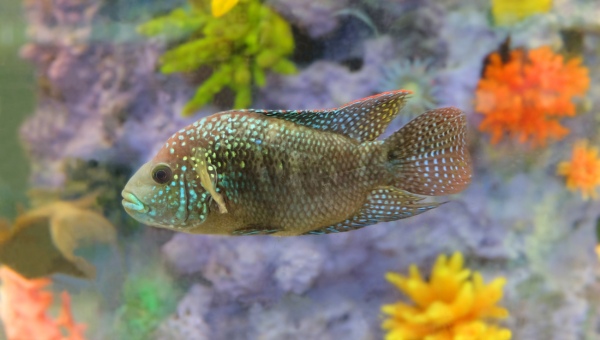
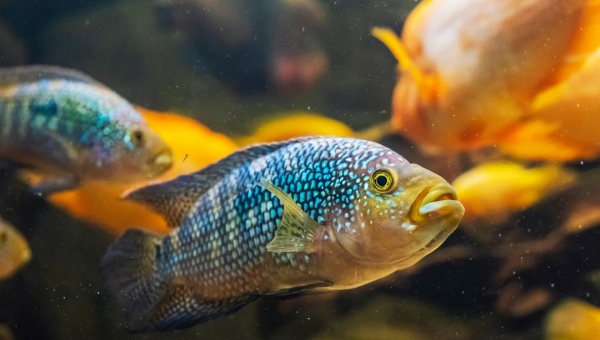
Jack Dempsey fish are visually striking with a stained-glass appearance that sets them apart from many other freshwater aquarium species. Their bodies display a base coloration ranging from brown or olive green to brilliant blue and purple hues, overlaid with shimmering iridescent speckles that catch the light beautifully. Eight dark vertical bars run along their flanks, though these fade as the fish matures and are more pronounced in younger specimens.
The fins of a Jack Dempsey feature bright yellow or orange coloration with distinctive black tips, creating a bold contrast against their darker body colors. Their bellies typically appear white or cream-colored, while some specimens develop a faint turquoise sheen along their scales. This color enhancement becomes more vivid when the fish are in breeding condition or when fed high-quality color-enhancing foods like Hikari Gold or New Life Spectrum pellets.

Several color variants exist within the species. The albino Jack Dempsey displays pink or orange bodies with pale yellow fins and characteristic red eyes. The pink Jack Dempsey variant shows similar coloration with subtle variations. However, the most celebrated variant is the Electric Blue Jack Dempsey, which we discuss in detail below. Each variant maintains the same robust body structure and territorial behavior that defines the species.
As Jack Dempseys age, their appearance undergoes significant transformation. Young fish begin life with prominent vertical bars and subdued coloration. As they grow, the stripes gradually fade and the body develops richer brown, greenish-yellow, or blue tones. The fins intensify their orange and yellow coloration, while the black tips become more defined. This color development process typically completes by the time the fish reaches sexual maturity around 12-18 months of age.
Jack Dempsey Fish: Size & Growth Rate
Jack Dempsey fish grow into substantial aquarium inhabitants that require appropriate space from the start. Adult specimens typically reach 9 to 12 inches (23-30 cm) in length, with males generally growing larger and more slender than females. Some exceptional individuals may approach 15 inches under optimal conditions with excellent nutrition and spacious housing.
The growth rate of Jack Dempsey cichlids is relatively rapid during their first two years of life. Juveniles can double their size multiple times within the first six months when provided with protein-rich foods and clean water conditions. By the end of their first year, well-cared-for Jack Dempseys often reach 6-8 inches, approaching their adult dimensions. Growth slows considerably after reaching sexual maturity, with fish typically achieving their maximum size within 24-30 months.
Water quality significantly impacts growth rates and final size. Fish kept in suboptimal conditions with poor water parameters or inadequate nutrition may experience stunted growth, potentially remaining several inches smaller than their genetic potential. Conversely, specimens maintained in large aquariums with pristine water conditions and varied high-protein diets often achieve the upper range of size expectations for the species.
Jack Dempsey Fish: Lifespan
With proper Jack Dempsey fish care, these robust cichlids can live 8 to 15 years in captivity, with some exceptional specimens reported to reach 19 years under optimal conditions. This impressive longevity makes them a significant long-term commitment for aquarium hobbyists, comparable to keeping a parrot or other long-lived pet.
Water quality remains the single most important factor influencing Jack Dempsey lifespan. Poor water conditions with elevated ammonia, nitrite, or nitrate levels create chronic stress that weakens the immune system and predisposes fish to diseases. Regular water changes of 25-30% weekly, combined with adequate filtration, help maintain the pristine conditions necessary for long-term health.
Nutrition also plays a critical role in longevity. A varied diet that includes high-quality cichlid pellets, frozen foods like blood worms and brine shrimp, and occasional live foods provides essential nutrients that support immune function and organ health. Overfeeding should be avoided, as obesity can shorten lifespan and cause secondary health problems. Maintaining stable water parameters within the recommended ranges prevents stress-related health issues that can significantly reduce life expectancy.
Jack Dempsey Fish: Behavior & Temperament
True to their boxing champion namesake, Jack Dempsey fish display territorial and aggressive behavior that aquarists must carefully manage. These cichlids establish and defend specific territories within the aquarium, particularly around cave decorations, driftwood, or other hiding places they claim as their own. When threatened or during breeding periods, they will confront tank mates with flared fins, darkened coloration, and physical attacks if necessary.
Despite their aggressive reputation, individual temperament varies considerably among Jack Dempseys. Some specimens remain relatively calm and tolerate community tank settings, while others become highly territorial loners that cannot coexist with any tank mates. Researching the specific temperament of individual fish before purchase helps ensure compatibility with your existing aquarium inhabitants.
An important concept for managing Jack Dempsey behavior is the use of dither fish. These are active, fast-swimming fish added to the aquarium to make skittish or aggressive cichlids feel more secure. When Jack Dempseys see other fish swimming confidently throughout the tank, they often become less reclusive and display more natural behaviors. Suitable dither fish for Jack Dempsey tanks include silver dollars, rainbowfish, and giant danios that are large and fast enough to avoid potential aggression.
Jack Dempseys are also notorious diggers that enjoy sifting through sand substrate searching for food. This natural behavior means they will rearrange decorations and excavate around cave structures. Providing a sand substrate at least 2 inches deep allows them to express this instinct without damaging their fins or stressing from the inability to perform natural behaviors. They may also become jumpers when startled, so secure tank lids are essential equipment for their aquarium setup.
Males typically display more aggression than females, particularly during breeding periods when they defend territories and court potential mates. For community setups, keeping more females than males helps distribute aggression and reduces the likelihood of serious injuries. A ratio of one male to two or three females often works well for aquarists attempting to maintain Jack Dempseys in group settings.
Jack Dempsey Fish: Male vs Female
Sexual dimorphism in Jack Dempsey fish becomes apparent as they approach sexual maturity around 12-18 months of age. Several physical characteristics help distinguish males from females, which is essential information for aquarists attempting to establish a mated pair for breeding purposes.
The most reliable indicator is size and body shape. Male Jack Dempseys grow significantly larger than females, often reaching 10-12 inches compared to the female's 8-10 inch maximum. Males also develop a more slender, elongated body profile, while females appear rounder and fuller-bodied, especially when carrying eggs.
Coloration and pattern differences provide additional clues. Males typically display more intense coloration with brighter iridescent speckles and more vivid fin coloration. The vertical bars that juvenile Jack Dempseys display often remain more visible in males throughout their lives, while females show these markings less distinctly. During breeding periods, males develop particularly brilliant coloration as they attempt to attract females.
Fin characteristics offer another distinguishing feature. Male Jack Dempseys develop longer, more pointed dorsal and anal fins, while female fins remain shorter and more rounded. The caudal (tail) fin of mature males also tends to be more elongated and flowing compared to the female's more standard fan shape.
Behavioral differences between sexes can help with identification. Males establish and defend territories more aggressively than females, spending considerable time patrolling their chosen area and displaying to attract mates. Females may show interest in potential nesting sites and respond to male displays with specific body language that signals receptiveness or disinterest in breeding.
Electric Blue Jack Dempsey
The Electric Blue Jack Dempsey represents one of the most controversial and sought-after variants in the aquarium trade. These stunning fish display an intense bright blue body coloration with contrasting yellow or orange fins that makes them immediately eye-catching. However, significant debate exists regarding their origin, genetics, and long-term viability as a strain.

Unlike the standard Jack Dempsey, Electric Blue variants generally display much more docile temperaments. Many aquarists report that EBJDs show reduced aggression compared to their normally-colored counterparts, making them potentially more suitable for community tank settings. However, this behavioral difference has led to speculation that the Electric Blue variant may not be a simple color mutation but potentially involves hybridization with other cichlid species.
The genetic background of Electric Blue Jack Dempseys remains a subject of ongoing debate among cichlid specialists. Unlike many color variants that breed true (producing offspring with the same coloration as parents), Electric Blues do not reliably produce Electric Blue offspring when bred together. Spawns often yield a mix of Electric Blue, normal coloration, and intermediate specimens, suggesting complex genetics or potential hybrid ancestry.
Practical concerns about Electric Blue Jack Dempsey fragility have emerged from hobbyist experiences. Many owners report that these fish are more delicate than standard Jack Dempseys, with higher mortality rates particularly during the juvenile stage. Some specimens fail to thrive despite apparently excellent care, suggesting potential inbreeding issues or genetic weaknesses associated with the blue coloration trait. Prospective owners should purchase from reputable breeders who prioritize fish health over color intensity.
The pricing of Electric Blue Jack Dempseys reflects their popularity and breeding challenges. These fish typically command significantly higher prices than standard Jack Dempseys, often costing three to five times as much per specimen. Buyers should be prepared for this premium and ensure they source fish from established breeders with healthy stock rather than purchasing inexpensive specimens that may carry hidden health problems.
Care requirements for Electric Blue Jack Dempseys mirror those of standard Jack Dempseys, though some keepers recommend slightly more pristine water conditions. The same 55-gallon minimum tank size, 73-84°F temperature range, and carnivorous diet apply to both variants. However, the reduced aggression of many Electric Blues means they may integrate more successfully into carefully planned community tanks with appropriate tank mates of similar size.
Jack Dempsey Fish: Breeding Advice
Breeding Jack Dempsey fish offers a rewarding experience for aquarists prepared to handle the challenges these cichlids present. Jack Dempseys form strong mated pairs that work cooperatively to raise fry, making them excellent parents once the breeding process begins. However, reaching that point requires careful preparation and attention to specific environmental triggers.
Essential breeding requirements include:
- Tank Size: A dedicated breeding tank of at least 80 gallons provides sufficient space for territorial establishment and fry rearing. Smaller tanks increase aggression problems between the pair.
- Water Temperature: Raising the temperature to 82°F (28°C) stimulates breeding behavior and supports egg development.
- pH Level: Maintaining pH between 6.5 and 7.5 creates optimal conditions for both spawning and fry survival.
- Nutrition: High-protein foods including live or frozen options condition the fish for breeding and support egg production in females.
- Spawning Sites: Flat rocks, driftwood surfaces, or even aquarium glass provide substrate for egg deposition. Jack Dempseys are substrate egg layers, attaching hundreds of eggs to chosen surfaces.
- Gender Ratios: Keeping more females than males in conditioning tanks reduces aggression during the pairing process. A ratio of two or three females per male allows natural pair formation.
The breeding process begins when a compatible male and female establish a mated pair bond. The male selects and cleans a spawning site, then displays to attract the female. If receptive, the female deposits rows of eggs while the male follows to fertilize them. A single spawn may produce 500-800 eggs, with larger females capable of producing even more.
Both parents participate in guarding the eggs and subsequent fry. They fan the eggs with their fins to prevent fungus and remove any non-viable eggs. Once the eggs hatch after 3-4 days, the parents move the wrigglers to pre-dug pits in the substrate. After approximately one week, the fry become free-swimming and begin accepting baby brine shrimp and finely crushed cichlid pellets.
A significant challenge of breeding Jack Dempseys is managing the sheer number of fry produced. A successful spawn can yield several hundred surviving juveniles, requiring substantial grow-out space and food resources. Many aquarists choose to leave fry with parents for 2-3 weeks before separating them, while others remove fry earlier to dedicated rearing tanks to avoid overpopulation issues in the main aquarium.
Jack Dempsey Fish: Food & Diet
Jack Dempsey fish are carnivorous predators with high protein requirements that must be met through appropriate diet planning. In their natural habitat across Central America, these cichlids hunt a variety of live prey including insects, small fish, worms, and crustaceans. Replicating this diverse protein intake in captivity ensures optimal health, coloration, and growth rates.
Wild diet components include:
- Insects: Dragonflies, mayflies, caddisflies, and terrestrial insects that fall into the water
- Small fish: Minnows, shiners, darters, and juvenile fish of various species
- Worms: Earthworms, leeches, and aquatic worm species
- Crustaceans: Crabs, shrimp, crayfish, and other aquatic invertebrates
- Other Jack Dempsey fish: Opportunistic cannibalism of smaller conspecifics
In the home aquarium, Jack Dempseys thrive on a combination of prepared foods and fresh or frozen options. High-quality cichlid pellets form an excellent dietary base, with brands like Hikari Gold and New Life Spectrum providing balanced nutrition specifically formulated for carnivorous cichlids. These pellets should contain at least 35-40% protein content to meet metabolic needs.
Recommended live and frozen foods include:
- Brine shrimp: Both live and frozen varieties provide excellent protein and can be fed regularly to adults or as a staple for growing juveniles
- Blood worms: Nutrient-rich and readily accepted, these make an excellent treat food offered 2-3 times weekly
- Mysis shrimp: These larger shrimp suit adult Jack Dempseys and provide variety from smaller brine shrimp
- Krill: Rich in astaxanthin, krill helps enhance the natural coloration of Jack Dempseys
- Earthworms: Chopped to appropriate sizes, these provide natural nutrition that fish readily accept
- Feeder fish: Occasional small goldfish, minnows, or guppies stimulate natural hunting behavior (always quarantine new feeders to prevent disease introduction)
Jack Dempsey Fish: Diet Foods To Avoid
While Jack Dempseys accept a wide variety of foods, certain items should be avoided to prevent health problems. Low-quality processed foods lack essential nutrients and may contain fillers that offer little nutritional value. Avoid generic flakes and low-grade pellets that list grains or plant matter as primary ingredients rather than fish meal or other protein sources.
Specific foods to limit or avoid:
- Basic flakes: Most flake foods lack sufficient protein density for carnivorous cichlids and dissolve quickly, fouling water quality
- Low-quality pellets: Generic pellets with plant-based fillers provide inadequate nutrition compared to species-appropriate cichlid pellets
- Tubifex worms: These are extremely high in fat and can lead to obesity and fatty liver disease if fed regularly
- Large quantities of mammalian meat: Beef heart and similar foods lack appropriate nutritional profiles for fish and can cause digestive issues
- Unquarantined live foods: Feeder fish or live foods from questionable sources may introduce parasites and diseases
By focusing on high-quality prepared foods supplemented with nutritious frozen options, you provide the balanced diet Jack Dempseys need for long-term health and brilliant coloration.
Jack Dempsey Fish: Feeding Schedule
Establishing an appropriate feeding schedule ensures Jack Dempsey fish receive adequate nutrition without the risks of overfeeding. Adult Jack Dempseys thrive on one substantial feeding per day, though some aquarists prefer splitting this into two smaller meals. Juveniles require more frequent feeding to support their rapid growth rates.
Recommended feeding schedule by age:
- Juveniles (under 3 inches): Feed 2-3 times daily with small portions they can consume within 2-3 minutes
- Young adults (3-6 inches): Feed twice daily with moderate portions
- Adults (over 6 inches): Feed once daily with a portion they can finish within 3-5 minutes, or split into two smaller feedings
- Breeding pairs: Increase to 2-3 feedings daily with high-protein foods to support egg production and recovery
Vary the types of food offered throughout the week to ensure nutritional diversity. A sample weekly rotation might include cichlid pellets as the staple food, supplemented with frozen blood worms twice weekly, brine shrimp twice weekly, and occasional live or fresh foods for variety. Always remove uneaten food within 10 minutes to maintain water quality.
Jack Dempsey Fish: Care Guide
Successful Jack Dempsey fish care requires understanding and meeting their specific environmental needs. While these cichlids are hardy and forgiving of minor mistakes, long-term health and longevity depend on consistent maintenance of appropriate water conditions, tank setup, and equipment. This section covers the essential elements of creating a thriving environment for your Jack Dempsey.
The foundation of good Jack Dempsey care lies in tank size and water quality management. These are active, substantial fish that produce significant waste, making both space and filtration critical considerations. Beginners to cichlid keeping should recognize that Jack Dempseys represent an intermediate care level not because they are delicate, but because their aggressive nature and size create management challenges.
Jack Dempsey Fish: Tank size
Minimum tank size for a single adult Jack Dempsey is 55 gallons (208 liters), though 75-80 gallons provides significantly better long-term housing. These dimensions allow sufficient swimming space while accommodating the territories Jack Dempseys establish. For community setups with tank mates or mated pairs, 100-125 gallons becomes necessary to reduce aggression through space provision.
Tank dimensions matter as much as total volume. Jack Dempseys need horizontal swimming space more than vertical height, making longer tanks preferable to tall ones. A 75-gallon tank measuring 48 inches long provides better usable space than a taller 55-gallon tank with the same footprint. Prioritize length and width over height when selecting aquariums for these fish.
When keeping multiple Jack Dempseys or mixing with other cichlids, provide abundant visual barriers using rocks, driftwood, and plants (or plant-safe artificial decorations). These breaks in sightlines help reduce aggression by preventing fish from seeing each other constantly. Each fish should have the opportunity to establish a territory with defined boundaries that other fish respect.
Jack Dempsey Fish: Water Parameters
Maintaining stable water parameters within acceptable ranges ensures Jack Dempsey health and reduces stress-related disease susceptibility. These fish tolerate a reasonably wide range of conditions but show optimal health and coloration when parameters remain consistent and within ideal ranges.
| Parameter | Ideal Range | Acceptable Range | Notes |
|---|---|---|---|
| Temperature | 75-80°F (24-27°C) | 73-84°F (23-29°C) | Stable temperature more important than exact value |
| pH | 6.8-7.2 | 6.1-7.5 | Slight acidity to neutral preferred |
| Hardness (dGH) | 9-15 dGH | 5-20 dGH | Moderately hard water ideal |
| Ammonia | 0 ppm | 0 ppm | Must be zero at all times |
| Nitrite | 0 ppm | 0 ppm | Must be zero at all times |
| Nitrate | < 20 ppm | < 40 ppm | Regular water changes keep low |
Water changes form a critical component of Jack Dempsey care due to their substantial waste production. Perform 25-30% water changes weekly to maintain low nitrate levels and replenish trace minerals. In heavily stocked tanks or during breeding when feeding increases, 50% water changes twice weekly may be necessary to maintain pristine conditions.
Always use a quality water conditioner when performing water changes to remove chlorine and chloramine from tap water. Jack Dempseys are sensitive to sudden parameter shifts, so match replacement water temperature to tank temperature and adjust pH gradually if necessary. Drip acclimation is recommended when introducing new fish to minimize shock from parameter differences.
Filtration
Effective filtration is non-negotiable for Jack Dempsey tanks due to the significant bioload these fish generate. As large, active predators with hearty appetites, they produce substantial waste that quickly degrades water quality without adequate filtration. A conservative rule suggests selecting filtration rated for at least twice the actual tank volume.
Recommended filtration options:
- Canister filters: The gold standard for cichlid tanks, canister filters offer massive biological and mechanical filtration capacity suitable for tanks up to 350 gallons. Multiple media stages allow customized filtration tailored to your specific needs.
- Hang-on-back filters: Quality HOB filters work well for tanks up to 75 gallons as supplemental or primary filtration. Choose models rated for at least double your tank capacity.
- Sponge filters: Useful as supplemental biological filtration and fry protection in breeding tanks, though insufficient as primary filtration for adult Jack Dempseys.
- Power filters: Available in various sizes for smaller setups, though generally less effective than canister options for heavily stocked cichlid aquariums.
Regular filter maintenance ensures continued performance. Rinse mechanical media in discarded tank water during water changes to preserve beneficial bacteria while removing debris. Replace chemical media like activated carbon monthly, and clean intake strainers weekly to prevent flow reduction.
Heating
As tropical fish native to Central America, Jack Dempseys require stable warm temperatures that heaters must maintain year-round. Room temperature fluctuations, particularly in winter, make reliable heating equipment essential rather than optional.
Heating recommendations:
- Submersible heaters: Efficient and reliable, available in wattages from 50W to 500W to suit various tank sizes. Select 3-5 watts per gallon of tank capacity.
- External inline heaters: Mounted on canister filter return lines, these maintain tank aesthetics while providing heating without in-tank equipment.
- Multiple heaters for large tanks: Consider two smaller heaters placed at opposite ends of tanks over 75 gallons to ensure even heat distribution and provide backup if one fails.
Monitor heater function regularly using a separate thermometer. Heater failures can cause rapid temperature swings that stress or kill fish. Check that the set temperature matches the actual tank temperature weekly, and inspect heaters during water changes for damage or calcium buildup.
Lighting
Jack Dempseys benefit from moderate lighting that highlights their coloration without creating excessive algae problems. In nature, they inhabit waters with varying light penetration, making them adaptable to different lighting intensities in captivity.
Lighting considerations:
- LED aquarium lights: Modern LED fixtures offer adjustable intensity and spectrum, typically requiring 8-10 hours daily operation to support fish coloration and any live plants
- Natural light considerations: While brief natural sunlight can enhance coloration, avoid placing tanks where direct sunlight hits for extended periods, as this causes problematic algae blooms and temperature fluctuations
- Lighting schedule: Use timers to maintain consistent day/night cycles of 8-10 hours light, 14-16 hours darkness. Sudden changes in lighting can startle fish and trigger jumping behavior
Co2 Systems
CO2 injection systems are generally unnecessary for Jack Dempsey aquariums. These fish are natural diggers that uproot plants, and their carnivorous waste produces adequate nitrogen compounds for most aquatic vegetation. CO2 supplementation becomes relevant only if maintaining heavily planted tanks with Jack Dempsey tank mates, and even then requires careful management given the fish's tendency to disturb substrate.
If you choose to use CO2 for aesthetic planted sections, select cichlid-safe plants attached to hardscape rather than rooted in substrate. Java fern, Anubias, and mosses tolerate Jack Dempsey behavior better than rooted plants and can benefit from supplemental CO2 without requiring the extensive systems needed for carpet plants.
Substrate
Substrate selection for Jack Dempsey tanks balances practical function with the fish's natural behaviors. These cichlids are enthusiastic diggers that enjoy sifting through bottom material searching for food, making substrate choice an important welfare consideration.
Recommended substrate options:
- Sand: The ideal substrate for Jack Dempseys. Pool filter sand, play sand, or aquarium-specific sand allow natural digging behavior without damaging fins. A depth of 2-3 inches (5-8 cm) enables the pit-digging behavior breeding pairs require.
- Gravel: Smaller gravel (pea-sized) works acceptably though less ideally than sand. Larger gravel traps debris and may injure fish during digging. If using gravel, select smooth, rounded varieties over sharp crushed options.
- Plant substrate: Generally unsuitable for Jack Dempsey tanks due to disturbance, though can work if restricted to planted areas protected by hardscape barriers.
Expect your Jack Dempsey to rearrange any substrate you install. This natural behavior should be accommodated rather than prevented. Smooth sand allows fish to express these instincts safely while maintaining a naturalistic tank appearance.
Aquascaping
Creating an appropriate aquascape for Jack Dempsey fish involves balancing their need for territories and hiding places with practical maintenance considerations. Naturalistic setups featuring rocks, driftwood, and strategic plant placement provide both aesthetic appeal and functional benefits for these territorial cichlids.
Key aquascaping elements:
- Cave decorations: Essential for Jack Dempsey wellbeing. Provide multiple caves using rocks, driftwood, or commercial decorations to allow territory establishment. Caves should be sized appropriately for adult fish (at least 8-10 inches opening).
- Rocks and hardscape: Use smooth river rocks, slate, or limestone to create caves and territorial boundaries. Avoid stacking rocks precariously as digging behavior may destabilize them.
- Driftwood: Large driftwood pieces provide hiding places and visual barriers. Select hardwood varieties that do not significantly alter water chemistry unless specifically seeking pH reduction.
- Plants: Choose robust species like Java fern, Anubias, and Amazon swords attached to hardscape. Floating plants such as water sprite or duckweed provide cover while tolerating digging behavior below.
Arrange hardscape to break sightlines across the tank, reducing the constant visual contact that triggers aggression. Multiple caves distributed throughout the aquarium allow subordinate fish to establish safe retreats from dominant tank mates.
Water Conditioners
Water conditioners serve an essential role in Jack Dempsey care by neutralizing harmful chlorine and chloramine present in municipal tap water. These chemicals, added to public water supplies for human safety, are toxic to fish and beneficial bacteria in biological filters.
Quality water conditioner brands include:
- Seachem Prime: Highly concentrated formula that detoxifies ammonia, nitrite, and nitrate in addition to chlorine and chloramine
- API Stress Coat: Contains aloe vera to support slime coat health while neutralizing harmful water additives
- Tetra AquaSafe: Reliable basic water conditioner suitable for routine water changes
- Aqueon Water Conditioner: Cost-effective option for aquarists performing frequent water changes on large cichlid tanks
Always dose water conditioners according to the full tank volume when performing water changes, not merely the volume of replacement water. Some products work immediately, while others require a few minutes of circulation before fish can be safely exposed to treated water.
Decorations
Decorations in Jack Dempsey tanks serve functional purposes beyond aesthetics. Items that provide hiding places, territory boundaries, and visual barriers contribute significantly to fish welfare and aggression management.
Recommended decoration types:
- Clay pots and PVC pipes: Inexpensive, effective cave options that Jack Dempseys readily accept as spawning sites and hiding places
- Rock caves: Commercially available or DIY caves constructed from aquarium-safe rocks provide secure retreats
- Driftwood structures: Create natural-looking caves and territories while contributing to biological filtration through beneficial biofilm development
- Floating plants: Water lettuce, frogbit, or red root floater create surface cover that reduces aggression by dimming lighting and providing security
Secure all decorations firmly, as Jack Dempsey digging can destabilize improperly placed items. Avoid sharp decorations that might injure fish during their enthusiastic digging and territorial displays.
Jack Dempsey Fish: Other Tank Accessories
Several additional accessories enhance Jack Dempsey care and tank maintenance. Consider these items for complete aquarium management:
- Thermometer: Essential for monitoring water temperature independently from heater settings. Digital or accurate liquid crystal thermometers provide reliable readings.
- pH test kit: Regular pH monitoring ensures water parameters remain within acceptable ranges. Liquid test kits offer greater accuracy than test strips for critical parameters.
- UV sterilizer: Optional but beneficial for controlling pathogens and algae in Jack Dempsey tanks. Units rated for your tank size help maintain pristine water conditions.
- Aquarium lid: Absolutely essential. Jack Dempseys are capable jumpers that will escape uncovered tanks. Secure lids with feeding hatches provide safety while allowing maintenance access.
Jack Dempsey Fish: Water Changes
Regular water changes form the cornerstone of Jack Dempsey health maintenance. Given their size and waste production, these cichlids require more frequent water changes than smaller community fish to prevent the accumulation of harmful nitrogen compounds.
Recommended water change schedule:
- Standard maintenance: 25-30% water change weekly for tanks with normal stocking
- Heavy stocking or breeding: 40-50% water change twice weekly to manage increased waste production
- Deep cleaning: 75% water change monthly to reset parameters and remove accumulated dissolved organic compounds
- Emergency situations: 50% water changes daily when treating diseases or correcting parameter crashes
Always treat replacement water with quality water conditioner before adding it to the tank. Match replacement water temperature to tank temperature within 2-3 degrees to prevent temperature shock. Gradually pour water into the tank or use airline tubing to siphon it in slowly, preventing sudden parameter shifts that stress fish.
Jack Dempsey Fish: Cleaning The Tank
Thorough tank cleaning maintains the aesthetic appeal and health benefits of your Jack Dempsey aquarium. A systematic approach ensures all components receive appropriate attention without disrupting the biological balance.
Cleaning supplies needed:
- Algae scraper or magnet cleaner: Remove algae from glass surfaces weekly during water changes
- Gravel vacuum or siphon: Clean substrate and remove debris during water changes
- Soft sponge: Clean hardscape and decoration surfaces without scratching
Step-by-step cleaning process:
- Turn off filters and heaters to prevent damage from air exposure during water removal
- Use algae scrapers on glass surfaces while water level is lowered
- Vacuum substrate thoroughly, focusing on areas where debris accumulates
- Remove and gently scrub decorations in discarded tank water to remove algae without killing beneficial bacteria
- Replace water with conditioned, temperature-matched replacement
- Restart equipment and verify normal operation
Jack Dempsey Fish: Cleaning The Filter
Filter maintenance is critical for Jack Dempsey tanks given the heavy bioload these fish generate. However, excessive cleaning can destroy beneficial bacteria colonies essential for nitrogen cycle function.
Filter cleaning guidelines:
- Clean mechanical filter media (sponges, floss) in discarded tank water during regular water changes every 2-4 weeks
- Avoid cleaning biological media (ceramic rings, bio-balls) unless absolutely necessary, and never use tap water which kills beneficial bacteria
- Replace chemical media (activated carbon, phosphate removers) monthly as these become exhausted rather than clogged
- Check and clean intake strainers weekly to prevent flow restrictions that reduce filtration efficiency
- Never clean all filter media simultaneously; stagger cleaning different media types by at least one week to preserve bacterial colonies
Jack Dempsey Fish: Testing The Water
Regular water testing provides early warning of deteriorating conditions before fish show stress symptoms. Jack Dempseys are relatively hardy but suffer from prolonged exposure to suboptimal parameters.
Recommended testing schedule:
- Daily: Visual inspection of fish behavior and feeding response serves as the first line of health monitoring
- Weekly: Test pH, ammonia, and nitrite before or after water changes
- Bi-weekly: Test nitrate levels to determine if water change frequency is adequate
- Monthly: Complete parameter testing including general hardness, carbonate hardness, and phosphate
- As needed: Test when fish show unusual behavior, after filter maintenance, or following any equipment changes
Maintain a simple log of test results to track trends over time. Gradual parameter shifts often indicate developing problems that single measurements might miss. Digital monitors provide continuous pH and temperature readings for advanced monitoring.
Jack Dempsey Fish: Common Possible Diseases
Despite their hardy reputation, Jack Dempsey fish are susceptible to several common aquarium diseases. Early recognition of symptoms enables prompt treatment and significantly improves recovery outcomes. Understanding these diseases helps aquarists maintain vigilant observation and appropriate preventive measures.
Common Jack Dempsey diseases include:
- Ich (White Spot Disease): Characterized by white salt-like spots covering the body and fins, Ich is caused by the parasite Ichthyophthirius multifiliis. Affected fish may rub against objects and display rapid breathing. Treatment involves raising temperature to 86°F and using copper-based medications or formalin.
- Fin Rot: Bacterial infection causing ragged, deteriorating fins that may show red streaking at the base. Poor water quality is the primary cause. Treatment requires excellent water conditions and antibiotic medications if severe.
- Dropsy: Symptom of internal bacterial infection or organ failure causing fluid accumulation and characteristic pinecone appearance from raised scales. Unfortunately, advanced dropsy often proves fatal despite treatment attempts using antibiotics in food.
- Hole in the Head (HITH) / Head and Lateral Line Erosion (HLLE): Pitting lesions on the head and along the lateral line, often linked to poor nutrition, water quality issues, or hexamita parasites. Treatment involves improving diet, water conditions, and anti-parasitic medications.
- Swim Bladder Disease: Affects buoyancy control, causing fish to float uncontrollably or sink to the bottom. Often results from overfeeding, constipation, or bacterial infection. Treatment involves fasting, feeding peas (for herbivorous fish), or antibiotics for bacterial causes.
Prevention remains far more effective than treatment for these diseases. Maintain excellent water quality through regular water changes and filtration, quarantine new fish for at least two weeks before adding them to the main tank, and provide a varied, nutritious diet that supports immune function.
Jack Dempsey Fish: Preventing Diseases
Preventive care dramatically reduces disease incidence in Jack Dempsey tanks. These proactive measures protect fish health while saving the cost and stress of treating sick specimens.
Key disease prevention strategies:
- Quarantine new fish: Isolate all new arrivals for 14-21 days in a separate tank with separate equipment. Observe for disease symptoms before introducing to the main aquarium.
- Quarantine live foods: Feeder fish and wild-caught live foods can carry parasites and pathogens. Rinse frozen foods before feeding and avoid live feeders from questionable sources.
- Maintain water quality: The single most important preventive measure. Clean water supports fish immune systems and prevents the stress that predisposes fish to disease.
- Avoid overfeeding: Excess food degrades water quality and can cause digestive problems. Feed only what fish consume within a few minutes.
- Varied nutrition: Quality prepared foods supplemented with frozen and occasional live foods provide the nutrients necessary for robust immune function.
- Minimize stress: Aggressive tank mates, improper water parameters, sudden changes, and inadequate hiding places all stress fish and reduce disease resistance.
Regular observation enables early disease detection. Know your fish's normal behavior, appetite, and appearance to recognize subtle changes that indicate health problems. Fish that hide excessively, refuse food, show color loss, or develop visible symptoms require immediate attention.
Jack Dempsey Fish: Treatment & Medications
When prevention fails and disease strikes, appropriate treatment becomes necessary. Jack Dempseys tolerate most common aquarium medications well, though their scaleless head regions require consideration when using certain treatments.
Common treatment options include:
- Medicated foods: Antibiotic-infused foods treat internal bacterial infections more effectively than water-borne medications. Useful for systemic infections, dropsy, and advanced bacterial diseases.
- Medicated baths/dips: Short-term exposure to concentrated medication solutions treats external parasites like Ich or flukes before they establish in the main tank.
- Antibiotics: Water-column antibiotics like erythromycin or kanamycin treat bacterial infections including fin rot and certain systemic diseases. Always complete full treatment courses to prevent antibiotic resistance.
- Anti-parasitic medications: Copper-based treatments, formalin, or praziquantel address various external and internal parasites. Follow dosing instructions carefully as some treatments affect biological filtration.
- Salt treatments: Aquarium salt at 1-3 grams per liter helps with osmoregulatory stress and certain external parasites. Use pure sodium chloride without additives like iodine.
Always remove activated carbon from filters before medicating, as carbon adsorbs most medications and renders them ineffective. Treat in a quarantine tank when possible to avoid disrupting main tank biological filtration. Consult a fish veterinarian for severe or persistent diseases rather than cycling through multiple treatments randomly.
Jack Dempsey Fish: Tank Mates
Selecting appropriate tank mates for Jack Dempseys requires careful consideration of size, temperament, and swimming patterns. Ideal companions are either robust enough to handle occasional aggression or fast enough to escape confrontations. Smaller or more delicate fish inevitably become targets for the Jack Dempsey's predatory instincts and territorial behavior.
Compatible tank mates for Jack Dempsey fish include:
- Other Jack Dempseys: Similar-sized conspecifics can coexist, particularly when raised together from juveniles. Maintain adequate space and hiding places for multiple specimens.
- Firemouth Cichlids: Comparable Central American cichlids with similar aggression levels that can hold their own against Jack Dempseys. Their comparable size and temperament make them natural tank companions.
- Silver Dollars: These fast, schooling fish serve as excellent dither fish that encourage Jack Dempseys to display more natural behaviors while being too large and quick to be bullied.
- Angelfish: Larger angelfish can coexist in sufficiently spacious tanks (100+ gallons) where territories can be established without constant conflict.
- Convict Cichlids: Equally aggressive Central American cichlids that match Jack Dempsey temperament. Ensure adequate space for both species to establish territories.
- Oscar Fish: Comparable large cichlids that can handle Jack Dempsey aggression. Requires 125+ gallon tanks to provide adequate territory for both species.
- Clown Loaches: Tough, armored bottom-dwellers that grow large enough to avoid predation while staying out of the Jack Dempsey's primary territory.
- Plecos: Bottom-dwelling armored catfish that avoid conflict by inhabiting different tank regions. Larger species like common plecos or sailfin plecos work best.
- Blue Acara: Milder Central American cichlids that can coexist with Jack Dempseys in spacious community tanks with plenty of hiding places.
- Large Corydoras Catfish: Armored bottom dwellers that stay out of the Jack Dempsey's way. Choose larger species (2+ inches) rather than dwarf varieties.
- Rainbowfish: Fast-swimming dither fish that add color and activity while being quick enough to avoid aggression. Boeseman's and Red Rainbowfish work particularly well.
Tank mates to avoid include:
- Goldfish: Slow, cold-water fish that are easy targets for Jack Dempsey aggression and have incompatible temperature requirements.
- Betta Fish: Small, delicate fish with long fins that make them irresistible targets. Their aggression is no match for a Jack Dempsey's size.
- Guppies: Small livebearers that will be hunted and eaten despite their speed.
- Siamese Algae Eaters: Smaller algae eaters may be harassed or consumed.
- Tetras and small community fish: Neon tetras, cardinal tetras, and similar small fish are simply food items for adult Jack Dempseys.
- Shrimp and snails: Any invertebrates will be hunted and eaten by these predatory cichlids.
When introducing tank mates, monitor interactions carefully for the first several weeks. Even compatible species may experience initial conflict while establishing territories. Provide multiple caves and visual barriers to reduce aggression, and be prepared to rehome fish if serious conflicts develop.
Advantages Of Having Jack Dempsey Fish In Your Tank
- Interactive personality: Jack Dempseys recognize their owners and often exhibit begging behavior at feeding time. Their awareness of their surroundings and responsiveness to human presence makes them more engaging than many other aquarium species.
- Stunning coloration: The combination of iridescent speckles, vertical bars, and vivid fin coloration creates a visually impressive centerpiece fish. Their stained-glass appearance becomes more brilliant with proper nutrition and care.
- Hardiness: These fish tolerate a range of water conditions and forgive minor mistakes in care. Their robust constitution makes them suitable for aquarists developing their maintenance skills.
- Long lifespan: With 8-15 year life expectancy, Jack Dempseys become long-term aquarium residents that aquarists can bond with over many years.
- Breeding potential: For those interested in fish breeding, Jack Dempseys form strong mated pairs and display fascinating parental care behaviors while producing large numbers of fry.
- Pest control: Their predatory nature helps control pest snail populations and eliminates weak or sick fish from community tanks.
Disadvantages Of Having Jack Dempsey Fish In Your Tank
- Aggression management: Their territorial nature requires careful tank mate selection and potentially limits community stocking options. Serious aggression can result in injured or killed tank mates.
- Space requirements: Minimum 55-gallon tanks for single fish, with 100+ gallons needed for community setups. This space requirement limits housing options for aquarists with limited room.
- Heavy maintenance: Large size means significant waste production requiring frequent water changes and robust filtration. Maintenance demands exceed those of smaller community tanks.
- Digging behavior: Natural substrate sifting means aquascapes will be rearranged and potentially uprooted plants. Achieving stable planted tanks is challenging.
- Potential for jumping: Startled Jack Dempseys may leap from tanks, necessitating secure lids and careful handling during maintenance.
- Long-term commitment: Their 8-15 year lifespan represents a significant long-term commitment that may not suit aquarists seeking variety or anticipating life changes.
- Breeding overpopulation: Successful spawns produce hundreds of fry that require grow-out space or rehoming arrangements. Uncontrolled breeding creates aquarium management problems.
Frequently Asked Questions
Are Jack Dempsey fish hard to keep?
Jack Dempsey fish are moderately difficult to care for, making them suitable for intermediate aquarists rather than complete beginners. While they are hardy and forgiving of minor water quality issues, their aggressive temperament and large size create management challenges. They require 55+ gallon tanks, robust filtration, and careful tank mate selection. Beginners should gain experience with peaceful community fish before attempting Jack Dempsey care, though their hardiness means they are forgiving of the learning curve once basic requirements are understood.
What is the lifespan of a Jack Dempsey fish?
With proper care, Jack Dempsey fish live 8 to 15 years in captivity, with some exceptional specimens reaching up to 19 years. Their longevity depends heavily on water quality, nutrition, and stress management. Poor water conditions with elevated ammonia or nitrite levels can significantly shorten lifespan, while pristine conditions, varied high-protein diets, and appropriate tank mates support maximum longevity. Regular water changes of 25-30% weekly, quality filtration, and proper diet are essential for achieving the upper range of their life expectancy.
What size tank does a Jack Dempsey need?
A single adult Jack Dempsey requires a minimum tank size of 55 gallons (208 liters), though 75-80 gallons is strongly recommended for long-term health. For community setups with tank mates or breeding pairs, 100-125 gallons provides the space necessary to manage aggression through territory establishment. Tank dimensions matter as much as volume—longer tanks (48+ inches) provide better horizontal swimming space than tall tanks. Juveniles can start in smaller tanks but will quickly outgrow anything under 40 gallons.
What temperature should the water be for a Jack Dempsey?
Jack Dempsey fish thrive in water temperatures between 73-84°F (23-29°C), with the ideal range being 75-80°F (24-27°C). Stability matters more than the exact temperature within this range—sudden fluctuations cause stress and disease susceptibility. During breeding, raising temperatures to 82°F (28°C) stimulates spawning behavior. As tropical fish from Central America, they require reliable heaters to maintain these temperatures year-round. Always use a separate thermometer to verify heater settings and monitor for equipment failures.
How do you tell male from female Jack Dempsey fish?
Male Jack Dempseys grow larger (10-12 inches vs 8-10 inches) with more slender bodies compared to rounder females. Males display brighter coloration with more intense iridescent speckles and longer, pointed dorsal and anal fins. Females remain smaller with shorter, rounded fins and less pronounced vertical barring. During breeding periods, these differences become more pronounced as males intensify their colors to attract mates. The most reliable indicators are body shape and fin length, which become apparent as fish reach sexual maturity around 12-18 months of age.
What do Jack Dempsey fish eat?
Jack Dempseys are carnivorous predators requiring high-protein diets. In captivity, feed quality cichlid pellets (Hikari Gold, New Life Spectrum) as a staple, supplemented with frozen foods like blood worms, brine shrimp, and Mysis shrimp. Occasional live foods including earthworms and properly quarantined feeder fish stimulate natural hunting behavior. Adults need feeding once daily with what they consume in 3-5 minutes, while juveniles require 2-3 smaller feedings daily to support growth. Avoid low-quality flakes, tubifex worms (too fatty), and unquarantined live foods that may carry diseases.
Conclusion
Jack Dempsey fish care offers aquarists a fascinating blend of beauty, personality, and challenge that has made these Central American cichlids enduringly popular since their introduction to the aquarium hobby. Their iridescent speckles, stained-glass appearance, and interactive behaviors create engaging aquarium centerpieces that reward attentive keepers with 8-15 years of companionship.
Success with Jack Dempseys requires understanding and accommodating their essential needs: spacious tanks of 55+ gallons with sand substrate and abundant caves, stable water parameters within the 73-84°F temperature range, varied high-protein diets featuring quality cichlid pellets and frozen foods, and carefully selected tank mates that can handle their territorial aggression. The addition of dither fish often transforms shy specimens into confident display fish that exhibit their full range of natural behaviors.
Whether you choose the classic Jack Dempsey with its olive-green body and iridescent blue speckles, explore the controversial but beautiful Electric Blue variant, or attempt the rewarding challenge of raising a mated pair and their fry, these fish deliver an aquarium experience unlike typical community setups. Their hardy nature forgives beginner mistakes while their complex behaviors engage experienced aquarists seeking more than passive fishkeeping.
In 2026, Jack Dempsey fish remain an excellent choice for intermediate aquarists ready to move beyond basic community tanks into the dynamic world of Central American cichlids. With proper Jack Dempsey fish care, robust filtration, and attention to water quality, these boxing champions of the aquarium world will thrive and display the bold personalities that earned them their famous name.
Thanks for reading our comprehensive guide to Jack Dempsey fish care. For more information on compatible tank mates and related cichlid species, explore our Convict Cichlid care guide and Oscar Fish types articles.