Damselfish are small yet surprisingly resilient saltwater fish that belong to the Pomacentridae family, one of the most diverse groups of marine aquarium fish available to hobbyists in 2026. With over 300 recognized species distributed across tropical and subtropical waters worldwide, these fish have earned a reputation for being both challenging and rewarding additions to marine aquariums. Their bright coloration, active swimming behavior, and remarkable hardiness make them a perennial favorite among saltwater aquarists, though their territorial nature requires thoughtful tank planning.
Whether you are setting up your first saltwater tank or expanding an established reef system, understanding damselfish behavior is essential for success. These fish are found naturally in coral reefs throughout the Indo-Pacific, Atlantic, and Caribbean regions, where they establish and defend territories with surprising ferocity given their small size. In the aquarium trade, damselfish are often recommended as beginner fish due to their tolerance of variable water conditions, but their aggression levels vary dramatically between species.
This comprehensive guide covers everything you need to know about damselfish care in 2026, from species identification and aggression tiers to proper tank setup and compatible tank mates. We will explore the crucial differences between true damselfish and their peaceful Chromis cousins, address the controversial practice of using damsels for cycling, and provide species-specific recommendations based on temperament and care requirements.
Table of Contents
- Top 3 Picks for Damselfish Tank Equipment
- Species Summary
- Damselfish Care Guide
- Damselfish Food and Diet
- Damselfish Tank Mates
- Damselfish Tank Size
- Damselfish Water Conditions
- Filtration
- Fluval 307 Perfomance Canister Filter for...
- Penn-Plax Cascade 1200 Canister Filter - 315 GPH...
- Heating
- Orlushy Submersible Aquarium Heater, Adjustable...
- Lighting
- NICREW ClassicLED Marine Saltwater Aquarium Light...
- Substrate
- Carib Sea ACS00050 Aragonite Reef Sand for...
- Plants
- Ornaments
- Water Changes
- Instant Ocean Sea Salt for Marine Aquariums...
- Cleaning the Tank
- Cleaning The Filter
- Water Testing
- API Saltwater Master Test Kit 550-Test Saltwater...
- Protein Skimming
- Fluval Sea PS1 Protein Skimmer for Aquarium, for...
- Common Possible Diseases
- Damselfish Treatment and Medications
- Quick Overview: Essential Damselfish Equipment in 2026
- Advantages Of Having Damselfish In Your Tank
- Disadvantages Of Having Damselfish In Your Tank
- FAQ
- Conclusion
Top 3 Picks for Damselfish Tank Equipment
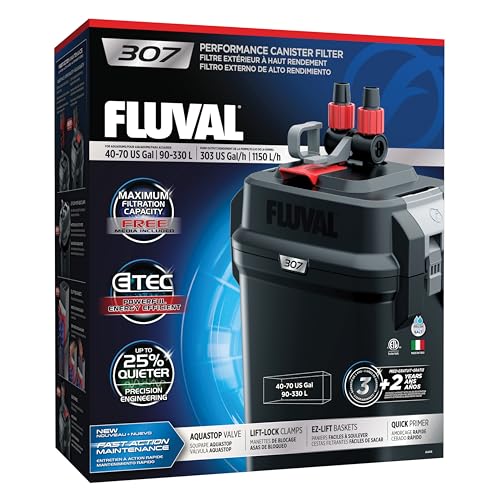
Fluval 307 Performance...
- For aquariums up to 70 gallons
- EZ-Lift media baskets
- 25% quieter operation
- Energy efficient
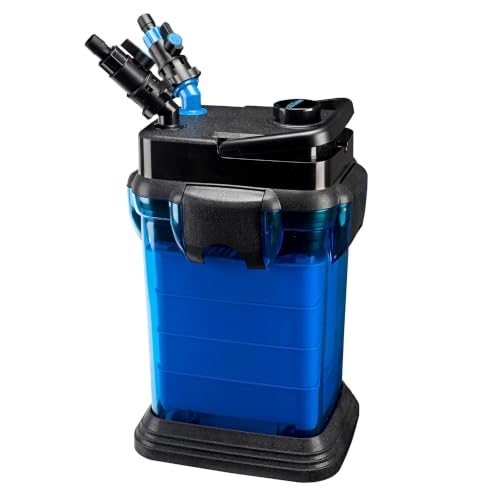
Penn-Plax Cascade 1200...
- For aquariums up to 150 gallons
- Four stackable baskets
- Push button primer
- 360-degree valves

CaribSea Aragonite Reef Sand
- 100% aragonite sand
- Buffers pH to 8.2
- 40-pound bag
- Made in USA
Species Summary
| Scientific Name: | Pomacentridae (family) |
| Subfamilies: | Abudefdufinae, Chrominae, Pomacentrinae, Stegastinae |
| Lifespan: | 5-6 years (up to 10+ in optimal conditions) |
| Size: | 2-8 inches depending on species |
| Care Level: | Easy to Moderate |
| Water Temperature: | 72°-79°F |
| Temperament: | Semi-aggressive to Aggressive |
| pH: | 8.1 to 8.4 |
| Color Form: | Various (blue, yellow, black, orange, purple) |
| Diet: | Omnivore |
| Minimum Tank Size: | 30 gallons |
| Tank Set-Up: | Marine: coral or rocks |
| Reef Compatible: | Generally Safe |
Damselfish Appearance
Damselfish display a remarkable diversity of colors and patterns across their many species, though one crucial factor aquarists must understand is the dramatic color changes many undergo from juvenile to adult stages. While juvenile damselfish often showcase electric blues, vibrant yellows, or striking patterns, numerous species transform into relatively drab brown or gray adults, a fact that disappoints many unprepared hobbyists. The Blue Damselfish, for instance, may retain some coloration but often becomes significantly less vivid, while species like the Three-Stripe Damsel show minimal change.

Body shapes within the Pomacentridae family vary from the deep-bodied, laterally compressed forms of Chrysiptera species to the more elongated profiles seen in Chromis. Most damselfish possess a single continuous dorsal fin that extends along much of their back, paired pectoral fins that enable precise maneuvering among coral branches, and forked caudal fins that provide bursts of speed when defending territory. Their mouths are small and terminal, equipped with teeth adapted for grazing algae and capturing small prey items.
The bright coloration of many damselfish serves multiple purposes in their natural habitat. Beyond the obvious mate attraction and species recognition functions, these vivid hues function as a form of disruptive camouflage against the colorful backdrop of coral reefs. When viewed against the patchwork of coral, sponges, and algae, a bright blue or yellow fish becomes surprisingly difficult to spot, providing protection from predators while still allowing territorial displays.
Always research the adult appearance of any damselfish species before purchasing. Many retailers display juvenile fish at their most colorful, and the transformation to adult coloration can occur within 6-12 months. Species like the Orangespine Unicornfish damselfish retain beauty throughout life, while others such as the Yellowtail Blue Damsel become progressively muted.
Damselfish Size and Growth Rate
Damselfish size varies dramatically across the family, with adult lengths ranging from tiny 2-inch species to impressive 8-inch giants. Understanding these size differences is crucial for appropriate tank selection and long-term planning. The popular Yellowtail Blue Damsel (Chrysiptera parasema) typically reaches only 2-3 inches, making it suitable for smaller systems, while the Sergeant Major (Abudefduf saxatilis) can grow to 6-8 inches and requires substantially more space.
Growth rates in damselfish are generally rapid during their first year, with most species reaching 60-70% of their adult size within 8-10 months under optimal conditions. Water quality, diet, and tank size all influence growth velocity. Fish kept in undersized tanks often experience stunted growth, though this comes with health complications and reduced lifespans rather than being a desirable outcome.
Here are typical adult sizes for popular aquarium species:
- Azure Damsel (Chrysiptera hemicyanea): 3-4 inches
- Yellowtail Blue Damsel (Chrysiptera parasema): 2-3 inches
- Blue Devil Damsel (Chrysiptera cyanea): 3-4 inches
- Three-Stripe/Humbug Damsel (Dascyllus aruanus): 3-4 inches
- Domino Damsel (Dascyllus trimaculatus): 4-5 inches
- Sergeant Major (Abudefduf saxatilis): 6-8 inches
- Garibaldi Damsel (Hypsypops rubicundus): 12-14 inches (requires very large tank)
Damselfish Lifespan
The average lifespan for most damselfish species kept in home aquariums ranges from 5 to 6 years, though exceptional specimens have been documented living 10 years or more under optimal conditions. Longevity correlates strongly with water quality maintenance, appropriate tank size, and proper nutrition. Species from the genus Chrysiptera generally live 4-6 years, while larger Dascyllus and Abudefduf species often reach 8-10 years when well cared for.
Several factors significantly impact damselfish lifespan. Chronic stress from aggressive tank mates, inadequate swimming space, or poor water quality can reduce life expectancy by half. Conversely, damselfish kept in stable, spacious reef environments with compatible tank mates and varied diets often exceed typical lifespan projections. The key to longevity is consistency in water parameters and minimizing territorial disputes through proper stocking order and tank layout.
Popular Varieties of Damselfish
The family Pomacentridae contains hundreds of species suitable for aquariums, but certain varieties dominate the trade due to their coloration, availability, and manageable care requirements. Understanding the differences between true damselfish and their Chromis cousins is essential, as is recognizing which species are appropriate for community tanks versus species-only setups.
True Damselfish (Pomacentrinae subfamily): These are the classic aggressive damsels that earned the family its reputation. They establish territories and defend them vigorously against intruders.
- Blue Devil Damsel (Chrysiptera cyanea): Electric blue coloration with yellow accents on fins. Grows to 3-4 inches and is moderately aggressive. One of the hardiest marine fish available.

- Yellowtail Blue Damsel (Chrysiptera parasema): Features a brilliant blue body with distinctive yellow tail fin. Reaches 2-3 inches and is among the least aggressive true damselfish options.

- Azure Damsel (Chrysiptera hemicyanea): Beautiful blue body with yellow fins. Grows to 3-4 inches and adapts well to both nano and regular aquariums. Relatively peaceful for a damselfish.

- Three-Stripe Damsel (Dascyllus aruanus): Also called the Humbug Damsel, features bold black and white vertical stripes. Hardy but becomes increasingly territorial with age. Reaches 3-4 inches.
- Domino Damsel (Dascyllus trimaculatus): Black body with three white spots. One of the more aggressive species, reaching 4-5 inches. Best kept in larger tanks or species-only setups.
Chromis (Chrominae subfamily): Often grouped with damselfish due to family relationship, Chromis are schooling fish with peaceful temperaments distinctly different from their territorial cousins.
- Green Chromis (Chromis viridis): The most popular peaceful alternative to aggressive damsels. Metallic green-blue coloration with peaceful schooling behavior. Excellent for reef tanks, grows to 3 inches, and should be kept in groups of 5 or more.
Note on Clownfish: While clownfish (Amphiprion and Premnas genera) are technically members of the Pomacentridae family, they are not typically referred to as damselfish in the aquarium hobby due to their specialized anemone symbiosis and distinct care requirements. They are generally more peaceful than true damselfish and deserve separate consideration.
Damselfish Behavior and Temperament
Damselfish behavior centers on territoriality, with most species establishing and defending defined areas of the aquarium as their own. This territorial drive manifests differently across species, ranging from mild chasing to relentless harassment that can stress or kill tank mates. Understanding these behavioral patterns is essential for successful damselfish keeping.
The aggression level of damselfish species can be categorized into three tiers:
- Low Aggression: Yellowtail Blue Damsel, Azure Damsel, Talbot's Damsel, Springer's Damsel
- Moderate Aggression: Blue Devil Damsel, Bicolor Damsel, Starck's Damsel
- High Aggression: Three-Stripe Damsel, Domino Damsel, Sergeant Major, Yellowtail Damsel
Territory size correlates with tank dimensions and species aggression. In a 30-gallon tank, a moderately aggressive damselfish may claim one-third to one-half of the total space as its exclusive domain. This explains why even a single damselfish can dominate a community tank, forcing other fish to remain in restricted areas.
Stocking order significantly impacts damselfish aggression. Adding damselfish last to an established community typically results in reduced territorial behavior, as they cannot claim territory already occupied by other fish. Conversely, adding other fish to a tank where damselfish have already established territories often results in sustained harassment and stress.
Damselfish Breeding
Most damselfish are sequential hermaphrodites, beginning life as males with the capacity to transition to females as social circumstances dictate. This reproductive strategy, known as protandry, ensures that breeding pairs can form even in small isolated populations. When a female dies or is removed, the dominant male will transition to female status, and a subordinate male will assume the dominant male role.
Spawning typically occurs on cleaned rock surfaces, coral rubble, or other hard substrates that the male prepares in advance. The male courts the female through swimming displays and color intensification, leading to the female depositing adhesive eggs in a monolayer patch. The male then fertilizes the eggs externally and assumes sole parental care responsibilities, guarding the nest against predators and maintaining water flow over the eggs by fanning with his fins.
Incubation periods range from 3-7 days depending on temperature, with warmer water accelerating development. Newly hatched damselfish larvae are planktonic, drifting in the water column and feeding on microscopic organisms until they complete metamorphosis and settle to the bottom as miniature versions of the adults. This larval stage presents the primary challenge for captive breeding, as the tiny larvae require specialized feeding with rotifers and other microfoods.
Some damselfish species, particularly certain Chromis, have never been successfully bred in home aquariums due to the extended planktonic larval phase. However, many Chrysiptera and Dascyllus species are regularly bred by dedicated hobbyists and commercial breeders, making tank-raised specimens increasingly available.
Damselfish Care Guide
Providing excellent care for damselfish requires attention to their specific needs as marine fish while accommodating their territorial nature. These fish are remarkably hardy and forgiving of minor water quality lapses, but long-term health and color vibrancy depend on consistent maintenance and appropriate tank conditions. The following sections detail the essential care requirements for keeping damselfish successfully in 2026.
Before purchasing damselfish, consider the ethical debate surrounding their use for cycling new aquariums. While damsels are exceptionally tolerant of ammonia and nitrite spikes that would kill most marine fish, using them as expendable "canary in the coal mine" fish is increasingly viewed as inhumane. Fishless cycling with ammonia or bottled bacteria products is the recommended modern approach, allowing you to add damselfish to a fully cycled, safe environment.
Once added to an established tank, damselfish require moderate care levels. They thrive in stable water conditions with regular maintenance routines and varied diets. The key challenge lies not in their biological needs, which are straightforward, but in managing their social behavior within the community tank context.
Damselfish Food and Diet
Damselfish are omnivores with a strong preference for meaty foods supplemented with algae and plant matter. In their natural reef habitat, they feed on zooplankton, small crustaceans, algae films, and occasional coral polyps. Replicating this varied diet in captivity ensures optimal coloration, immune function, and breeding condition.
A quality diet for damselfish should include multiple food types offered in rotation:
- Live foods: Brine shrimp, mysis shrimp, and copepods stimulate natural hunting behaviors and are particularly valuable for conditioning fish for breeding
- Frozen foods: Mysis shrimp, krill, and cyclops provide excellent nutrition and are readily accepted by most specimens
- Prepared foods: High-quality marine flakes and pellets formulated with spirulina and marine proteins should form the dietary staple
- Algae supplementation: Nori sheets, spirulina flakes, and naturally occurring algae growth in the tank support their herbivorous needs
Feed adult damselfish 2-3 times daily with portions they can consume within 2-3 minutes. Overfeeding leads to obesity and water quality degradation, while underfeeding triggers increased aggression as fish compete for limited resources. Many damselfish will graze on algae growing on live rock between formal feeding sessions, supplementing their diet naturally.
Damselfish Tank Mates
Selecting appropriate tank mates for damselfish requires careful consideration of temperament compatibility and stocking order. The aggressive nature of many damselfish species limits suitable companions to fish that can either hold their own or avoid territorial disputes through behavioral strategies.
Generally compatible tank mates include:
- Dottybacks: These similarly sized, assertive fish can establish their own territories without being driven out by damselfish
- Basslets and Grammas: Species like the Royal Gramma occupy different tank zones and often avoid conflict
- Larger Wrasses: Active swimmers that generally ignore damselfish territories
- Tangs and Surgeonfish: The Tomini Tang and similar species are typically fast enough to avoid harassment
- Peaceful Damselfish alternatives: Green Chromis can often coexist in groups of 5 or more, though individual results vary
Tank mates to avoid include:
- Peaceful community fish: Gobies, firefish, and small anthias are frequently bullied and stressed by damselfish aggression
- Slow swimmers: Seahorses, pipefish, and mandarin fish cannot escape territorial attacks
- Small invertebrates: While damselfish are generally reef-safe regarding coral, they may consume small ornamental shrimp and crabs
- Smaller damselfish species: Mixing significantly different sizes often results in the smaller fish being killed
Can damselfish live with clownfish? This common question has a nuanced answer. While both belong to the Pomacentridae family and share similar environmental needs, their compatibility depends on species selection and tank size. In larger systems (55+ gallons), peaceful damselfish like the Yellowtail Blue Damsel can coexist with clownfish pairs, particularly if the clownfish have established an anemone territory. However, aggressive damselfish species will harass clownfish relentlessly, especially during breeding when clownfish become more territorial themselves.
Damselfish Tank Size
The minimum recommended tank size for keeping damselfish is 30 gallons, a standard that provides adequate swimming space while allowing for territorial establishment without overwhelming the entire system. This recommendation applies to single specimens or pairs of smaller species. The previous industry advice suggesting 10-gallon minimums has been revised based on improved understanding of fish welfare and territory requirements.
Specific tank size recommendations by stocking plan:
- Single small damselfish (under 3 inches): 30 gallons minimum
- Pair of small damselfish: 40 gallons with plenty of rockwork to establish separate territories
- Single large damselfish (Sergeant Major size): 55 gallons minimum
- Multiple damselfish community: 75+ gallons with extensive rockwork to break sight lines
- Species-only damselfish tank: 100+ gallons for groups of 4 or more to distribute aggression
Tank dimensions matter as much as volume. Damselfish prefer tanks with horizontal swimming space rather than tall narrow designs. A 40-gallon breeder tank (36 inches long) provides superior territory distribution compared to a 40-gallon tall tank (24 inches long) despite identical volumes. The extended footprint allows subordinate fish to remain visible while staying outside the dominant individual's core territory.
Damselfish Water Conditions
Damselfish tolerate a reasonably wide range of marine water parameters, reflecting their adaptability and hardiness. However, maintaining optimal conditions promotes vibrant coloration, active behavior, and long-term health. The following parameters represent ideal targets for damselfish aquariums:
- Temperature: 72°-79°F (22°-26°C). Stability matters more than the specific temperature within this range.
- pH: 8.1-8.4. Marine buffers help maintain stable alkalinity and pH.
- Specific Gravity: 1.020-1.025. Most reef aquarists maintain 1.025 to support both fish and coral.
- Ammonia: 0 ppm at all times. Any detectable ammonia indicates insufficient biological filtration.
- Nitrite: 0 ppm. Like ammonia, nitrite should never be present in established tanks.
- Nitrate: 0-20 ppm. While damselfish tolerate higher nitrates than sensitive invertebrates, keeping levels under 20 ppm supports overall health.
Regular water testing is essential for maintaining these parameters. The API Saltwater Master Test Kit provides accurate readings of the critical ammonia, nitrite, nitrate, and pH values. Test weekly in new tanks and biweekly in established systems, or whenever fish show signs of stress.
Filtration
Effective filtration for damselfish tanks combines mechanical, biological, and chemical processes to maintain water clarity and quality. Given that damselfish are active swimmers that consume substantial food, robust filtration is essential for processing the waste load they generate.
Canister filters and hang-on-back (HOB) units both work well for damselfish systems, though canister filters generally provide superior mechanical filtration and can be hidden in aquarium cabinets for cleaner aesthetics. Regardless of filter type, select a model rated for at least twice your tank volume to ensure adequate flow and processing capacity.
Fluval 307 Perfomance Canister Filter for...
For aquariums up to 70 gallons
EZ-Lift media baskets
25% quieter operation
Fluval eTEC technology
What we like
- Ultra-quiet operation
- Easy to set up and maintain
- EZ-Lift media baskets for easy cleaning
- Powerful water flow
- Energy efficient
What could be better
- Premium price point
- Tubes may be thick for some tank lids
The Fluval 307 Canister Filter represents the current standard for mid-sized marine aquariums. Its advanced eTEC technology delivers powerful filtration while consuming minimal electricity, and the redesigned EZ-Lift media baskets make maintenance significantly easier than previous generations. For larger damselfish systems or multiple-fish setups, the extra capacity ensures stable water quality even with the bioload of active, well-fed fish.
For aquariums exceeding 75 gallons or housing multiple large damselfish, a high-capacity canister filter becomes essential. The push-button primer and rotating valve taps on premium models simplify the often-frustrating startup process that discourages many hobbyists from using canister filtration.
Penn-Plax Cascade 1200 Canister Filter - 315 GPH...
For aquariums up to 150 gallons
Four stackable media baskets
Push button primer
Dual 360-degree valves
What we like
- Large capacity for big tanks
- Push button primer is easy to use
- 360 degree rotating valves for flexible setup
- See-through housing to monitor filter
- Good value for the capacity
What could be better
- Large size requires cabinet space
- Instructions could be more detailed
When selecting filtration for damselfish, prioritize models with substantial media capacity. These fish produce significant waste, and adequate biological media volume supports the beneficial bacteria colonies that process ammonia and nitrite. The Penn-Plax Cascade 1200's four stackable baskets allow customization with ceramic rings, bio-balls, or other biological media tailored to your specific bioload.
Heating
Maintaining stable tropical temperatures is non-negotiable for damselfish health. These fish originate from stable reef environments where temperature fluctuations are minimal, and they suffer stress and immune suppression when subjected to temperature swings in captivity. A quality heater properly sized to your tank volume is essential equipment.
General heater wattage guidelines for damselfish tanks:
- 20-30 gallons: 100-150 watts
- 40-55 gallons: 200-300 watts
- 75+ gallons: 300-500 watts (or two 200-250 watt heaters for redundancy)

Orlushy Submersible Aquarium Heater, Adjustable...
For 40-55 gallon tanks
2mm thickened quartz glass
68-89°F temperature range
Automatic shut-off
What we like
- Affordable price
- Works for both freshwater and saltwater
- Thick quartz glass construction
- Reliable thermostat
- Free thermometer included
What could be better
- Temperature dial may need calibration
- Suction cups may need replacement over time
The Orlushy 300W heater offers excellent value for damselfish systems in the 40-55 gallon range. Its explosion-proof quartz glass construction withstands the saltwater environment, while the precise temperature dial allows fine-tuning within the 68-89°F range. The included thermometer provides independent temperature verification, which is crucial since no heater thermostat is perfectly accurate.
For larger systems, consider using two smaller heaters rather than one large unit. This approach provides heating redundancy if one heater fails and distributes heat more evenly throughout the tank. Position heaters near filter outputs to ensure heated water circulates throughout the aquarium rather than collecting in warm pockets.
Lighting
Modern LED lighting has largely replaced fluorescent and metal halide systems for marine aquariums, offering superior energy efficiency, spectrum control, and longevity. For damselfish specifically, lighting serves two primary functions: supporting photosynthetic organisms (if keeping live rock with algae or corals) and enhancing the fish's natural coloration.
Damselfish appear particularly striking under lighting with strong blue/actinic components, which accentuates their fluorescent coloration and mimics the deep reef environments many species inhabit. LED systems with programmable dawn/dusk cycles and moonlight modes also support natural behavioral patterns.

NICREW ClassicLED Marine Saltwater Aquarium Light...
For 18-24 inch tanks
445nm and 460nm blue LEDs
10,000K white
Day+night controller
What we like
- Affordable LED reef lighting
- Programmable timer with sunrise/sunset
- Good spectrum for corals
- Extendable brackets for different tank sizes
- Low profile design
What could be better
- Timer resets after power outage
- May need canopy to prevent moisture damage
The NICREW Reef Light provides an excellent balance of features and affordability for damselfish tanks. The combination of blue and white LEDs brings out the brilliant coloration of blue damsels and yellowtail varieties, while the programmable controller simulates natural dawn and dusk transitions that reduce stress compared to abrupt on/off switching.
Light duration should follow a consistent photoperiod of 8-12 hours daily, depending on whether you are maintaining photosynthetic organisms. Use the programmable features to create a gradual sunrise over 30-60 minutes rather than instant full intensity, which better mimics natural reef conditions and allows fish to adjust gradually.
Substrate
Damselfish originate from reef environments with diverse substrate types, from solid rock and coral rubble to sandy patches between coral heads. In captivity, substrate choice impacts water chemistry, aesthetics, and maintenance requirements. For marine damselfish tanks, aragonite-based substrates provide the most benefits.
Aragonite sand, composed of calcium carbonate, slowly dissolves in saltwater, helping to buffer pH and maintain the alkaline conditions marine fish require. This buffering capacity reduces pH swings that stress fish and supports the biological filtration processes occurring in the substrate surface layers.
Carib Sea ACS00050 Aragonite Reef Sand for...
100% aragonite sand
Buffers pH to 8.2
40-pound bag
Made in USA
What we like
- Buffers pH to around 8.2
- Natural reef appearance
- Good grain size for detritus control
- Made in USA
- Good value for 40lb bag
What could be better
- Requires thorough rinsing before use
- May cloud water initially
CaribSea Aragonite Reef Sand has been an industry standard for decades, providing the ideal grain size and composition for marine aquariums. The natural aragonite composition maintains stable pH while the carefully selected grain size prevents the compaction and anaerobic dead zones that occur with finer sands.
Depth recommendations vary by tank purpose. For fish-only systems, 1-2 inches of sand provides adequate buffering and aesthetic appeal. Reef tanks with live rock and potential sand-dwelling organisms benefit from 2-4 inches to support denitrification processes and provide habitat for beneficial microfauna.
Plants
Unlike freshwater aquariums, marine tanks do not accommodate traditional aquatic plants. Damselfish inhabit reef environments dominated by coral, macroalgae, and other salt-tolerant photosynthetic organisms. The appropriate "plants" for a damselfish tank are marine macroalgae and coral specimens that provide similar benefits: cover, territory boundaries, and natural filtration.
Suitable marine plant alternatives for damselfish aquariums include:
- Chaetomorpha (Chaeto): This green macroalgae grows rapidly in refugiums, exporting nutrients while providing copepod habitat. It is not typically placed in the display tank but supports overall system health.
- Caulerpa: Several Caulerpa species (prolifera, mexicana, taxifolia) can be grown in the display or refugium. These fast-growing macroalgae help control nitrates and phosphates.
- Halimeda: An attractive calcareous green macroalgae that adds a tropical reef aesthetic while contributing to calcium stability.
- Dragon's Tongue (Halymenia): A beautiful red macroalgae that provides excellent visual interest in refugiums or display tanks.
Do not add freshwater plants like Anacharis, Hornwort, or Java Fern to marine aquariums. These plants cannot tolerate saltwater and will quickly die, creating water quality issues as they decompose. The misconception that these plants can adapt to marine conditions is unfortunately common but biologically incorrect.
Ornaments
Decorative elements in damselfish tanks serve functional purposes beyond aesthetics. Live rock provides the biological filtration foundation for marine aquariums while creating the caves and crevices damselfish use as territory anchors. Rockwork should be arranged to create multiple visual barriers, allowing subordinate fish to escape dominant individuals' sight lines.
When aquascaping for damselfish, stability is paramount. These fish will excavate sand and rubble around rock bases, potentially destabilizing poorly positioned structures. Use aquarium-safe epoxy or superglue gel to bond rocks together, creating stable caves that will not collapse during natural digging behaviors.
Additional ornaments that enhance damselfish tanks include:
- Coral rubble and small shells: Provide natural territory markers that damsels can rearrange without destabilizing larger structures
- PVC pipe caves: Inexpensive and easily cleaned hiding spots that can be camouflaged with rockwork
- Artificial coral inserts: Add color and structure without the care requirements of live coral
Also check Cherry Barb Fish: Care, Tankmates, Lifespan, Breeding & All
Water Changes
Regular water changes are essential for maintaining the water quality damselfish need for long-term health. Even with excellent filtration, dissolved organic compounds, accumulated minerals, and trace element depletion require periodic correction through partial water replacements.
For damselfish aquariums, a weekly water change of 10-15% is the standard maintenance routine. This schedule maintains stable water chemistry without causing the stress of large parameter swings. In heavily stocked tanks or those with limited filtration, increasing to 20-25% weekly may be necessary.
Always use properly mixed and aged saltwater for changes. Marine salt mixes like Instant Ocean Sea Salt have been the hobby standard for decades, providing the essential elements marine fish require. Mix saltwater 24 hours in advance, ensuring complete dissolution and temperature matching before adding to the tank.
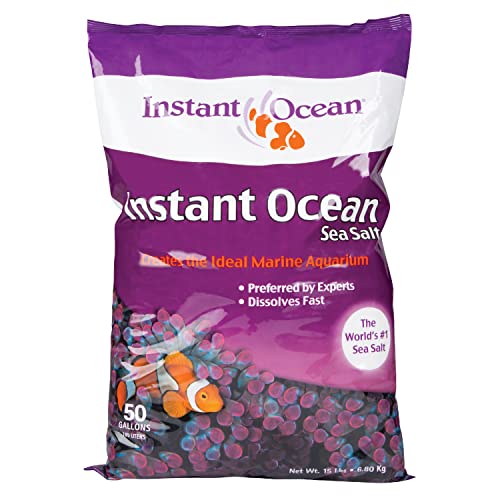
Instant Ocean Sea Salt for Marine Aquariums...
50 gallon mix
Fast dissolving formula
Contains all trace elements
Free of nitrate and phosphate
What we like
- Industry standard for 40+ years
- Fast dissolving formula
- Complete trace elements
- No nitrates or phosphates
- Excellent value for money
What could be better
- May clump if exposed to moisture
- Not as enriched as premium reef salts
Instant Ocean has remained the go-to marine salt for good reason. Its consistent formulation dissolves rapidly, achieving the proper specific gravity and pH without the extended mixing times required by some competing brands. For damselfish systems without demanding coral, this standard formulation provides everything necessary for fish health.
During water changes, take the opportunity to vacuum visible debris from the substrate surface and inspect equipment. These regular maintenance windows prevent the gradual decline that leads to emergency situations requiring major interventions.
Cleaning the Tank
Beyond water changes, regular tank cleaning maintains the aesthetic appeal and biological stability of damselfish aquariums. Glass cleaning, filter maintenance, and substrate vacuuming should follow consistent schedules to prevent the accumulation of organic waste that fuels algae growth and compromises water quality.
Clean tank glass weekly using an algae magnet or scraper to remove green and coralline algae buildup. While some coralline algae is desirable in marine tanks, excessive growth on viewing panels obstructs visibility. Clean exterior glass with aquarium-safe products only, avoiding ammonia-based household cleaners that can poison the tank if accidentally introduced.
Substrate vacuuming during water changes removes accumulated detritus from the sand surface. Use a gravel vacuum with appropriate flow control to lift waste without removing excessive sand. Target areas where debris collects, typically beneath rock overhangs and in corners with reduced current.
Also check Ryukin Goldfish Care, Lifespan, Behaviour, Diet & All
Cleaning The Filter
Filter maintenance is critical for damselfish health, as these active fish generate substantial waste that accumulates in filtration media. However, over-cleaning can destroy the beneficial bacterial colonies that process ammonia and nitrite, causing dangerous parameter swings.
Clean mechanical filtration (floss, sponges, filter pads) monthly or when flow visibly decreases. Rinse these components in removed tank water rather than tap water to preserve beneficial bacteria. Replace filter floss when it no longer rinses clean, typically every 4-6 weeks.
Biological media (ceramic rings, bio-balls, sintered glass) should only be lightly rinsed in tank water when flow is obstructed. Never scrub or aggressively clean biological media, as this removes the nitrifying bacteria that maintain the nitrogen cycle. If media must be replaced, do so gradually, replacing no more than one-third at a time to preserve bacterial populations.
Water Testing
Regular water testing prevents the invisible chemistry problems that sicken damselfish before visible symptoms appear. Ammonia and nitrite should remain at zero in established tanks, while nitrate should stay below 20 ppm for optimal fish health. pH should remain stable within the 8.1-8.4 range, with minimal daily fluctuation.
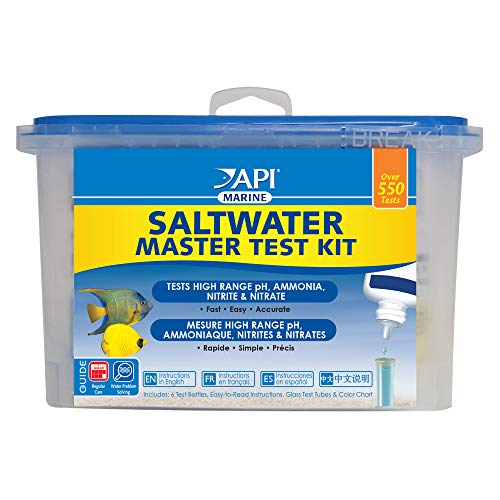
API Saltwater Master Test Kit 550-Test Saltwater...
550-test capacity
Tests pH, ammonia, nitrite, nitrate
6 testing solution bottles
Designed for saltwater
What we like
- Comprehensive 4-parameter testing
- 550 tests per kit
- Liquid tests for accuracy
- Trusted by aquarium professionals
- Easy to use color comparison
What could be better
- Does not test alkalinity or calcium
- Test solutions have expiration dates
The API Saltwater Master Test Kit provides the essential testing capabilities every damselfish keeper needs. Liquid test kits offer greater accuracy than test strips for the parameters that matter most for fish health. Record results in a log to track trends over time, catching gradual changes before they become emergencies.
Test weekly during the first six months of tank operation and whenever adding new fish. Established tanks with stable parameters can transition to biweekly testing, though any sign of fish stress warrants immediate water chemistry verification.
Protein Skimming
Protein skimmers remove dissolved organic waste before it decomposes into ammonia, significantly reducing the bioload on biological filtration. While not strictly mandatory for fish-only damselfish tanks, skimmers dramatically improve water quality and reduce maintenance requirements in any marine system.
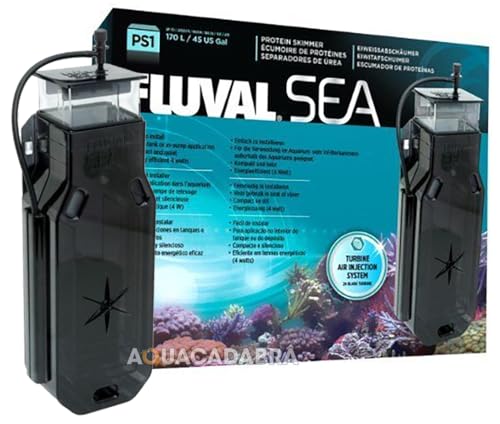
Fluval Sea PS1 Protein Skimmer for Aquarium, for...
For aquariums up to 45 gallons
24-blade turbine system
Quick break-in period
Ultra-silent operation
What we like
- Compact design for smaller tanks
- 24-blade turbine for efficient skimming
- Works well for nano reefs
- Clear collection cup for easy monitoring
What could be better
- Break-in period required
- May produce microbubbles initially
- Works best with Fluval tanks
The Fluval Sea PS1 offers an affordable entry into protein skimming for nano and small reef tanks housing damselfish. Its compact footprint fits smaller systems where larger skimmers would be impractical, while the efficient turbine system produces the fine bubbles necessary for effective waste removal.
Expect a break-in period of 3-7 days as the skimmer adjusts to your tank's specific organic load. During this time, microbubbles may enter the display aquarium, but this typically resolves as the skimmer establishes consistent foam production.
Common Possible Diseases
Damselfish are generally disease-resistant fish, but they are not immune to the common ailments that affect marine aquariums. Understanding disease symptoms and prevention strategies keeps your fish healthy and prevents the spread of illness through your tank.
Marine Ich (Cryptocaryon irritans): The most common parasitic infection in marine tanks appears as small white spots resembling salt grains on the fish's body and fins. Affected fish may rub against objects, breathe rapidly, or show clamped fins. Ich is highly contagious and requires prompt treatment with copper-based medications or hyposalinity in a quarantine tank.
Fin Rot: Bacterial infection causing progressive deterioration of fin membranes, leaving ragged edges or shortened fins. Poor water quality is the primary trigger. Treatment involves water quality correction and antibiotic medications if improvement does not occur within days.
Mouth Rot (Columnaris): Appears as cottony growths around the mouth or erosion of mouth tissues. This bacterial infection spreads rapidly in stressed populations. Immediate water quality improvement and antibiotic treatment are essential.
Also check How To Cure Fish Fungus (Aquarium Fish) Ultimate Treatment & Medication
Damselfish Treatment and Medications
When damselfish show disease symptoms, prompt diagnosis and treatment prevent losses and stop spread to tank mates. A quarantine tank is essential for effective treatment, as many medications harm invertebrates or disrupt biological filtration in display tanks.
Marine Ich treatments:
- Copper sulfate: Effective against ich parasites but must be administered in a quarantine tank at precisely controlled concentrations. Copper is lethal to invertebrates and stays in tank materials permanently.
- Hyposalinity: Lowering salinity to 1.009 specific gravity for 4-6 weeks disrupts the ich life cycle without chemicals. This treatment requires careful monitoring and is only suitable for fish-only quarantine systems.
Bacterial infection treatments:
- Metronidazole: Effective against many bacterial and protozoan infections. Can be administered in food for internal infections or water for external problems.
- Kanamycin: Broad-spectrum antibiotic useful for severe bacterial infections including fin and mouth rot.
Prevent disease through quarantine of all new fish for 4-6 weeks before adding to display tanks. This observation period reveals latent infections and allows treatment without endangering established livestock. Maintain excellent water quality and minimize stress from aggression or handling to support natural immune function.
Quick Overview: Essential Damselfish Equipment in 2026
Setting up a successful damselfish aquarium requires the right equipment to maintain water quality, temperature, and lighting. Here is a quick comparison of the essential products covered in this guide to help you make informed decisions for your marine tank setup.
| Product | Highlights | Action |
|---|---|---|
| Fluval 307 Canister Filter |
|
Check Latest Price |
| Penn-Plax Cascade 1200 |
|
Check Latest Price |
| Orlushy 300W Heater |
|
Check Latest Price |
| NICREW Reef Light |
|
Check Latest Price |
| CaribSea Aragonite Sand |
|
Check Latest Price |
| Fluval Sea PS1 Skimmer |
|
Check Latest Price |
| Instant Ocean Sea Salt |
|
Check Latest Price |
| API Saltwater Test Kit |
|
Check Latest Price |
Advantages Of Having Damselfish In Your Tank
Damselfish offer several compelling benefits that explain their enduring popularity in marine aquariums. Their hardiness alone makes them valuable for aquarists learning saltwater maintenance, as they tolerate the minor water quality lapses that inevitably occur during the learning process.
- Algae control: Many damselfish species actively graze on algae films, helping control unwanted growth on glass and rockwork. While they won't eliminate established algae problems, their constant picking reduces new growth.
- Disease resistance: Damselfish possess robust immune systems and rarely succumb to common marine ailments when provided basic proper care. This resilience reduces the medication needs and losses common with more delicate species.
- Hardiness: These fish tolerate wider temperature and parameter ranges than most marine species, surviving equipment failures that would kill sensitive livestock. This hardiness makes them excellent indicator fish for new systems.
- Low cost: Most damselfish species are bred commercially or collected sustainably, resulting in prices that make them accessible to all hobbyists. Losses, while unfortunate, do not represent significant financial setbacks.
- Reef compatibility: Unlike many aggressive fish, damselfish generally ignore coral and are considered reef-safe, allowing them in mixed reef displays with appropriate tank mate selection.
Disadvantages Of Having Damselfish In Your Tank
Despite their advantages, damselfish present significant challenges that lead many experienced aquarists to avoid them. Understanding these limitations helps set realistic expectations and prevents the frustration of incompatible stocking decisions.
- Territorial aggression: The defining characteristic of true damselfish is their aggressive defense of territory. Even peaceful species will chase and nip at tank mates that enter their claimed space, causing stress and injury over time.
- Tank mate limitations: Their aggression restricts compatible companions to similarly assertive species, eliminating the possibility of peaceful community tanks with delicate fish like gobies, firefish, or small wrasses.
- Size deceptions: The dramatic color changes many species undergo from juvenile to adult stages lead to disappointed aquarists when their brilliant blue fish turns brown. Researching adult appearances prevents this disappointment.
- Dominance hierarchies: Groups of damselfish establish brutal pecking orders, with the dominant individual harassing subordinates until they die or are removed. This makes group keeping challenging without substantial space.
- Not truly beginner-friendly: Despite their hardiness, their aggression makes damselfish poor choices for beginners who typically want peaceful community tanks. The behavioral management required contradicts the "easy" label often applied to these fish.
FAQ
How aggressive are damselfish?
Damselfish aggression varies significantly by species. Yellowtail Blue Damsels and Azure Damsels show relatively mild territorial behavior, while Three-Stripe Damsels, Domino Damsels, and Sergeant Majors are highly aggressive. Most damselfish establish and defend territories against intruders, with aggression increasing as they mature. Stocking order and tank size significantly impact aggression levels.
What are damselfish known for?
Damselfish are known for their hardiness, bright coloration, and territorial aggression. They belong to the Pomacentridae family with over 300 species distributed across tropical reefs worldwide. They are famous for being the hardiest marine fish available, tolerating water conditions that would kill most saltwater species. Their territorial behavior and dramatic juvenile-to-adult color changes are also notable characteristics.
What is the friendliest damsel fish?
The Yellowtail Blue Damsel (Chrysiptera parasema) and Azure Damsel (Chrysiptera hemicyanea) are considered the friendliest true damselfish species. However, Green Chromis (Chromis viridis) are significantly more peaceful and school together rather than establishing individual territories. Talbot's Damsel and Springer's Damsel are also relatively mild compared to aggressive species like Domino or Three-Stripe Damsels.
Can you mix damsels with clownfish?
Damselfish and clownfish can coexist in larger aquariums (55+ gallons) with careful species selection. Peaceful damselfish like Yellowtail Blue Damsels have the best chance of success with clownfish pairs. However, aggressive damselfish species will harass clownfish relentlessly, especially during clownfish breeding periods. Both are from the Pomacentridae family and share similar environmental needs, but territorial disputes can be problematic.
What fish get along with damsels?
Compatible tank mates for damselfish include assertive species that can hold their own: dottybacks, larger wrasses, tangs like the Tomini Tang, and basslets like Royal Grammas. Fish that swim in open water and avoid territory boundaries work best. Avoid peaceful community fish like gobies, firefish, and small anthias, which cannot escape damselfish aggression and will be bullied continuously.
Can you keep different damsels together?
Keeping different damselfish species together is challenging and generally not recommended except in large tanks (75+ gallons) with extensive rockwork. When attempted, all damselfish should be added simultaneously as juveniles to prevent established territories. Similar-sized species have better success than mixing small and large damsels. Expect continuous territorial disputes and have a plan to separate fish if aggression becomes lethal.
What damsel fish are not aggressive?
The least aggressive damselfish include Yellowtail Blue Damsel, Azure Damsel, Talbot's Damsel, and Springer's Damsel. However, even these relatively peaceful species will defend territories against intruders. For truly peaceful alternatives, consider Green Chromis (Chromis viridis), which school together rather than fighting and are significantly more community-friendly than true damselfish from the Pomacentrinae subfamily.
Do damsels and clownfish get along?
Damselfish and clownfish can get along in sufficiently large tanks with appropriate species selection. Peaceful damselfish species paired with established clownfish pairs in 55+ gallon systems have the highest success rates. The key factors are tank size (allowing territory separation), stocking order (adding damselfish last), and species temperament. Aggressive damselfish will attack clownfish, particularly when clownfish are breeding and defending their own territory.
Conclusion
Damselfish remain one of the most divisive fish in the marine aquarium hobby in 2026, simultaneously praised for their hardiness and criticized for their aggression. The truth, as with most complex topics, lies in the nuanced middle ground. These fish offer genuine advantages for aquarists who understand and accept their behavioral limitations, while presenting significant challenges for those seeking peaceful community displays.
Success with damselfish requires species selection appropriate to your goals. Choose Yellowtail Blue Damsels or Azure Damsels for relatively manageable aggression, or opt for Green Chromis if you want the damselfish aesthetic without the territorial warfare. Avoid highly aggressive species like Domino Damsels and Three-Stripe Damsels unless you are prepared for species-only setups or very large tanks with compatible assertive tank mates.
The key to damselfish keeping lies in honest assessment of your expectations and willingness to work within their behavioral constraints. These are not community fish in the traditional sense, but they are fascinating, colorful, and hardy specimens that reward knowledgeable keepers with years of active behavior and brilliant display. If you can accommodate their territorial nature through tank size, stocking order, and compatible companion selection, damselfish can be a satisfying addition to your marine aquarium for years to come.
Thanks for reading this comprehensive damselfish care guide! Whether you are a beginner seeking hardy first fish or an experienced aquarist considering adding these colorful characters to your reef display, understanding their unique needs and behaviors is the foundation of successful keeping.