The German Blue Ram (Mikrogeophagus ramirezi) stands as one of the most visually striking dwarf cichlids in the aquarium hobby, yet these South American natives hide a challenging secret behind their vibrant colors. After keeping these butterfly cichlids for over five years and learning through both successes and painful failures, I can tell you that their care demands respect and preparation. The most critical factor? Water temperature that stays between 82-86°F year-round, paired with pristine water conditions that would challenge even experienced aquarists.
Despite what some pet stores suggest, German Blue Rams are not beginner fish. Their sensitivity to ammonia, need for soft acidic water, and specific dietary requirements place them firmly in the advanced care category. Many aquarists lose their first rams within weeks due to incorrect temperature or poor water quality, not realizing these fish require conditions closer to discus than typical community fish.
This comprehensive guide covers everything you need to succeed with German Blue Rams in 2026. From proper tank setup and water parameters to breeding techniques and identifying healthy stock, you will find actionable advice based on current best practices and veterinarian-reviewed information. Whether you are setting up your first ram tank or troubleshooting why your fish are not thriving, this guide provides the detailed information you need.
Table of Contents
- German Blue Ram: Species Summary
- German Blue Ram: Food & Diet
- German Blue Ram: Care
- 1. Tetra Whisper IQ Power Filter - Best Budget HOB Filter
- 2. Hygger Aquarium Sponge Filter - Best for Gentle Filtration
- 3. Seachem Tidal Power Filter - Best Premium HOB Filter
- 4. Tetra HT Submersible Aquarium Heater - Best Budget Heater
- 5. AQUANEAT LED Aquarium Light - Best Budget LED Light
- 6. Ameliade Aquarium Cave Decoration - Best Budget Cave Decor
- 7. Java Moss Live Aquarium Plant - Best Budget Live Plant
- 8. Majoywoo Natural Coral Driftwood - Best Natural Driftwood Set
- German Blue Ram Buying Guide: Selecting Healthy Fish
- Advantages Of Having German Blue Ram In Your Tank
- Disadvantages Of Having German Blue Ram In Your Tank
- FAQ: German Blue Ram Care
- Conclusion
German Blue Ram: Species Summary
| Scientific name: | Mikrogeophagus ramirezi |
| Common names: | German Blue Ram, Ram cichlid, Blue ram cichlid, Butterfly cichlid, Ramirezi dwarf cichlid |
| Family: | Cichlidae |
| Origin: | Orinoco River basin, Colombia and Venezuela |
| Size: | 2 - 3 inches (5 - 7.5 cm) |
| Lifespan: | 2 - 4 years |
| Care level: | Advanced |
| Temperature: | 82° - 86° Fahrenheit (28° - 30° Celsius) |
| pH range: | 5.5 - 7.0 |
| Water hardness: | 0 - 10 dGH (soft water essential) |
| Tank size: | 20 gallons minimum, 30+ gallons for pairs |
| Diet: | Omnivorous (picky eaters) |
| Behavior: | Peaceful but territorial during breeding |
| Breeding: | Egg layer, forms monogamous pairs |
These dwarf cichlids originate from the warm, soft waters of the Orinoco River basin in South America. Wild specimens inhabit shallow, slow-moving waters with sandy substrates and abundant plant cover. Understanding their natural habitat explains why they demand such specific conditions in captivity. The high temperatures they require match their natural environment, where water stays consistently warm year-round.
Their classification as an advanced care species stems from multiple factors beyond just temperature. German Blue Rams show extreme sensitivity to ammonia and nitrites, requiring established, fully cycled tanks with pristine water quality. They also demand soft, acidic water conditions that many municipal tap water supplies cannot provide without modification through reverse osmosis or similar methods.
German Blue Ram: Appearance
The German Blue Ram displays an extraordinary palette of colors that changes dramatically based on mood, health, and breeding condition. Their bodies shimmer with iridescent blue and yellow-gold hues, creating a metallic appearance that catches light from every angle. The characteristic blue spangling covers their flanks, appearing as tiny glittering dots that give these fish their signature sparkle.

A prominent black vertical stripe runs from just behind their eye down through the cheek, often extending onto the gill plate. This stripe serves as more than decoration, it actually helps with species identification and sex determination. Their fins display brilliant red and orange coloration, with the dorsal and anal fins showing the most intense hues in healthy specimens.
Their large, flowing fins and deep-bodied shape give them an elegant, almost regal appearance in the aquarium. Large, bright orange eyes complete their striking look, creating an alert expression that matches their curious personality. Color intensity varies significantly between individuals and depends heavily on water quality, diet, and stress levels.
Several color variations exist beyond the classic German Blue Ram. Electric Blue Rams show intensified blue coloration throughout the body. Gold Rams display a yellow-orange base color with reduced blue. Balloon Rams feature a rounded, shortened body shape that results from selective breeding but comes with potential health complications.
German Blue Ram: Size & Growth Rate
Healthy German Blue Rams reach approximately 2 to 3 inches in length at maturity, with males typically growing slightly larger than females. Their body shape remains deep and compact rather than elongated, giving them a distinctive profile among dwarf cichlids. Balloon ram varieties may appear smaller due to their compressed body shape, though this comes at the cost of potential swim bladder issues.
Growth rate depends heavily on water temperature, diet quality, and genetic factors. In optimal conditions with temperatures maintained at 84-86°F and high-quality food, young rams grow quickly and reach sexual maturity by 3-4 months of age. Colder temperatures dramatically slow their metabolism and growth, often resulting in stunted fish that fail to develop their full color potential.
Well-fed juveniles can approach adult size within 6 months under ideal conditions. However, rushing growth through overfeeding causes its own problems. Slow, steady development in pristine water produces healthier fish with better long-term survival rates. Their small adult size makes them suitable for moderately sized aquariums, though their territorial nature demands careful consideration of tank dimensions.
German Blue Ram: Lifespan
With excellent care including proper temperature, water quality, and nutrition, German Blue Rams typically live 2 to 4 years. Some exceptional individuals may reach 5 years, though this remains rare in captivity. Their relatively short lifespan reflects their small size and high metabolism rather than poor hardiness when kept correctly.
The quality of their start in life significantly impacts longevity. Fish purchased as adults from questionable sources often carry hidden health issues or hormone treatment damage that shortens their remaining life. Starting with young, healthy juveniles from reputable breeders gives the best chance for a full lifespan.
Water temperature plays a surprising role in lifespan expectations. While higher temperatures increase metabolism and might theoretically shorten life, German Blue Rams actually live longer at 84-86°F than at cooler temperatures because their immune systems function properly. Cold stress leads to chronic health issues and premature death, making the temperature requirement non-negotiable for long-term success.
German Blue Ram: Behavior & Temperament
German Blue Rams display complex social behaviors that make them fascinating aquarium inhabitants. Generally peaceful toward other species, they show remarkable intelligence and personality compared to many freshwater fish. Their curiosity leads them to investigate tank maintenance activities, recognize their owners, and respond to environmental changes.

Within their own species, rams establish clear social hierarchies and form monogamous pairs when given the opportunity. Single males may claim territory and defend it against other males, particularly in smaller tanks. This territoriality intensifies dramatically during breeding, when pairs become fiercely protective of their chosen spawning site.
Their interaction with tank mates depends heavily on the other species present. Compatible fish such as small tetras or corydoras rarely trigger aggression. However, similarly shaped fish or other bottom-dwellers may face harassment, especially from breeding pairs. Providing abundant hiding spots and visual barriers reduces conflicts significantly.
These fish spend much of their time in the lower half of the aquarium, sifting through substrate in search of food. They appreciate caves, driftwood, and planted areas where they can establish territories and retreat when feeling threatened. Their behavior changes noticeably when comfortable, showing brighter colors and more active swimming patterns.
German Blue Ram: Male vs Female Identification
Distinguishing male from female German Blue Rams becomes easier as the fish mature, though several reliable indicators help with sexing even at younger ages. The most accurate method involves examining the black spot on the fish's side, specifically looking for the presence of blue spangling within that spot.
Females display distinctive blue spangling, tiny iridescent blue dots, scattered throughout their black spot. Males either lack this spangling entirely or show significantly less of it. This characteristic, highlighted by master breeder Dean from Aquarium Co-Op, provides the most reliable sexing technique for German Blue Rams. Additionally, females typically develop a pinkish or reddish belly, especially when ready to spawn.
Physical differences extend beyond coloration. Males grow larger with more elongated, flowing dorsal fins that often extend into points. Their dorsal fin rays may show extended filaments that create an almost sail-like appearance. Females maintain shorter, rounder fins and a more compact body shape, particularly noticeable when viewed from above.
Behavioral differences also aid identification, especially during breeding periods. Males typically establish and defend territory more aggressively, while females spend more time near potential spawning sites. When a pair forms, the female usually leads the spawning process while the male provides protection. Understanding these differences helps when selecting pairs and predicting compatibility in community settings.
German Blue Ram: Breeding
German Blue Rams rank among the most rewarding cichlids for home breeding when provided appropriate conditions. These egg-layers form monogamous pairs and display exceptional parental care toward their offspring. Successful breeding requires pristine water conditions, proper temperature, and appropriate spawning sites, but the process itself follows predictable patterns.
Before spawning, pairs engage in elaborate courtship rituals including fin flaring, color intensification, and cleaning potential spawning sites together. The female develops a noticeably fuller belly and intensified pink coloration on her ventral area. Both fish clean their chosen surface, whether a flat rock, driftwood, or even plant leaves, preparing it for egg deposition.

During spawning, the female lays rows of small adhesive eggs while the male follows to fertilize them. A typical clutch contains 150 to 300 eggs, though first-time spawns may produce fewer. Both parents guard the eggs aggressively, fanning them with their fins to prevent fungal growth and removing any eggs that develop fungus or fail to develop properly.
After approximately 3 to 5 days, depending on temperature, the eggs hatch into wrigglers that remain attached to the spawning site. Parents continue guarding and may move the wrigglers to different locations. Another 3 to 5 days later, the fry become free-swimming and begin searching for food. First foods should include infusoria, baby brine shrimp, or commercial fry foods like Hikari First Bites.
Some pairs eat their first few clutches while learning proper parenting. Removing the eggs to a separate container with methylene blue for fungal prevention offers an alternative to natural rearing. However, artificially hatched fry miss the protection and feeding assistance parents provide. With experience, most pairs become excellent parents capable of raising multiple batches of fry successfully.
German Blue Ram: Food & Diet
German Blue Rams are omnivorous but notoriously picky eaters, particularly when first introduced to a new aquarium. In their natural habitat, they consume small insects, crustaceans, plant matter, and organic debris sifted from the substrate. Replicating this varied diet in captivity promotes optimal health and coloration.
High-quality protein sources form the foundation of their nutritional needs. Live or frozen foods including bloodworms, daphnia, brine shrimp, and mysis shrimp trigger their strongest feeding responses. These foods should constitute the majority of their diet, supplemented with quality prepared foods for nutritional completeness.
Recommended food options include:
- Bloodworms: Nutrient-dense and readily accepted by most rams. Frozen or live options work equally well.
- Brine shrimp: Both adult and baby brine shrimp provide excellent nutrition. Newly hatched baby brine shrimp make ideal first foods for fry.
- Daphnia: Small crustaceans that stimulate natural hunting behavior while providing essential fatty acids.
- Mysis shrimp: Larger shrimp that add variety to the diet and appeal to adult fish.
- High-quality pellets or flakes: Look for small-sized options formulated for cichlids with high protein content.
Feeding frequency depends on the fish's age and whether they are conditioning for breeding. Adults do well with twice-daily feedings of small amounts they can consume within two to three minutes. Breeding pairs benefit from three or four small feedings daily to support egg production. Remove uneaten food promptly to maintain water quality.
German Blue Ram: Diet Foods To Avoid
Certain foods can harm German Blue Rams or fail to provide adequate nutrition. Understanding what to avoid helps prevent health issues and maintain water quality.
Foods to avoid include:
- High-fat foods: Mealworms, crickets, and similar insect larvae contain excessive fat that can cause digestive issues and long-term health problems.
- Low-quality flakes: Cheap generic flakes often lack proper nutritional balance and contain fillers that foul water without benefiting fish.
- Large pellets: Pellets too big for their small mouths go uneaten and decay, degrading water quality.
- Excessive plant matter: While they consume some plant material naturally, rams cannot digest high amounts of vegetable matter efficiently.
Feeding practices matter as much as food selection. Never dump large quantities of food hoping the fish will eat it eventually. Rams are messy eaters that scatter food while feeding, making overfeeding particularly problematic for water quality. Fast your fish one day per week to clear their digestive systems and reduce waste accumulation.
German Blue Ram: Care
German Blue Ram care demands an advanced level of commitment and attention to detail. These are not fish you add to a newly set up aquarium or maintain with minimal effort. Their sensitivity to water parameters, strict temperature requirements, and need for stable conditions separate them from hardier community fish like guppies or tetras.

Success begins with understanding their environmental needs. The water must stay consistently warm, soft, and clean. Ammonia and nitrite levels must remain at zero at all times, as even small spikes can prove fatal. Nitrate levels should stay below 20 ppm through regular water changes. These requirements mean German Blue Rams belong only in fully cycled, mature aquariums with established biological filtration.
Their reputation for difficulty largely stems from improper temperature maintenance. Many hobbyists attempt keeping them at standard tropical temperatures of 74-78°F, which leads to stress, weakened immune systems, and eventual death. The 82-86°F range is non-negotiable for long-term health. This high temperature requirement often dictates tank mate selection, as not all fish tolerate such warmth.
Regular maintenance must include weekly water testing and partial water changes. Their soft water requirements may necessitate using reverse osmosis water or treating tap water with specific conditioners. Indian almond leaves provide beneficial tannins that lower pH naturally while offering antibacterial properties. Planning your maintenance routine before acquiring these fish prevents the common scenario of beautiful rams dying within weeks of purchase.
German Blue Ram: Tank Size
The minimum tank size for a single German Blue Ram or a bonded pair is 20 gallons. However, larger tanks of 30 to 40 gallons provide significantly better outcomes, especially for community setups or breeding attempts. The extra space allows for proper territory establishment and reduces aggression between pairs or individuals.
When keeping multiple pairs or creating a community tank, increase the tank size accordingly. A general rule suggests an additional 10 gallons per extra ram beyond the first pair. This space allows each pair to claim distinct territories and reduces the likelihood of constant conflict. In smaller tanks, dominant pairs may relentlessly harass subordinate fish.
Tank dimensions matter as much as volume. Rams prefer tanks with larger footprints rather than tall narrow configurations. A 30-gallon breeder tank with dimensions around 36 inches by 18 inches works better than a 30-gallon tall tank. The increased floor space provides more territory options and better reflects their natural shallow-water habitat.
German Blue Ram: Water Parameters
Maintaining proper water parameters separates successful German Blue Ram keeping from failed attempts. These fish require soft, acidic water that mimics their natural South American habitat. Understanding how to achieve and maintain these conditions proves essential before bringing rams home.
The ideal pH range falls between 5.5 and 7.0, with the lower end preferred. While captive-bred specimens tolerate slightly higher pH up to 7.5, their colors fade and health suffers outside the optimal range. Water hardness should stay very soft, between 0 and 10 dGH (general hardness) and 0 to 10 dKH (carbonate hardness). Hard water stresses these fish and interferes with proper osmoregulation.
Methods for achieving soft water include:
- RODI water: Reverse osmosis deionized water provides the purest base for mixing ideal parameters.
- Indian almond leaves: Release tannins that naturally lower pH while providing antibacterial benefits.
- Peat moss: Can be added to filters to soften water and acidify gradually.
- Dilution with distilled water: Mixing tap water with distilled water reduces hardness proportionally.
Ammonia and nitrite must remain at zero ppm continuously. German Blue Rams show extreme sensitivity to nitrogenous waste products, much more so than hardier fish. Nitrate should stay below 20 ppm through regular water changes. Test water parameters weekly and address any deviations immediately to prevent health issues.
German Blue Ram: Water Temperature
Water temperature represents the single most critical factor in German Blue Ram care. These fish require temperatures between 82°F and 86°F (28°C to 30°C), with 84-86°F being optimal. This requirement proves non-negotiable for long-term health and survival. Temperatures below 80°F compromise their immune function, metabolism, and overall vitality.
The misconception that German Blue Rams thrive at standard tropical temperatures of 74-78°F has caused countless hobbyists to lose their fish prematurely. Cold water suppresses their immune systems, making them susceptible to infections they would normally resist. Their metabolism slows, leading to reduced appetite and poor growth. Many apparent "mystery deaths" of German Blue Rams trace directly to inadequate temperature.
Maintaining stable high temperatures requires reliable heating equipment and potentially increased energy costs. Invest in quality heaters with accurate thermostats and place them where water flow ensures even heat distribution. Using two smaller heaters rather than one large one provides backup if one fails and creates more even heating throughout the tank.
The high temperature affects other aspects of aquarium management. Warmer water holds less dissolved oxygen, so ensure adequate surface agitation through filtration outputs or air stones. Higher temperatures also accelerate metabolic waste production, necessitating diligent water change schedules. Every aspect of ram care connects back to maintaining that crucial 82-86°F range.
German Blue Ram: Water Type
German Blue Rams require freshwater conditions with specific mineral content as outlined in the water parameters section. They cannot tolerate brackish water or marine conditions under any circumstances. The type of water source you use depends on your local water supply quality and how closely it matches their requirements.
Tap water varies dramatically by location. Some areas naturally have soft, slightly acidic water perfect for German Blue Rams. Others have extremely hard, alkaline water that requires significant modification. Test your tap water parameters before deciding whether to use it directly, mix it with purified water, or switch entirely to reverse osmosis water with remineralization.
Always use a quality water conditioner when adding new water to the aquarium. These products neutralize chlorine and chloramine that municipal water supplies contain. Choose conditioners that also help with heavy metal removal and slime coat protection. Some conditioners specifically formulated for soft water fish provide additional benefits.
German Blue Ram: Water Changes
Regular water changes form a cornerstone of German Blue Ram maintenance. Replace 25-30% of the tank water weekly to maintain pristine conditions. In heavily stocked tanks or breeding setups, increase this to twice weekly. The high temperatures these fish require increase metabolic rates, leading to faster waste accumulation than in cooler tanks.
Match replacement water parameters closely to the existing tank water. Temperature differences should not exceed 2-3 degrees Fahrenheit to prevent thermal shock. pH and hardness should match within reasonable tolerances. If using tap water treated with conditioner, let it reach room temperature before adding or adjust the heater to compensate.
During water changes, vacuum the gravel to remove uneaten food and waste accumulation. Rams spend significant time near the substrate, making clean bottom conditions particularly important. Clean filter media monthly in old tank water to preserve beneficial bacteria while removing debris. Never clean biological media in tap water, as chlorine will kill the nitrifying bacteria essential to the nitrogen cycle.
Filtration
Proper filtration keeps German Blue Ram aquariums healthy by removing physical debris and processing harmful nitrogenous wastes. However, these fish prefer gentle water flow rather than strong currents. Choose filters that provide adequate biological filtration while allowing adjustable flow rates or use techniques to disperse strong outputs.
Filter selection depends on tank size and stocking levels. For German Blue Rams, prioritize gentle filtration over high flow. Sponge filters offer excellent biological filtration with minimal current, making them ideal for breeding tanks or ram-only setups. Hang-on-back filters work well for community tanks when outputs are baffled to reduce flow intensity.
1. Tetra Whisper IQ Power Filter - Best Budget HOB Filter
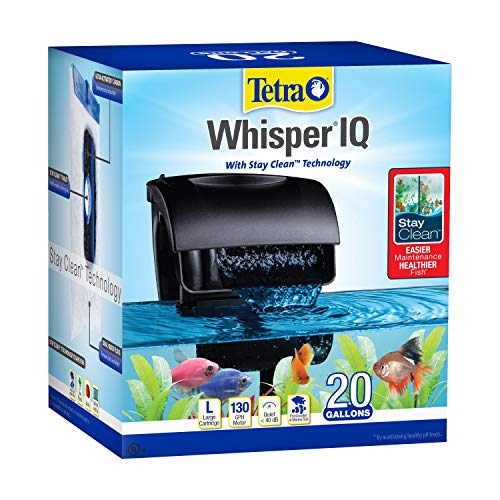
Tetra Whisper IQ 130 GPH Power Filter for...
130 GPH capacity
Quiet under 40 dB
Stay Clean Technology
For tanks up to 20 gallons
What we like
- Very quiet operation
- Self-priming motor
- Adjustable flow rate
- Affordable price
- Reliable brand
What could be better
- Cartridges need monthly replacement
- Bulky on smaller tanks
- Flow may slow with heavy media
The Tetra Whisper IQ offers reliable filtration at an affordable price point, making it ideal for German Blue Ram keepers setting up their first tank. The self-priming motor proves particularly valuable during power outages or maintenance, automatically restarting without manual intervention. Its quiet operation respects the peaceful nature of ram tanks, while the Stay Clean Technology helps maintain stable pH conditions beneficial for these sensitive fish.
For tanks housing a single pair of rams, this filter provides adequate mechanical and biological filtration. The adjustable flow rate allows you to reduce current strength, preventing stress on your fish while still maintaining water quality. Consider adding a pre-filter sponge to the intake for additional biological filtration and to protect fry or small fish from being drawn in.
The main cartridge system, while convenient, does require monthly replacement to maintain optimal flow and filtration efficiency. Budget for ongoing cartridge costs when selecting this filter. Despite this recurring expense, the Tetra Whisper IQ remains a solid choice for smaller ram aquariums where gentle, consistent filtration matters more than high flow rates.
For Whom It's Good
The Tetra Whisper IQ suits aquarists keeping a single pair of German Blue Rams in a 20-gallon tank who want reliable filtration without complex maintenance. Its quiet operation works well in bedrooms or offices where noise matters. Beginners appreciate the simple setup and self-priming feature that eliminates the frustration of post-maintenance restarts.
For Whom It's Bad
Skip this filter if you plan to breed German Blue Rams extensively, as the intake poses risk to newly hatched fry even with the pre-filter sponge. Those running heavily planted tanks with CO2 injection may find the surface agitation excessive at higher flow settings. Aquarists wanting long-term cost savings might prefer sponge filters with no recurring cartridge expenses.
2. Hygger Aquarium Sponge Filter - Best for Gentle Filtration

hygger Aquarium Sponge Filter 20-55 Gallon Fish...
Air-powered gentle filtration
Double bio filtration
Spare sponge included
For 20-55 gallon tanks
What we like
- Gentle flow perfect for rams
- No fry suction risk
- Excellent biological filtration
- Very affordable
- Easy to clean
- Spare sponge included
What could be better
- Requires separate air pump
- Needs regular cleaning
- Less mechanical filtration
The Hygger Sponge Filter represents the gold standard for German Blue Ram tanks, particularly breeding setups. Its air-powered design creates gentle water movement that mimics the slow currents of their natural Orinoco River habitat. Unlike power filters that can create stressful turbulence, this sponge filter provides biological filtration without threatening delicate fins or tiny fry.
The dual-chamber design maximizes biological filtration capacity through both bio cotton and ceramic ball media. This combination handles the ammonia sensitivity of German Blue Rams effectively, converting harmful waste products safely. The included spare sponge allows rotation during cleaning, preserving beneficial bacteria colonies that keep your fish healthy.
Breeding pairs particularly benefit from sponge filtration. Newly hatched fry can swim safely throughout the tank without risk of being sucked into filter intakes. The gentle bubbling from the built-in air stone provides adequate oxygenation even at the high temperatures rams require, without the strong surface agitation that power filters create.
For Whom It's Good
This sponge filter excels for dedicated German Blue Ram breeders and anyone prioritizing gentle water flow. The safety for fry makes it essential for raising ram offspring, while the biological filtration capacity supports the pristine water conditions these fish demand. Aquarists running multiple tanks appreciate the affordability of setting up sponge filtration throughout their fish room.
For Whom It's Bad
Avoid this filter if you dislike the aesthetic of sponge filters in display tanks or require strong mechanical filtration for debris removal. It does not clear suspended particles as effectively as hang-on-back or canister options. The requirement for a separate air pump adds initial cost and the bubbling noise may bother some keepers in quiet rooms.
3. Seachem Tidal Power Filter - Best Premium HOB Filter

Seachem Tidal Filter, 35 gal. (135 L) NA 120 V...
Adjustable flow 90-450 GPH
Surface skimmer included
Maintenance alert system
Internal motor no priming
What we like
- Premium Sicce build quality
- Highly adjustable flow rate
- Large media capacity
- Quiet operation
- Surface skimmer works well
- Self-priming
What could be better
- More expensive than basic options
- Shallow intake depth
- Not fully black color
The Seachem Tidal brings Italian engineering excellence to German Blue Ram filtration. Manufactured by Sicce, a respected name in aquarium equipment, this filter combines premium build quality with practical features specifically beneficial for sensitive fish. The fully adjustable flow rate lets you fine-tune water movement to your rams' preference, ranging from gentle circulation to stronger currents when needed.
Surface skimming capability addresses a common issue in warm ram tanks where protein films can develop. The skimmer removes oils and debris from the water surface, improving oxygen exchange and light penetration for planted tanks. The maintenance alert indicator notifies you when media becomes clogged, taking guesswork out of filter upkeep and ensuring consistent water quality.
Internal motor design eliminates the priming hassles common with traditional hang-on-back filters. After power interruptions or maintenance, the Tidal automatically restarts without manual intervention. This reliability matters for German Blue Rams, who cannot tolerate the ammonia spikes that occur when filtration stops for extended periods.
For Whom It's Good
The Seachem Tidal suits serious German Blue Ram enthusiasts running planted community tanks where both mechanical efficiency and adjustable flow matter. The premium construction justifies its higher price for those wanting long-term reliability. Aquarists who appreciate thoughtful design touches like the maintenance alert and self-priming capabilities will find this filter worth the investment.
For Whom It's Bad
Skip this option if budget constraints limit your equipment spending, as basic HOB filters cost significantly less. The intake design works best in tanks maintained near full capacity, requiring more frequent top-offs than non-skimming filters. Those wanting purely black equipment to hide in the background may find the gray/white accents noticeable in aquascapes.
Heater
Given the critical importance of maintaining 82-86°F water temperature, heater selection for German Blue Rams requires careful consideration. A reliable heater represents life-support equipment for these fish, not an area to cut corners. Choose heaters with accurate thermostats, safety shutoffs, and appropriate wattage for your tank size.
4. Tetra HT Submersible Aquarium Heater - Best Budget Heater

Tetra HT Submersible Aquarium Heater With...
50-Watt preset 78°F
Red/Green indicator
Fully submersible
Safety shutoff included
What we like
- Very affordable and reliable
- Electronic thermostat durable
- Simple set-and-forget
- Compact hides well
- Safety shutoff feature
What could be better
- Fixed temperature 78°F
- Not adjustable
- Smaller tanks only
The Tetra HT provides basic heating functionality at a budget-friendly price point. While the preset 78°F temperature falls below the ideal 82-86°F range for German Blue Rams, this heater can work in smaller tanks located in warm rooms or when used alongside additional heating elements. The electronic thermostat offers better reliability than older bimetallic strip designs common in this price range.
Visual indicators help monitor operation, with red showing active heating and green indicating the target temperature has been reached. The safety shutoff feature provides peace of mind against overheating failures that could harm your fish. Compact dimensions allow easy hiding behind decorations or plants to maintain natural tank aesthetics.
For German Blue Ram keepers, this heater works best as a supplemental heat source in already warm environments or for maintaining stable overnight temperatures. In most home aquariums, you will need a higher-wattage adjustable heater capable of reaching 84-86°F consistently. Consider this model for quarantine tanks or as emergency backup equipment rather than primary heating for display ram tanks.
For Whom It's Good
This heater suits aquarists in warm climates where ambient temperatures reduce heating demands, or those needing affordable heating for quarantine and hospital tanks. The reliability and safety features make it suitable for beginners learning proper heater placement and operation. It also works well as backup heating in emergencies.
For Whom It's Bad
Do not rely on this as your primary heater for German Blue Rams if your room temperature drops below 75°F regularly, as it likely cannot maintain the 82-86°F range needed. The fixed temperature limitation prevents dialing in optimal ram temperatures. For dedicated display tanks housing expensive or breeding-quality rams, invest in adjustable heaters with higher wattage.
Lighting
German Blue Rams thrive in well-planted aquariums, making proper lighting essential for both plant growth and showcasing their brilliant colors. LED lighting provides the best combination of efficiency, spectrum control, and low heat output. Choose full-spectrum options that enhance the blue and gold coloration of your fish while supporting healthy plant development.
5. AQUANEAT LED Aquarium Light - Best Budget LED Light

AQUANEAT LED Aquarium Light Full Spectrum for...
Full spectrum 6500K
Fits 18-24 inch tanks
42 energy-efficient LEDs
Low-to-mid light plants
What we like
- Excellent value under $16
- Bright full spectrum
- Easy extendable brackets
- Grows plants effectively
- Lightweight design
What could be better
- No built-in timer
- Brightness not adjustable
- Not waterproof
The AQUANEAT LED delivers impressive performance for its modest price, making quality lighting accessible to German Blue Ram keepers on any budget. The full spectrum output, combining 6500K white with blue, pink, and green diodes, brings out the iridescent blue spangling and gold body coloration that makes these fish so prized. Your rams will display their most vibrant colors under this balanced lighting.
Extendable brackets accommodate tanks from 18 to 24 inches, fitting the common 20 and 30-gallon sizes preferred for German Blue Ram setups. The 42 LED array provides sufficient intensity for low-to-medium light plants like java fern, anubias, and various mosses commonly used in ram aquascapes. These plants thrive under this lighting while creating the dim, sheltered areas rams prefer.
Installation takes minutes with no tools required. The lightweight design places minimal stress on tank rims while the slim profile reduces visual intrusion into your aquascape. Pair this light with an external timer to establish consistent photoperiods that benefit both plants and fish. A standard 8-hour daylight period works well for most planted ram tanks.
For Whom It's Good
This light suits German Blue Ram keepers wanting quality illumination without significant investment. It excels for tanks featuring java fern, mosses, and other low-light plants that create ideal ram habitats. Beginners appreciate the simple operation and reliable plant growth that supports stable tank conditions. Those expanding their aquarium hobby benefit from the affordability of lighting multiple tanks.
For Whom It's Bad
Avoid this light if you plan to grow demanding high-light plants like carpeting species or red stem plants. The lack of dimming capability prevents fine-tuning light intensity for sensitive aquascapes. The requirement for a separate timer adds minor inconvenience compared to all-in-one fixtures with integrated programming.
Aquarium Decor
Decor selection for German Blue Ram tanks focuses on creating natural territories, spawning sites, and hiding spots. Caves, driftwood, and live plants all contribute to the secure environment these fish need to display their best colors and behaviors. Smooth-edged decorations prevent fin damage while providing the visual barriers that reduce stress in community settings.
6. Ameliade Aquarium Cave Decoration - Best Budget Cave Decor
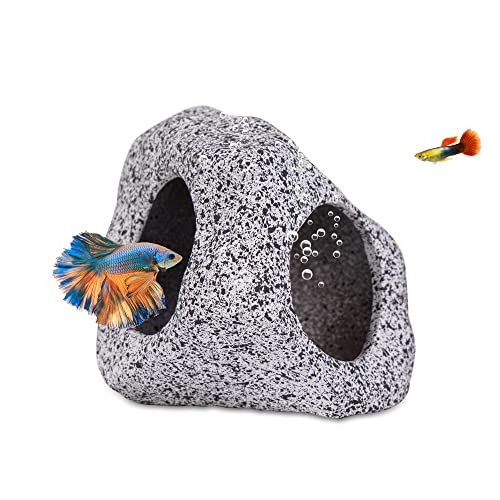
Ameliade Betta Fish Tank Rock Cave Decor Aquarium...
Ceramic stone texture
Hollow cave design
Smooth safe edges
Easy to clean
What we like
- Affordable under $8
- Perfect size for dwarf cichlids
- Natural stone appearance
- Safe smooth edges
- Hiding spots for shy fish
- Heavy sturdy construction
What could be better
- Can accumulate algae
- Single opening design
- May be too small for larger cichlids
The Ameliade cave provides essential shelter for German Blue Rams at a price that allows purchasing multiple units for territory creation. The ceramic construction with natural stone texture creates an aesthetically pleasing addition to planted aquascapes while providing the secure hiding spots these fish require. The hollow interior offers a perfect retreat for individual fish or pairs establishing spawning territories.
Smooth edges throughout prevent the fin damage that rough decorations can cause to delicate ram fins. The opening size suits dwarf cichlids perfectly, admitting adult rams while excluding larger tank mates that might harass them. Weight and density keep this cave stable on the substrate, preventing tipping that could stress inhabitants or damage aquascaping.
Multiple caves placed throughout the tank create distinct territories that reduce aggression between pairs or individuals. Position caves near plants or driftwood for enhanced security. The easy-to-clean ceramic material requires only rinsing during water changes to remove algae or debris accumulation.
For Whom It's Good
This cave suits German Blue Ram keepers wanting affordable shelter options for multiple fish. It works perfectly for breeding pairs needing privacy and security for spawning. Aquascapers appreciate the natural stone appearance that blends with various design styles. Those running community tanks benefit from the territorial definition caves provide.
For Whom It's Bad
Skip this if you prefer driftwood-based caves or have larger cichlid species that would ignore this small shelter. The single opening limits escape routes compared to multi-opening designs. Those with active algae issues may find the texture requires more frequent cleaning than smooth ceramic alternatives.
7. Java Moss Live Aquarium Plant - Best Budget Live Plant
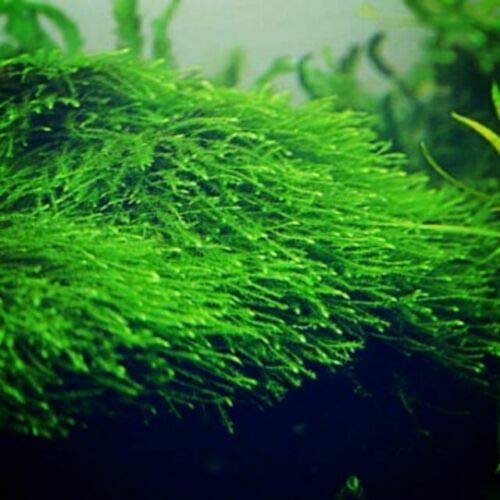
Java Moss Taxiphyllum Barbieri Easy Live Aquarium...
Live Taxiphyllum Barbieri
Golf ball size portion
Low light tolerant
Fry cover included
What we like
- Very affordable under $7
- Fast growing once established
- Extremely easy care
- Excellent for breeding
- Can use in filters for biofiltration
- Live arrival guarantee
What could be better
- Not Prime eligible
- May arrive brown initially
- Small portion size
- Potential snail hitchhikers
Java moss represents an essential component of the ideal German Blue Ram habitat. This versatile plant provides spawning substrate, fry refuge, and natural water filtration while thriving in the warm, soft conditions rams require. The golf ball-sized portion establishes quickly in most tanks, eventually expanding to cover substrate, rocks, or driftwood with a lush green carpet.
For breeding projects, java moss proves invaluable. Eggs deposited on moss receive better oxygenation than those on flat surfaces, while the dense structure protects fry from predation including their own parents. First foods like infusoria naturally colonize moss, providing grazing opportunities for newly hatched rams. The plant's tolerance for low light means it thrives under standard aquarium lighting.
Beyond breeding applications, java moss creates the dim, sheltered areas where German Blue Rams feel secure. Fish display better colors and more natural behaviors when provided with visual barriers and hiding spots. The moss also serves as excellent supplemental biofiltration when placed in filter compartments, processing nitrogenous wastes that sensitive rams cannot tolerate.
For Whom It's Good
Java moss suits all German Blue Ram keepers, from beginners to experienced breeders. The plant's forgiving nature tolerates the variable conditions new tanks experience while establishing. Breeders rely on its fry protection and first food cultivation properties. Aquascapers appreciate its ability to soften hardscape edges and create natural forest-floor aesthetics.
For Whom It's Bad
Avoid java moss if you prefer minimalist aquascapes without moss carpets or cannot tolerate potential snail introduction. The initial brown appearance upon arrival concerns inexperienced keepers until the plant greens up in the tank. Those wanting instant impact may prefer larger established portions from local sources over the smaller shipped portions.
8. Majoywoo Natural Coral Driftwood - Best Natural Driftwood Set
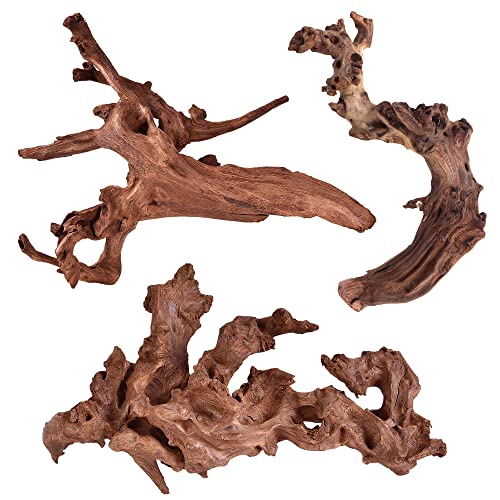
majoywoo Natural Driftwood for Aquarium Decor Fish...
3 pieces 6-10 inches
Natural unique shapes
Creates hiding spots
What we like
- Natural unique shapes
- Excellent hiding spots
- Sturdy long-lasting
- Versatile aquascaping options
- Well packaged
What could be better
- Requires boiling to remove tannins
- May float initially
- Some pieces may have sharp edges
The Majoywoo driftwood set brings authentic natural elements to German Blue Ram tanks at excellent value. Three distinct pieces ranging from 6 to 10 inches provide immediate aquascaping variety, creating territorial boundaries, spawning sites, and visual barriers that reduce stress. Each piece features unique shapes and textures impossible to replicate with artificial decorations.
Natural driftwood offers benefits beyond aesthetics. The porous structure supports beneficial bacteria colonization, contributing to biological filtration that keeps ammonia levels safe for sensitive rams. Tannins released during the initial soaking period naturally lower pH and provide antibacterial properties that benefit fish health. Over time, driftwood develops biofilm that rams graze upon naturally.
Preparation requires boiling or extended soaking to waterlog the wood and reduce initial tannin release. This extra effort pays dividends in the authentic South American biotope aesthetic and fish comfort. Position driftwood pieces to create caves underneath, caves that serve as prime spawning sites for bonded pairs.
For Whom It's Good
This driftwood set suits German Blue Ram enthusiasts wanting to create naturalistic South American biotope aquascapes. The variety of pieces allows creative territory design for multiple fish. Those keeping breeding pairs benefit from the numerous cave and spawning site opportunities. Value-conscious aquarists appreciate the three-piece set pricing compared to individual driftwood purchases.
For Whom It's Bad
Skip natural driftwood if you want instant aquascaping without preparation time for boiling and soaking. The variation between pieces means you cannot predict exact shapes, potentially frustrating those wanting specific designs. Dark water from tannins, while natural and beneficial, may not suit aquarists preferring crystal clear aquariums without extended pre-soaking of wood.
German Blue Ram: Other Tank Accessories
Beyond the core equipment of filters, heaters, and lighting, several accessories support successful German Blue Ram keeping. Water testing kits prove essential for monitoring the parameters these sensitive fish require. Quality test kits for pH, ammonia, nitrite, nitrate, and hardness help prevent problems before they become fatal.
Indian almond leaves provide valuable benefits for soft water fish. These leaves release tannins that naturally lower pH and hardness while offering antibacterial and antifungal properties. They also create the tea-colored water that mimics natural ram habitats and provides security for these sometimes-shy fish. Replace leaves every few weeks as they decompose.
Feeding rings or target feeding tools help ensure shy German Blue Rams receive their share of food in community tanks. These fish are often outcompeted by bolder tank mates at feeding time. A feeding ring placed in their territory allows targeted feeding while reducing food waste throughout the tank.
German Blue Ram: Cleaning The Tank
Regular tank maintenance keeps German Blue Rams healthy by preventing the water quality deterioration they cannot tolerate. Establish a consistent cleaning schedule that addresses both visible debris and invisible chemical parameters. The high temperatures these fish require accelerate waste decomposition, making diligent cleaning even more important.
Weekly maintenance should include gravel vacuuming to remove uneaten food and waste accumulation. Pay particular attention to areas under decorations and near the substrate where rams spend most of their time. Clean filter media monthly in old tank water to preserve beneficial bacteria while removing accumulated debris. Never use tap water for cleaning biological media.
Glass cleaning keeps viewing areas clear for enjoying your fish. Use an algae scraper or magnetic cleaner weekly to remove buildup from viewing panels. Leave some algae on back and side walls if desired, as it provides supplemental grazing for fish and helps process nitrates. Avoid glass cleaners with chemicals that could harm fish if residue enters the water.
German Blue Ram: Common Possible Diseases
German Blue Rams suffer from health issues primarily related to water quality problems and stress. Their sensitivity means diseases often progress rapidly once established, making prevention far more effective than treatment. Understanding common ailments helps you recognize and address problems before they become fatal.
Common health issues include:
- Ich (White Spot Disease): Caused by the parasite Ichthyophthirius multifiliis, presenting as white spots across the body and fins. Rams often succumb quickly to ich outbreaks due to their sensitivity. Treatment requires elevated temperatures and appropriate medications while maintaining pristine water quality.
- Internal Parasites: Wild-caught or poorly quarantined fish often carry internal parasites causing wasting, bloating, or abnormal feces. Metronidazole and praziquantel treat most common internal parasites, but prevention through quarantine remains essential.
- Bacterial Infections: Fin rot, mouth fungus, and systemic bacterial infections often follow stress or water quality issues. Symptoms include frayed fins, cottony growths, or red patches. Antibiotic treatments work best when combined with optimal water conditions.
- Hexamita (Hole in the Head): This parasitic infection causes pitting lesions on the head and lateral line. While often associated with vitamin deficiencies, hexamita requires specific treatment with metronidazole. Early detection and treatment prevent permanent disfiguration.
- Bloat/Dropsy: Characterized by swelling, raised scales, and lethargy. Often results from internal bacterial infections or organ failure. Treatment success rates are low once visible symptoms appear, emphasizing prevention through proper diet and water quality.
Prevention through quarantine, proper acclimation, and excellent water quality keeps German Blue Rams healthier than any medication. New additions should spend at least two weeks in quarantine before joining established tanks. Monitor new fish closely during this period for any signs of disease before introducing them to your main display.
German Blue Ram: Treatment & Medications
When German Blue Rams become ill, prompt treatment in a separate hospital tank provides the best chance of recovery. Treating fish in the main display tank often fails because the underlying water quality issues that caused the disease persist. Hospital tanks allow targeted medication without affecting beneficial bacteria or other healthy fish.
Common medications include:
- Metronidazole: Treats internal parasites, hexamita, and some bacterial infections. Safe for scaleless fish when dosed correctly.
- Praziquantel: Targets external and internal parasites including tapeworms and flukes. Often combined with metronidazole for broad parasite treatment.
- Paraguard/Formaldehyde-based: Effective against external parasites and fungal infections. Use with caution and proper aeration as these medications reduce dissolved oxygen.
- Antibiotics (Kanamycin, Nitrofurazone): Treat bacterial infections when identified. Complete full treatment courses even if fish appear recovered to prevent resistance development.
- Methylene Blue: Useful for fungal prevention on eggs and treating mild external infections. Safe for eggs and fry, making it valuable for breeding situations.
Always follow medication instructions precisely and remove carbon filtration during treatment, as carbon adsorbs medications rendering them ineffective. Increase aeration during medication periods since many treatments reduce oxygen levels. Never mix medications unless specifically directed, as combinations can prove toxic.
German Blue Ram: Tank Mates
Selecting appropriate tank mates for German Blue Rams requires considering both temperament and environmental needs. Suitable companions must tolerate the warm temperatures rams require and display peaceful behavior that does not stress or harass. The best tank mates occupy different tank levels, leaving the bottom territory for rams while adding activity to mid and upper water columns.
Excellent tank mates include:
- Corydoras Catfish: Peaceful bottom-dwellers that occupy the same tank level without competing for territory. They thrive in similar soft water conditions and warm temperatures. Choose smaller species like panda cories or pygmy cories for appropriate size matching.
- Small Tetras: Schooling fish like cardinal tetras, neon tetras, and rummynose tetras add color and movement to upper tank levels. Their peaceful nature and temperature tolerance make them ideal companions. Keep them in groups of six or more for natural schooling behavior.
- Honey Gourami: Peaceful labyrinth fish that prefer the same warm, soft water conditions. Their top-dwelling habits complement ram territoriality without conflict. Males display beautiful coloration that enhances overall tank aesthetics.
- Guppies: Hardy livebearers that tolerate warm water well. Choose fancy varieties for added visual interest. Their constant activity adds life to ram tanks, though provide plenty of plant cover so guppy fry have refuge from adult fish.
- Danios: Active swimmers that stay in upper water columns away from ram territories. Their constant movement encourages shyer rams to be more active. Celestial pearl danios offer particular beauty in planted ram tanks.
- Platies: Peaceful livebearers that add color and activity. Their hardy nature contrasts well with sensitive rams, though ensure the warm temperatures do not stress them over time.
When keeping multiple pairs of German Blue Rams, provide at least 40 gallons with abundant visual barriers. Dominant pairs claim prime territories while subordinate pairs establish in less desirable areas. Without adequate space and hiding spots, aggression becomes problematic.
German Blue Ram: Fish To Avoid
Certain fish create problems when housed with German Blue Rams due to aggression, temperature incompatibility, or competitive behavior. Avoid these species to maintain peaceful community dynamics and healthy rams.
Species to avoid include:
- Angelfish: Despite similar South American origins, angelfish grow large enough to view rams as prey. Their active breeding behaviors often stress rams, and their size advantage allows bullying during feeding.
- Barbs: Tiger barbs, cherry barbs, and similar species often nip at the flowing fins of German Blue Rams. Their active, sometimes aggressive nature creates constant stress that leads to ram illness.
- Large Cichlids: Oscars, Jack Dempseys, and other medium-to-large cichlids view rams as food. Even peaceful larger cichlids accidentally harm dwarf rams through competition or casual aggression.
- Bettas: While individual betta temperaments vary, many male bettas attack the bright colors and flowing fins of German Blue Rams. The ram's bottom-dwelling habits often trigger betta territorial responses.
- Goldfish: Temperature requirements conflict completely, with goldfish preferring much cooler water. Goldfish also produce massive waste loads that compromise the pristine water conditions rams require.
Always research any potential tank mate's adult size, temperament, and temperature requirements before adding them to a German Blue Ram community. When in doubt, maintain a species-only tank or consult with experienced ram keepers about specific combinations.
German Blue Ram Buying Guide: Selecting Healthy Fish
Purchasing healthy German Blue Rams requires knowledge beyond simply picking the brightest fish in the tank. Many commercially available rams suffer from hormone treatments, poor breeding practices, or stress that leads to early death. Understanding what to look for and what to avoid dramatically improves your success rate with these challenging fish.
Warning signs of hormone-treated or poor-quality rams:
- Intense but artificial coloration: Extremely bright, almost glowing colors that seem unnatural often indicate hormone treatments. These fish frequently die within weeks as the hormones wear off and their compromised immune systems fail.
- Bloated or balloon-like bodies: While balloon rams are a recognized variant, some hormones cause abnormal body shapes that indicate underlying health issues rather than selective breeding.
- Labored breathing: Fish gasping at the surface or showing rapid gill movement may have gill damage from chemical treatments or poor water conditions during shipping.
- Clamped fins or hiding: While normal behavior for stressed new arrivals, fish that remain clamped or hidden for extended periods may carry internal parasites or bacterial infections.
- Damage to fins or eyes: Torn fins or cloudy eyes indicate poor handling, aggression from tank mates, or pre-existing infections.
Where to buy German Blue Rams:
- Local breeders: Hobbyists breeding rams locally offer the healthiest stock with no hormone treatments or long-distance shipping stress. Search aquarium forums, local fish clubs, or Facebook groups to find breeders in your area. Locally bred fish have adapted to your water conditions and typically show better long-term survival.
- Specialty fish stores: Independent aquarium shops that specialize in cichlids or South American fish often maintain better stock quality than general pet stores. Staff at these shops can usually tell you the source of their rams and whether they have been treated.
- Online specialty retailers: Reputable online sellers who guarantee live arrival and provide quarantine periods before shipping often deliver healthier fish than mass-market sources. Read reviews and ask questions before ordering.
Signs of healthy German Blue Rams:
- Bright, clear eyes without cloudiness
- Full, flowing fins without tears or fraying
- Active swimming and curious behavior
- Good body weight without visible spine
- Strong coloration that appears natural rather than artificial
- Responsive to movement outside the tank
Quarantine all new German Blue Rams for at least two weeks before introducing them to established tanks. This practice protects your existing fish from diseases and allows you to observe and treat any issues with the new arrivals without affecting your main display. The quarantine period also gives fish time to recover from transport stress and begin eating prepared foods reliably.
Advantages Of Having German Blue Ram In Your Tank
- Exceptional visual appeal: Few freshwater fish match the color intensity and patterning of healthy German Blue Rams. Their iridescent blue spangling, golden body coloration, and red fin highlights create living artwork in properly set up aquascapes.
- Complex behaviors: Unlike many passive community fish, rams display fascinating social interactions, territorial establishment, and parental care. Watching a pair bond, select a spawning site, and raise fry offers endless entertainment.
- Peaceful community members: Outside breeding periods, German Blue Rams coexist peacefully with appropriate tank mates. They do not uproot plants, destroy decorations, or attack fish that enter their territory appropriately.
- Relatively compact size: At 2-3 inches, German Blue Rams fit comfortably in moderately sized tanks that would not accommodate larger cichlids. A dedicated 20-30 gallon tank provides adequate space for a pair.
- Breeding potential: Successfully breeding German Blue Rams and raising fry provides tremendous satisfaction. Their parental care behaviors and relatively straightforward breeding requirements make them accessible for committed hobbyists.
Disadvantages Of Having German Blue Ram In Your Tank
- Advanced care requirements: German Blue Rams demand more attention to water parameters, temperature stability, and water quality than hardier community fish. Their sensitivity to ammonia, need for soft water, and high temperature requirements challenge beginners.
- Shorter lifespan: Even with excellent care, German Blue Rams typically live 2-4 years. Their relatively brief time in your aquarium may disappoint those wanting long-term companions.
- Temperature limitations on tank mates: The 82-86°F requirement restricts compatible species. Many popular community fish cannot tolerate sustained high temperatures, limiting your stocking options.
- Sensitivity to water changes: German Blue Rams react poorly to inconsistent maintenance. Skipping water changes or allowing parameters to fluctuate leads to rapid health deterioration.
- Difficulty sourcing quality stock: Finding healthy, hormone-free German Blue Rams requires effort. Mass-market sources often sell treated fish destined for early death, forcing aquarists to seek specialized breeders.
- Territorial during breeding: While generally peaceful, breeding pairs become aggressive defenders of their spawning site. This behavior can stress or harm tank mates in smaller tanks.
FAQ: German Blue Ram Care
How many German Blue Rams should you keep together?
German Blue Rams do best when kept as a single pair in tanks under 40 gallons. A bonded male-female pair establishes territory and displays natural behaviors. In larger tanks of 40+ gallons with abundant visual barriers, you can keep multiple pairs, but provide at least 10 gallons per additional fish. Keeping multiple males in small tanks leads to constant aggression and stress that causes illness.
Why are German Blue Rams difficult to keep?
German Blue Rams require specific conditions that challenge many aquarists: water temperatures of 82-86°F, soft acidic water with pH 5.5-7.0, zero ammonia and nitrite tolerance, and pristine water quality maintained through frequent changes. They also need established tanks rather than new setups and are sensitive to stress, poor diet, and incompatible tank mates. Many failures stem from keeping them at standard tropical temperatures below their requirements.
What fish can live with German Blue Rams?
Good tank mates include peaceful community fish that tolerate warm temperatures: corydoras catfish, small tetras (cardinals, neons, rummynose), honey gouramis, danios, and platies. These species occupy different tank levels than rams and share similar water preferences. Avoid aggressive fish, fin nippers like barbs, large cichlids, or species requiring cooler temperatures.
Are German Blue Rams easy to care for?
No, German Blue Rams are not easy to care for and are best suited for intermediate to advanced aquarists. Their need for high temperatures, soft acidic water, pristine conditions, and established tanks makes them challenging for beginners. The Spruce Pets classifies them as advanced care fish, and many experienced keepers consider them more sensitive than discus cichlids.
Are German Blue Rams hard to keep?
Yes, German Blue Rams are considered difficult to keep due to their strict environmental requirements. They need stable 82-86°F temperatures, soft water with specific pH and hardness parameters, zero ammonia tolerance, and frequent maintenance. Their reputation for dying mysteriously usually traces back to improper temperature or water quality rather than actual fragility.
Are German Blue Rams friendly?
German Blue Rams are generally peaceful and non-aggressive toward other fish species. They show curiosity toward their owners and can recognize feeding routines. However, they become territorial during breeding, defending their spawning site against perceived threats. Their peaceful nature makes them suitable for community tanks with appropriate tank mates.
Can I keep just one German blue ram?
Yes, you can keep a single German Blue Ram, though they often display more natural behaviors when kept as a bonded pair. Single rams may show less vibrant colors and breeding-related behaviors. If keeping one individual, ensure plenty of visual barriers and hiding spots to help it feel secure. Many aquarists successfully keep single rams in community tanks.
Conclusion
German Blue Rams reward dedicated aquarists with some of the most spectacular colors and fascinating behaviors in the freshwater hobby. Their advanced care requirements demand respect and preparation, but success comes consistently to those who provide the proper environment. The critical elements, maintaining 82-86°F temperatures, soft acidic water, and pristine conditions, are achievable with the right equipment and commitment.
This guide has covered everything from selecting healthy fish and avoiding hormone-treated specimens to creating optimal tank conditions and managing breeding projects. Whether you are setting up your first German Blue Ram aquarium or troubleshooting existing challenges, remember that these fish thrive when their specific needs are met without compromise.
If you are considering adding German Blue Rams to your aquarium in 2026, ensure your tank is fully cycled, your heater can maintain the required temperature range, and you have sourced healthy fish from reputable breeders. The effort invested in proper preparation pays dividends in healthy, colorful fish that display their full range of natural behaviors. For related care guides on compatible tank mates and other cichlid species, explore our articles on Corydoras Catfish, Tetra Fish, and Apistogramma Dwarf Cichlids.